![PortStrategy[GreenPort]](https://www.portstrategy.com/wp-content/uploads/2026/09/PortStrategyGreenPort.svg)


Germanys green hydrogen strategy
Germany intends to ramp up its focus on green hydrogen as a key way to help decarbonise its marine sector.
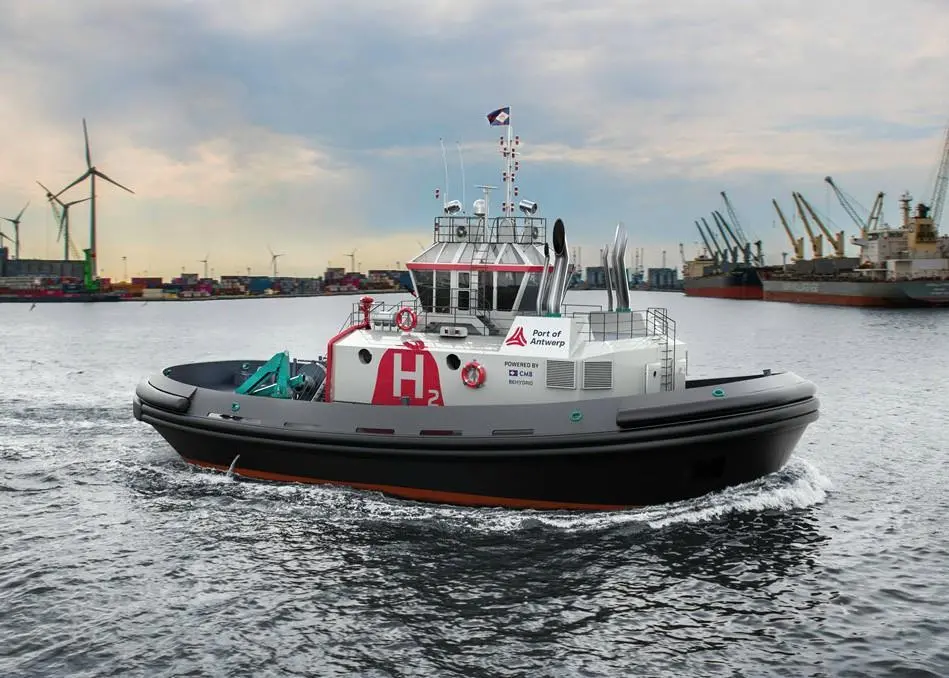
Germany’s government says that to this end “only hydrogen produced on the basis of renewable energies (‘green’ hydrogen) is sustainable in the long term” and aims to create of 10GW of domestic electrolysis capacity for green hydrogen made in Germany by 2040 at the latest.
The government assumes that a global and European hydrogen market will develop over the next ten years and CO2-neutral hydrogen will therefore also play a role in Germany. If available, it will also be used on a transitional basis, said the Federal Ministry for Economic Affairs and Energy.
Ramp-up
Going forward, Germany wants to make hydrogen competitive by pushing cost reductions with a fast international market ramp-up enabling technological progress and scaling effects.
The country will focus on the use of hydrogen on shipping, aviation, heavy goods transport and industry, starting with the steel and chemical industries. These sectors will be the first to benefit from market incentives to make green hydrogen competitive, which will include tenders for electrolyser capabilities and quotas.
The German government said that the majority of green hydrogen demand will still in the future however need to be imported. The strategy specifically names EU countries around the North and Baltic Sea and in Southern Europe as potential suppliers but also talks of developing energy partnerships with developing countries.
In addition to a €130bn stimulus package to further the country’s energy transition, a further €7bn will be made available for the market ramp-up of hydrogen technologies in Germany and a further €2bn put towards forming international partnerships.
Related Articles
 ALTERNATIVE FUELS GREENPORT
 NEWS
NEWS