![PortStrategy[GreenPort]](https://www.portstrategy.com/wp-content/uploads/2026/09/PortStrategyGreenPort.svg)






Cargo speaks volumes
North European container volumes tell one story, other cargo streams tell many others. Felicity Landon reports
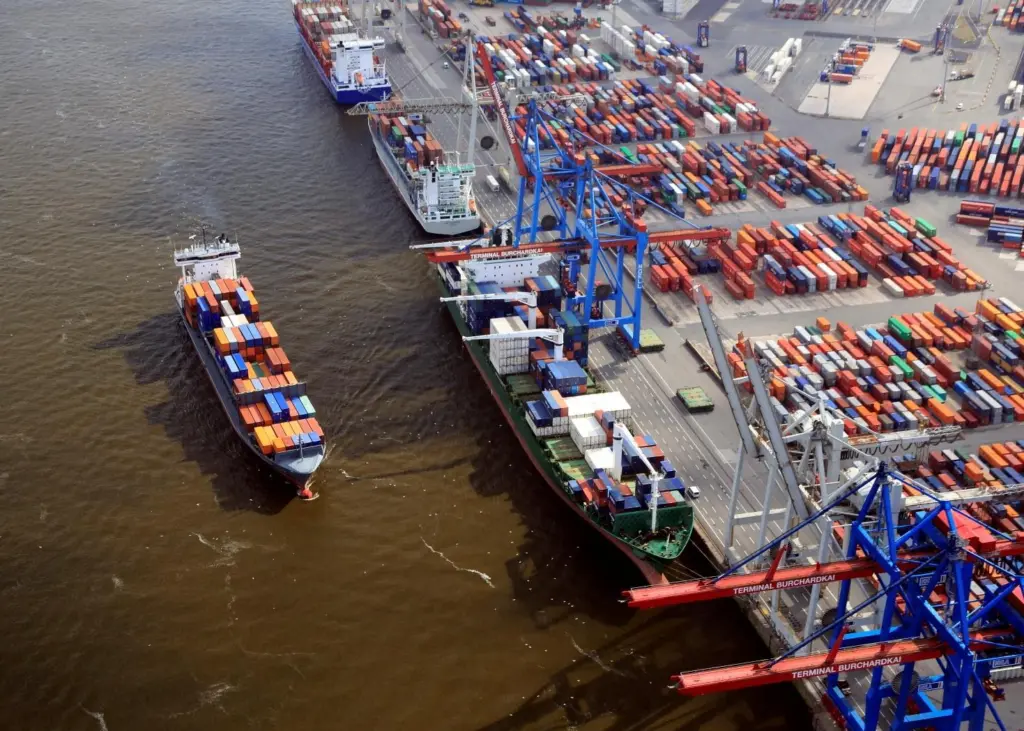
A mature market slowly moving out of recession is never going to deliver the astronomical growth figures we hear from ports in Asia – but picking through the figures in Northern Europe’s major ports, there are positives to be found.
In some cases, there are even some record-breaking figures; last year Antwerp, Europe’s second largest port, saw containers fall by 0.7% to 8.57m teu and suffered a huge drop in coal volumes, but still reported a record year overall. Total throughput was up by 3.5% year-on-year, to 190.6m tonnes, breaking the previous record set before the economic crisis, 189.3m tonnes in 2008.
“We are not a small island in Europe and generally speaking the economy is not doing that well,” says Port of Antwerp chief executive Eddy Bruyninckx. “But having that in mind and looking at the port in its different aspects, there are some positive trends.”
The first four months of 2014 saw growth of 3.1% overall at the port, and have included a slight growth in containers, he says. “April was excellent and May is also a good month, with the number of vessels calling in May more than 7% up compared to last year – just one of the indicators to be considered.”
Changing shifts
Within these figures, Antwerp has seen some dramatic shifts. Coal volumes handled in the first quarter of 2014 were 44% lower than the previous year, reflecting much lower demand within the port’s natural captive area. “The explanation lies in the disappearance of markets such as Arcelor Mittal, as well as the conversion of coal-fired power stations to biomass,” says Mr Bruyninckx.
However, liquid bulks keep on growing. “Last year was a fantastic year for liquid bulks with 30% growth, and so far this year there has been a further 6%-7% growth,” he says. “That was because of the take-up of new facilities by Glencore and Total. The integrated cluster of petrochemical logistics and cargo handling activities in the port is very important for employment and we are very happy with this performance. Responding to the structural decline in conventional cargo, we have been successful in reconfiguring former breakbulk terminals to liquid bulk and other facilities.”
Within the conventional general cargo sector, Antwerp has seen a slight improvement in steel volumes this year. Fruit and fresh produce has its own issues, because of the move from conventional fruit ships to reefer containers.
“Fortunately this has been a change inside the port – we handled specialist fruit ships before and now the fruit is coming on MSC container vessels. General cargo overall is now seeing a modest improvement and we are hoping things will continue that way. Probably general cargo would be the best reflection of the global economic situation and if it continues to get better we will be completely happy, because it is the most labour intensive, so employment figures will be good.”
Rotterdam rise
The Port of Rotterdam has also seen a slight increase in container throughput so far this year, after containers fell 2.1% to 11.6m teu last year. Rotterdam’s overall figures for 2013 were stable compared to 2012, at 442m tonnes – and, as a contrast to Antwerp, that included a 17% increase in coal volumes, thanks to high demand from new coal-fired power plants on the Maasvlakte and also a new coal-fired power station in Lünen, Germany.
Many eyes are on Rotterdam as APM Terminals and DP World prepare to open their new deepwater container terminals on the Maasvlakte 2 expansion later this year.
“Maasvlakte 2 is a massive development that is going to be catering for the longer-term – it has been built with larger ships in mind and it will make Rotterdam more competitive if the pricing is right,” says Dean Davison, principal consultant at Ocean Shipping Consultants. “As ships get bigger and exchanges get bigger, shipping lines need to be able to guarantee that their berth is waiting for them – it is all about reliability. If the ship is waiting to get to berth or is late departing, it is pouring money away. The ship needs to get out and get moving again. It is all about the search for scale economies, and so a terminal that has good levels of productivity is a terminal they will want to use.”
The P3 alliance’s planned schedules favour Antwerp over Rotterdam, but Neil Davidson, senior analyst, ports & terminals, at Drewry, says: “You have to imagine that Rotterdam will benefit at some stage from putting in this capacity, because it should be very attractive – location-wise and because of the quality of the facilities. Brand new, very deep water, big cranes – it ticks all the boxes.”
However, he says, Rotterdam is like any other port in that changing alliances, complex terminal shareholdings and larger ships are adding up to an increasing number of variables when it comes to which lines call where.
“For example, we can’t find any logical methodology behind the P3 alliance’s choice of ports. It certainly didn’t follow terminal ownership – it was much more random than that.”
MSC move
Last month, after some long discussions, the Port of Antwerp announced that MSC is to move from its present terminal in the Delwaide dock to the Deurganck dock on the left bank of the Scheldte. MSC had made it clear for some time that it was looking for a new location outside the locks – not only because its Home Terminal in Delwaide dock has been at capacity since 2010, but also because of increasing ship size. With throughput of 4.5m teu in 2013, the line is Antwerp’s biggest customer.
Mr Bruyninckx says: “I think this move is very important and, of course, it became an even higher priority when the P3 rotation announcement was made. MSC has had a hub in Antwerp for many years but there was a growing problem of capacity. The better economic forecast and also P3 were additional arguments for making the move.”
He adds: “Getting a 14,000 teu ship into the port area through the locks was a fantastic thing to do but much larger ships are on order.”
MSC’s move should be complete by the end of next year and will mean that all three P3 partners – MSC, Maersk and CMA CGM – will be operating in the Deurganck dock. “That means we will not have the problem in some other ports where the different shipping lines are participating in terminals substantial distances from each other, with corresponding distances for exchange of cargo. Having all three at the Deurganck dock gives a big advantage in terms of internal logistics.”
Hamburg growth
Among the top four northern European container ports – Rotterdam, Hamburg, Antwerp and Bremen/Bremerhaven – it was Hamburg that stood out last year as the only port to achieve container growth. Volumes increased by 4.4% to 9.3m teu. This increase could be partly down to a recovery in container traffic with Asia, but the main reason was the increase in feeder services into the North Sea and Baltic, which were up 10%.
“Hamburg proves the point that it is still an attractive port,” says Mr Davidson. “Ships will find a way to get in and out of Hamburg – dredging the Elbe would certainly help but it doesn’t kill the port if it isn’t dredged.”
It’s easy to get tied up with shipping lines, alliances and ship sizes, he says, “and if we are not careful, we forget about the cargo. Because what it is really about is cargo – where is it, where does it want to go, and if you are in the right place to serve a particular market, then at the end of the day I believe the cargo will decide.
“That is why the big ships are still going into places like Hamburg and Antwerp – because these ports are major cargo generation centres and you can’t afford not to call in at ports like these. So even if it is more difficult to get in with your big ship, if you have to wait for a tidal window or have to schedule it so it isn’t at full draft or whatever it happens to be, that is what you do – because the cargo is king.”
Which way
Mr Davison agrees. “It comes back to options: if you don’t go upriver to Hamburg, you have to stop at another port, whether inland or feeder. The question is whether it’s more cost-effective to go upriver and also whether it gives you a degree of control over that cargo. Dropping containers elsewhere means the line needs the network to move it on from there, and it is also about where the shippers want their cargoes.
“Having said that, there is also an element of inertia – ‘this is the way we have always done it’.”
The Port of Felixstowe does not release official figures, but volumes are generally put at 3.7m teu for 2013. Hutchison Ports UK is moving ahead with a 190-metre extension its deepwater Berths 8&9, which will enable the port to handle four of the largest containerships simultaneously; new cranes on order from ZPMC will be the largest in the UK.
The opening of the Port of Felixstowe’s new North Rail Terminal last summer doubled rail capacity at the port, and this year Network Rail has completed work on the Ipswich Rail Chord, removing a bottleneck for freight trains travelling between Felixstowe and the Midlands and opening up new capacity.
Related Articles
 PORT & TERMINAL NEWS
 EXPANSION & DEVELOPMENT
 PORT & TERMINAL NEWS