![PortStrategy[GreenPort]](https://www.portstrategy.com/wp-content/uploads/2026/09/PortStrategyGreenPort.svg)





Feeders vie for Black Sea business
Approximately 70% of current imports into the Black Sea region are being sourced in the Far East, but opinions are divided on the most effective way to actually reach these markets, writes Alex Hughes
Two years ago, CMA CGM took the ground-breaking step to serve Odessa and Illichivsk using deepsea vessels originating in China. But observers remain puzzled by the decision.
Rates charged remain high reflecting frequent delays incurred by vessels when passing through the crowded Bosporus Straits.
Interestingly, vessels additionally call at ports in Turkey on the return leg, suggesting that potential exists to establish a regional transhipment hub in that country, thereby obviating the need for deepsea vessels to get tangled up with other maritime traffic that has no option other than to access Black Sea markets through direct calls.
Norasia’s direct service to Odessa, deploying 4,500 teu ships, is not expected to survive beyond the autumn as the expense of using chartered vessels in a region plagued with endemic transit delays begins to bite.
One industry observer comments that he does not understand the economics of calling at ports in Ukraine with such big vessels. Draught restrictions at Odessa, for example, mean they cannot operate at full capacity, forcing them to incur additional expenses by rotating some boxes out of Constantza.
“The Ukraine is clearly a feeder market, ” comments one shipping agent, adding that most lines recognise this and, instead, use Constantza as their hub in the region.
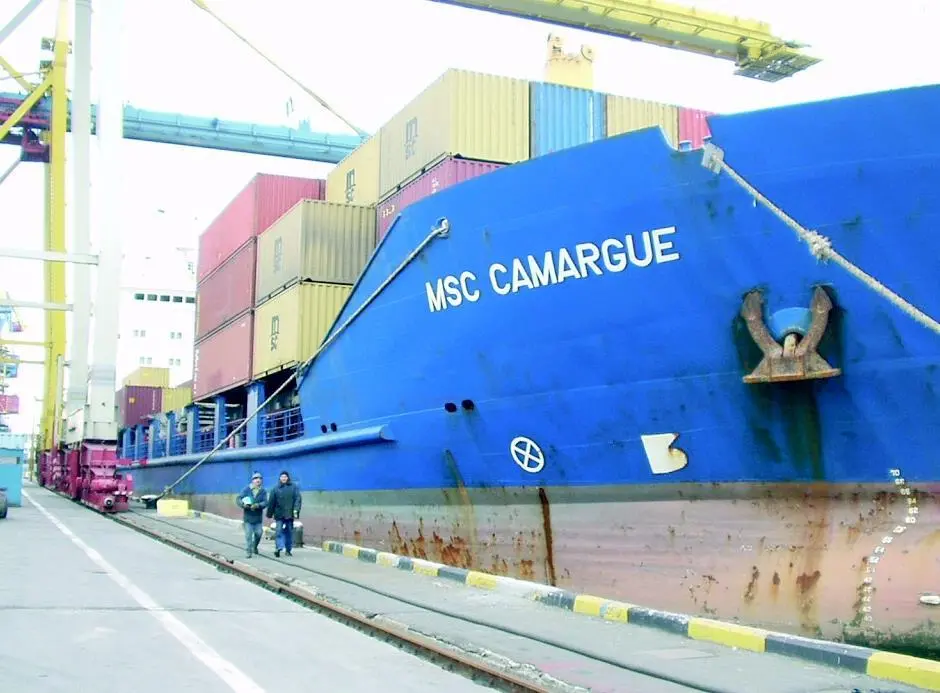
This appears to be a philosophy shared by MSC, which uses Constantza to forward boxes to either Odessa or Illichivsk on a weekly feeder service using 1,200 teu vessels. Previously, it had feedered boxes out of Istanbul, although made the sudden switch to Romania after just four months.
Port Strategy asked several industry players in the region to explain why lines remain reluctant to use Turkish ports from which to serve the Black Sea. The response of Yavuz Tarku of Inchcape Shipping Services was typical: “One of the main factors mitigating against the development of container transhipment operations in Turkey is the amount of paperwork and bureaucracy involved. Shipping lines don’t normally have the packing lists and invoices for containers they are carrying, but these are required in Turkey prior to transhipment taking place, ” he notes.
Although private operators and shipping agents are lobbying hard to have formalities eased, there does still appear to be resistance from some elements within the government. This, explains Mr Tarku, is because the authorities are less than keen to push yet more traffic through the busy Bosporus Straits because of safety issues.
In fact, the current traffic flow is being disrupted by the building of a new road tunnel connecting Asian and European Istanbul, while bad weather, especially fog, can hinder operations at the best of times.
Add to that convoys of oil tankers taking up precious slots, then capacity into the Black Sea area is, and will remain, strictly limited.
Nevertheless, Mr Tarku reveals that some reform in the overall bureaucratic jungle is now taking place, although Turkey still has a long way to go to match the document-friendly regime currently available in Romania.
In the meantime, Turkey remains an important market, with trade growing significantly year-on-year with the rest of the world and with the European Union, too. The size of the market is reflected in the fact that several shipping lines – notably MSC, CMA CGM and Maersk – already serve terminals in Istanbul using direct services to bring ashore import containers from the Far East. Connections within Europe, however, tend to be maintained using feeder vessels of around 1,500 teu.
Related Articles
 PORT & TERMINAL NEWS
 EXPANSION & DEVELOPMENT
 PORT & TERMINAL NEWS