![PortStrategy[GreenPort]](https://www.portstrategy.com/wp-content/uploads/2026/09/PortStrategyGreenPort.svg)





Filling the gaps
Since the downturn has left many ports with space to spare, some are looking at port-centric logistics and developing specialised clusters in a move to up the volumes and improve revenue.
One aspect is wind energy, and there are a number of north European ports that are fighting to become part of the alternative energy logistics chain, offering landside space for wind turbine manufacture and installation support. For example, Hull has just gained an important contract from Siemens to manufacture turbines at its facilities, and Harwich International now aims to use a site earmarked for a box terminal for wind farm support operations.
Richard Morton of Jura Associates points out that although some might consider it just an interesting sideline, “It’s no small potatoes” with more than €100bn ($144bn) of investment over 25 years promised by the UK alone.
He adds that the UK is sitting on vast alternative energy resources that interested ports in the area are just starting to tap into. According to Energy Report figures, the country has around 40% of Europe’s total wind resource, and 30% of both its raw tidal and wave power.
However, how long the gold rush to renewables will last depends partly on how profitable the wind energy input turns out to be – again a subject of some controversy.
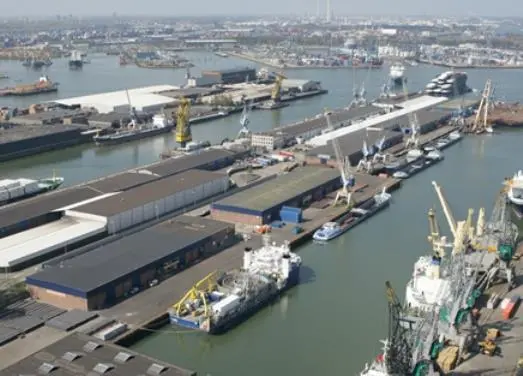
There are other kinds of diversification afoot, as Northern European ports are getting increasingly “supply chain” minded and starting to look at bringing added value services and assembly into the port. However, surprisingly, it’s not just containers, but breakbulk which is becoming one of Rotterdam’s rising stars.
While still overshadowed by larger container traffic and chemicals logistics flows, the breakbulk business has exhibited remarkable growth in the last two years. There’s an increasing trend among those previously importing iron ore, for example, to also bring in semi-finished products such as slabs and billets.
To improve Rotterdam’s ‘steel cluster’, over €100m ($144m) was spent by the port authority and stevedoring companies to increase storage and capacity along with hardware to handle the vast variety of steel products (including slabs, billets, plates, pipes, tubes and stainless) in any and all quantities.
Related Articles
 PORT & TERMINAL NEWS
 EXPANSION & DEVELOPMENT
 PORT & TERMINAL NEWS