![PortStrategy[GreenPort]](https://www.portstrategy.com/wp-content/uploads/2026/09/PortStrategyGreenPort.svg)





Flying high
The Benelux ports are soaring with rocketing volumes and investments on a breath-taking scale. Felicity Landon reports
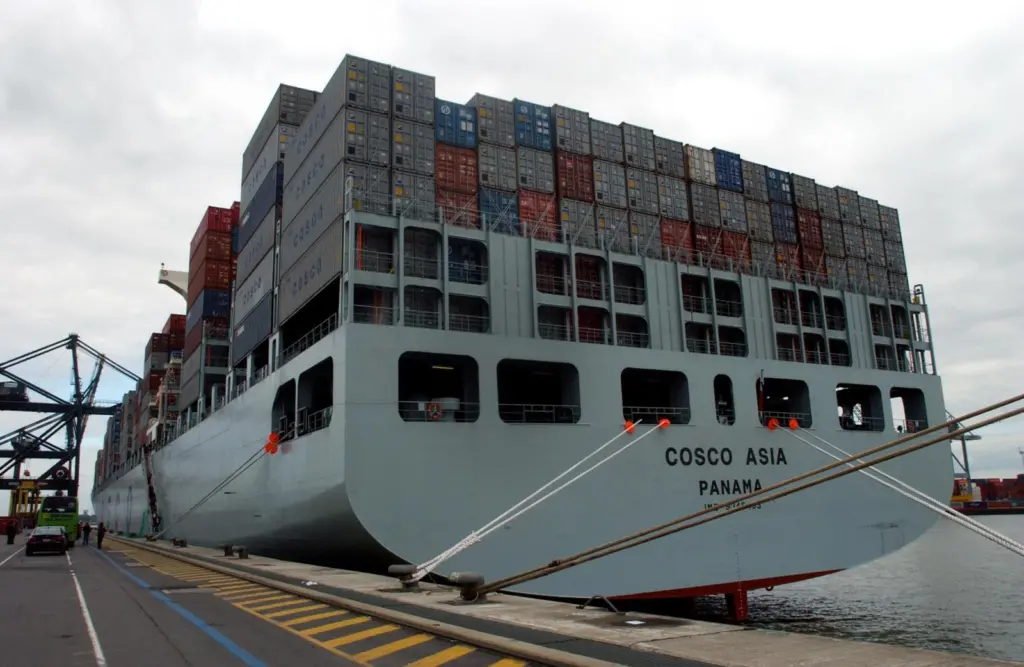
These are heady times for the port giants of the Netherlands and Belgium. Last year, Rotterdam became the first European port to break through the barrier of 400m tonnes of cargo, with a 6.6% increase taking throughput to 407m tonnes. For the first time, more tonnes of containerised cargo – 105m – were transhipped than crude oil, and Rotterdam scored another European first in containers, breaking the 10m teu milestone to reach 10.8m teu, a 12% increase on 2006.
In the first three months of this year, Rotterdam’s throughput was up 6.8% compared with January-March 2007, to 104.6m tonnes.
The Port of Antwerp handled 182m tonnes of cargo last year – a 9.3% increase on 2006, and including a 16.5% increase in containers, to 8.1m teu. Imports of iron and steel were up by 45% to 6.5m tonnes, and ro-ro grew 14.7%.
In the first three months of 2008, volumes were up 3.4% year-on-year, and container volumes were up 6.1%.
At Zeebrugge, total cargo volumes were up 6.6% to exceed 42m tonnes, and containers were up 13% to more than 2m teu.
While Rotterdam and Amsterdam have gained the advantage of hugely increased rail opportunities via the Betuwe Line, Antwerp is set to benefit massively from the deepening of the Western Scheldt – this work finally began in December 2007 and is due for completion at the end of next year.
The deepening will clearly strengthen the competitiveness of Antwerp; seven out of ten ships that currently have to take account of the tide will be able to enter and leave port at any time, while others will have a much wider tidal window. By the end of 2009, the Scheldt will offer tide-independent navigation for ships with a draft of up to 13.5 metres. Around 1,500 of the 16,689 seagoing ships that called at the port in 2007 had to wait for the tide.
Star performers for Antwerp have been the two terminals at the Deurganck dock – one operated by PSA, the other by DP World. In 2006, their first full year of operation, they handled around 800,000 teu between them. A year later, throughput exceeded 1.5m teu – an increase of 89%.
There are headlines away from containers too, of course. DP World Breakbulk is the new joint venture formed between DP World Antwerp and the stevedoring companies Rickmers-Linie and Conti-Lines. Over the next five years, the venture will invest heavily in modernising the common user terminal in the Churchill dock; its partners say they will not act just as a pure operational organisation, but as a full service provider for the flow of conventional freight in Antwerp.
DP World Breakbulk will invest ¢50m ($77.5m) over five years in the Churchill dock, on the right bank of the Scheldt. The terminal has 1.5 km of quayside and 32 hectares of back-up land; a first phase of investment in surfacing, renovating warehouses, building new warehouses and buying new handling equipment, is designed to raise capacity from 1.5m tonnes to 2m tonnes by the middle of this year.
At the Delwaide dock, ITC Rubis Terminal Antwerp is due to start operation of a new terminal for the storage and handling of liquid chemicals. The first phase of building has provided capacity of 110,000 cu m, and there are plans to expand this to 400,000 cu m.
Of Antwerp’s total 182.9m tonnes last year, liquid bulks made up 39.6m tonnes. The port has a total tank storage capacity of nearly 3m cu m spread across a dozen terminals – but demand is rising, says the port – thanks to increasing production in the Middle East, the development and production of new derivatives and European Union (EU) regulations requiring each EU member state to hold strategic oil stocks equal to one quarter of annual consumption.
The ports of Rotterdam and Amsterdam are both shareholders in the Betuwe Line, which provides a 160-km dedicated rail freight link from Rotterdam Maasvlakte to the German border. Opened in June last year, it has no intersections with road traffic and is exclusively used by freight trains.
The Port of Amsterdam has a direct connection on to the Betuwe Line. “The Betuweroute is important for rail traffic going to central and south Germany, Eastern Europe, Italy, Austria and Switzerland,” says a spokeswoman. “The Port of Amsterdam participates, together with Port of Rotterdam and Prorail, in Keyrail, the company that is responsible for operations of Betuweroute.”
Two projects are going ahead at the Port of Amsterdam in order to make the most of the Betuwe Line: a second rail yard in the western area of the port and a second harbour rail connection to the national rail network, both expected to be ready between 2010 and 2012.
At the end of last year, the rail carriers, network operator Keyrail (Betuwe Route) and combined network operator Prorail signed a four-year agreement for use of the line, in which both carriers and rail operators can call each other into account. “If a carrier does not make use of a slot, it will be required to pay a cancellation penalty; and if the rail operator defaults on service delivery, it will pay compensation to the rail carrier,” says Minco van Heezen, Rotterdam port spokesman. “Everyone involved, including the Port of Rotterdam, is pleased with the agreement. The rates do sometimes increase quite sharply – for instance, heavy trains on the combined rail network – but the importance of having clarity and certainty for several years in advance is very highly valued from a commercial point of view.”
In April, Rotterdam reported that more than 80 trains were using the line every week. Tests were carried out during May in advance of a capacity increase and Keyrail expects six times more trains to be using the line by the end of the year. By the end of 2012, the number should reach around 1,000 a week.
The “big one” for Rotterdam is, of course, Maasvlakte 2. Having received the go-ahead for this vast reclamation and development project in October 2006 from the Dutch government, the port still had to make its way through a series of planning procedures. “We expect the opinion of the highest administrative court in September,” says Mr van Heezen. “Dredged material will be in the region by that time, and work will start soon after.”
The first container could, or should, be handled in spring 2013 – the original schedule, he says.
The first phase of work involves building a dyke to contain a new “lake”, within which the new port land will be steadily reclaimed according to demand.
Investments ongoing or planned at the Port of Rotterdam add up to ¢15bn ($26.3bn) between 2007 and 2013.
Liquefied natural gas (LNG)is also a big factor – in December, Vopak and Gasunie made their final investment decision on the new Gate Terminal, an LNG receiving and regasification facility. Meanwhile, the new Lion-Gas LNG terminal, developed and operated by 4Gas, is expected to start operations around now.
“Securing supply of gas is still an issue and the port authority, as well as the government, is putting in a lot of effort to this end,” says Mr van Heezen.
As part of this, a long-term strategic cooperation has been announced by Qatar Petroleum, the world’s largest LNG producer, and the Port of Rotterdam.
Qatar Petroleum, which is planning further developments at its owned Port of Ras Laffan, signed a memorandum of understanding with Rotterdam which will see an exchange of information and experience in the area of port-related facilities worldwide. Rotterdam says it is willing to share its expertise in port management, port development and other fields with its new partner.
“With this cooperation, the Port of Rotterdam wants to strengthen its position as Europe’s main energy port, especially in the supply chain for LNG and associated hydrocarbon products,” says Hans Smits, Rotterdam’s chief executive.
Related Articles
 PORT & TERMINAL NEWS
 EXPANSION & DEVELOPMENT
 PORT & TERMINAL NEWS