![PortStrategy[GreenPort]](https://www.portstrategy.com/wp-content/uploads/2026/09/PortStrategyGreenPort.svg)





Marco Polo grant qualification to get easier ne
More than 420 companies have had financial support from the European Unions Marco Polo fund since its inception almost seven years ago – and rules for unlocking more of the ¢ 450m ($671m) set aside for grants will be made simpler from next year.
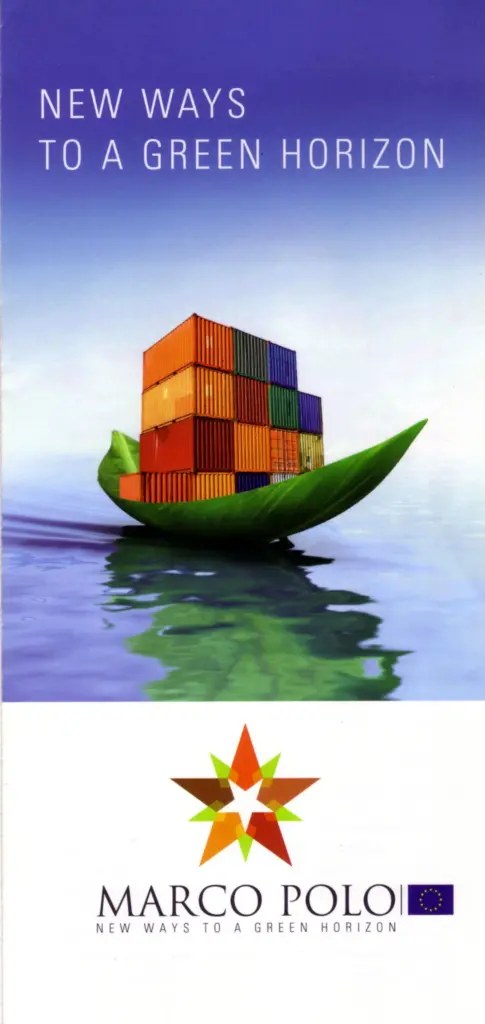
The principle of the scheme is to persuade road hauliers off the road by switching their attention to the potential offered by short sea shipping – while recognising that road haulage is still a major dimension within the logistics chain.
By successfully combining the two, the EU hopes to secure significant economic and social benefits, including greatly reduced CO2 emissions and eased road congestion, estimated at a convenient ¢1bn ($1.5bn), before 2013.
Changes to the rules promise that the hoops through which applicants must jump won’t be so restrictive. Thresholds for the value of the business involved are to be lower, as are the road mileages and tonnes being squeezed out of the system. Equally the rules are to be modified to include empty boxes on the move, which hadn’t previously been the case, since roads still become congested if boxes are full or empty.
“We believe lowering the qualification criteria will encourage smaller companies to become involved,” said Cristobal Millan de la Lastra, Marco Polo programme co-ordinator with the EU’s Directorate-General for Energy and Transport.
He acknowledged that take-up within the scheme had been thin during 2008, with few proposals put forward. But in the first nine months of 2009 the number had increased by half, with the promise of more to come as a result of next year’s rule change.
A call for proposals goes out at the beginning of every year, which is the signal to start to bid for a share in the ¢60m ($89m)annual budget. Proposals have to be capable of viability by the end of the grant period, and must involve organisations from and of the 27 EU member states, Norway, Iceland, Leichtenstein or Croatia.
The Marco Polo II conference was held in Gdansk towards the end of September. Opening the conference Jan Kozlowski, Marshall of the Pomeranian Voivodship, said Marco Polo was the only alternative to traditional road transport due to the need to protect the environment and keep roads safe.
The EU believes in it as a powerful tool to reduce road congestion and encourage environmentally-friendly transport modes – like short sea, inland waterways and rail. Running it is in the hands of the EU’s Executive Agency for Competitiveness and Innovation (EACI), which adminsters the application procedure. Further information about how to explore the possibilities of Marco Polo are available, in the first instance, at http://ec.europa.eu/marcopolo, or via email to eaci-marcopolo-enquiries@ec.europa.eu.
Related Articles
 PORT & TERMINAL NEWS
 EXPANSION & DEVELOPMENT
 PORT & TERMINAL NEWS