![PortStrategy[GreenPort]](https://www.portstrategy.com/wp-content/uploads/2026/09/PortStrategyGreenPort.svg)






Marseilles polls workers over plans
Marseilles-Fos handled 94m tonnes of cargo in 2004, a 1.6% drop on the previous years but container throughput rose 10% to 916,600TEUs. The total included 593,600TEUs at Fos and 323,000TEUs at Marseilles.
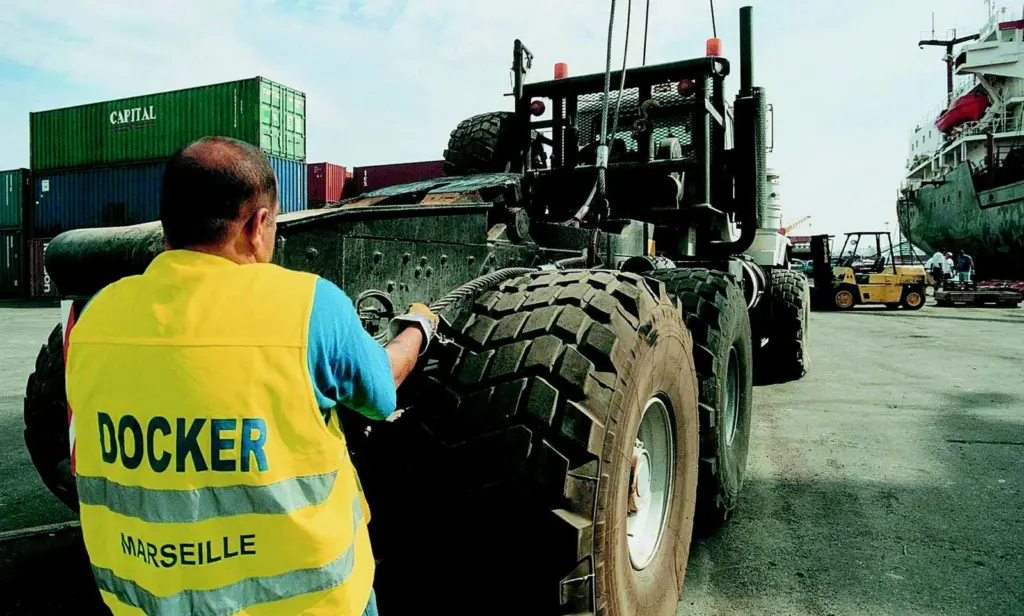
The Fos increase averaged 14% over the first nine months of the year but was pegged back in the last quarter by industrial action over plans for new working agreements in preparation for the proposed Fos 2XL terminal development.
The port is to stage a referendum among its 1,500 workforce to seek support for its five-year,¢540m development strategy which it says risks being undermined by an industrial dispute involving just 200 port authority personnel employed as gantry crane drivers at Fos container terminal. The referendum has been prompted by deadlock over new working agreements drawn up ahead of the proposed Fos 2XL container terminal development, a crucial element of the investment programme that is due on stream by 2008.
The crane drivers went on a go-slow at the end of last year in protest at the authority’s moves to end a traditional ‘double payment’ system under which their regular salaries are boosted by unofficial incentive pay from the private stevedores who run container handling operations.
Marseilles points out that it is the only port in France where the so-called ‘baksheesh’ system still exists and labels the additional payments as “an inequitable brake on social progress within the enterprise” that contrasts with the profit sharing scheme available to all personnel.
The authority wants to regularise the drivers’ pay and working hours in line with international standards and the principle of collective agreements covering the rest of its employees – and is insisting on a solution before concluding talks with Fos 2XL’s designated private operators.
Management has stressed that the development programme will create 8,500 new jobs – in addition to the 40,000 currently generated directly and indirectly by the port – through schemes that also include the Fos Distriport logistics hub, a second methane terminal and a new passenger terminal. The authority adds that it is at a new turning point in its development and does not want to see a repeat of the 1980s when it lost its rank among container sector leaders and as Europe’s second-biggest port.
In other news, the port is introducing a sliding scale of tariffs in 2005 based on the level of its earnings from 22 core activities – the greater the profitability, the lower the rate, and vice versa. On average, tariffs will rise by 1.7% – below inflation and in line with other French ports.
The main adjustments relate to charges for the use of cargo handling equipment, which have been well below market prices. The PMA says the new strategy is designed to balance the return on its activities by 2009 and guarantee an ambitious investment programme of almost ¢540m over the intervening years.
Related Articles
 PORT & TERMINAL NEWS
 EXPANSION & DEVELOPMENT
 PORT & TERMINAL NEWS