![PortStrategy[GreenPort]](https://www.portstrategy.com/wp-content/uploads/2026/09/PortStrategyGreenPort.svg)




No fat to spare on TEN-T funding
There’s something to be said about the political and practical impact of the application of funds such as the Trans-European Transport Network’ (TEN-T) initiative.
Isabelle Ryckbost of the European Federation of Inland Ports points out that new TEN-T plans will mean a change of priorities and that a ‘core’ network should be gaining most of the funds – and that rail and waterway links, rather than roads, will be the priority. However, Ms Ryckbost explains that being part of the core network “isn’t just a wish list” as it comes with some serious obligations while providing, normally, only around 20% of the investment.
Certainly Eddy Bruyninckx of Antwerp, Jens Meier of Hamburg and Hans Smits of Rotterdam port authority say that the European Commission funds shouldn’t merely be scattered across the 27 EU Member States but actually invested in the areas where the largest volumes of freight are concentrated – the main routes from the seaports into the hinterland – in order to leverage the efficiencies of the existing corridors.
Even though this could be seen as a large slice of self interest and a willingness to widen the gap between the haves and have nots, they do have a point. As Annik Dirkx of Antwerp points out, “the cargo goes where the economic heart beats”. Beyond the fact that bringing Southern Europe up to parity would take much more investment, she says, the first question is, “what exactly are we trying to achieve?” Ms Dirkx argues the southern ports should be looking at their natural hinterland rather than one hundreds of kilometres away. ”Let’s focus on the region where the cargo is… rather than trying to create artificial corridors,” she says, pointing out that the southern ports still benefit from structural initiatives that amount to sums far greater than the TEN-T funds.
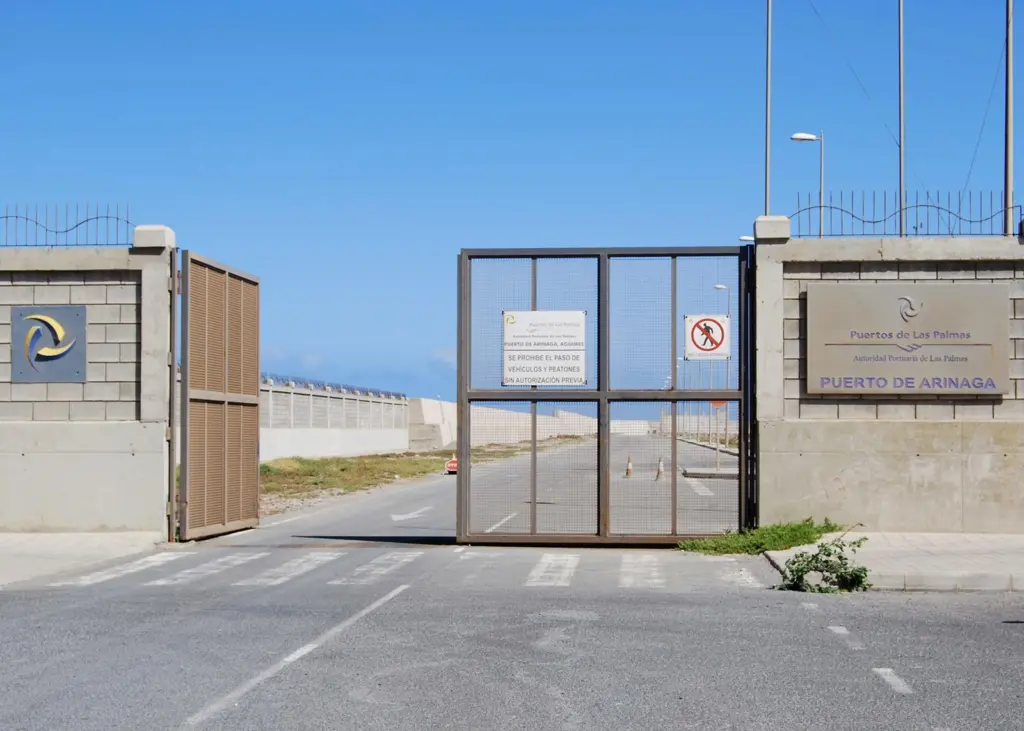
Further, a recent EC auditor’s report shows that European funded public port finance – focused mostly in the south – was squandered on projects at the ports of Arinaga and Campamento in Spain and Augusta in Italy which were never completed. There are also, they say, other projects which will now need considerable further investment before they can be put into effective use. The auditors also concluded that none of the audited regions and countries had a long-term port development plan in place and no assessment of transport needs had ever been carried out to justify winning EU funds.
The findings will raise questions and only add fuel to the fire – and power to Antwerp, Rotterdam’s and Hamburg’s arguments.
Related Articles
 PORT & TERMINAL NEWS
 EXPANSION & DEVELOPMENT
 PORT & TERMINAL NEWS