![PortStrategy[GreenPort]](https://www.portstrategy.com/wp-content/uploads/2026/09/PortStrategyGreenPort.svg)




Northern lights
Sustained recovery is in reach for Scandinavia, explains Stevie Knight
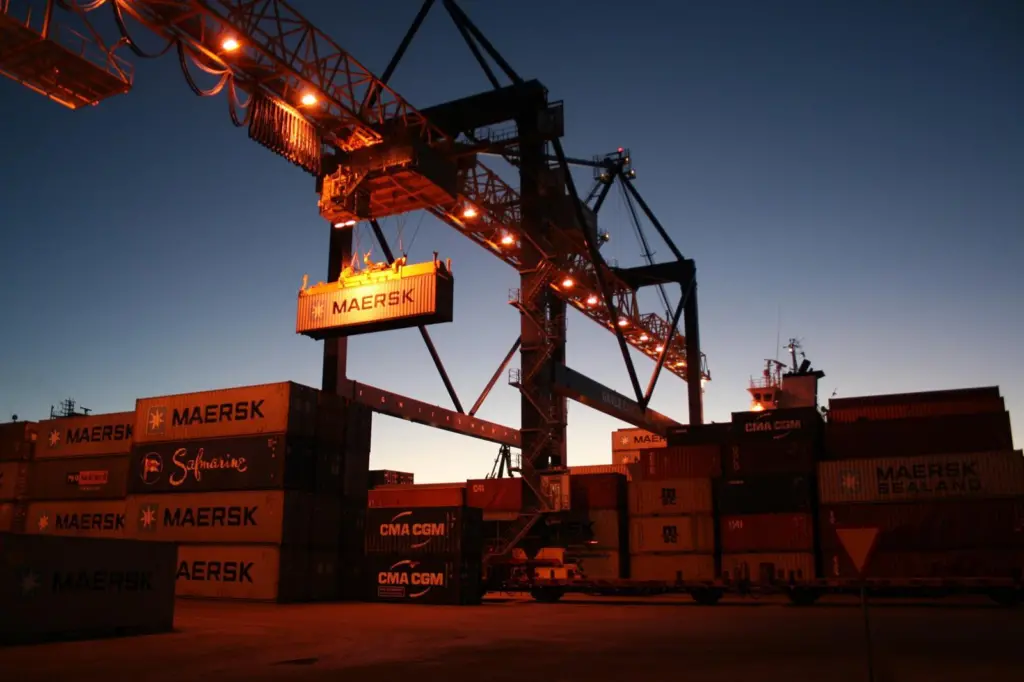
Norwegian ports had it all: a booming economy and a 35% container rise in just five years. But in 2015 the sudden plunge of the oil and gas market plucked Norway from its trajectory and only government support limited the container cargo hit to a drop of 4.5%. Although ports like Bergen and Stavanger picked up a new revenue stream from offshore vessel layups (which soared from zero to over a hundred inside a year), the drop came as a shock.
According to Arnt-Einar Litsheim of the Norwegian Ports Association, the economy has now “stabilised” somewhat but he’s “not expecting a return to the old days”. Oil revenues are under a half of what they were and Oslo’s box volumes for 2016, for example, were still 12% down on 2014’s nearly 3m teu.
But despite the turmoil, Norway isn’t turning its back on its famously high-tech, eco-friendly agenda. Rather, it is investing in helping its ports position themselves for the future. Mr Litsheim’s colleague, Johanne Solheim explains: “There are now more than 50 shore power projects underway in both large and small ports. It’s not that ships are demanding it yet, but the idea is once the landside bottlenecks are removed, they will follow.”
This ‘build it and they will come’ approach “is partly government strategy to keep the economy rolling” she says, but admits it’s a gamble and needs consistency – which hasn’t always been Norway’s strongest point. She points out a lot of publicly funded infrastructure was put in to support LNG and 16 or so terminals acquired bunkering facilities. Some like Narvik and Bodø looked at local industry collaboration to get a better, combined deal on LNG prices. “Then the government focus switched toward electrification and zero emission ships”, she said. “People have found that frustrating.”
Road rage
Despite its clean air policies, Norway has a running sore on the roads. “There’s about 2,500 trucks every day crossing over the border from Sweden to Norway,” says Mr Litsheim, ferried in on any one of the several lines from places like Rostock and Puttgarden in Germany’s north to facilities like Trelleborg in Sweden before driving into Norway.
The air quality, congestion and, lastly, fatalities are cause for concern. This isn’t just due to pollution – it’s the weather: “Several times a week through the winter we have an accident because of the road conditions,” says Mr Litsheim.
It’s not going down too well in Norway, or for that matter, Sweden. In response, both countries are looking at hefty rebate schemes to see if this can leverage a modal shift.
Although there are a number of smaller port facilities on the doorstep of local consumers, long shorelines create their own challenges. As Mr Litsheim points out, “if you are going all the way up the coast with containers and then coming back empty, it is just not that economic”.
In Sweden and Finland, the export balance usually comes in from the forests, but Norway’s might once again be found in the ocean. Fish feed provides most of the bulk handled at the port at Karmsund which is growing apace with the fish farming industry; there’s also some thought being given to containerising live stock like salmon for high-end markets like Paris.
However, the ports will have a fight on their hands when it comes to grabbing cargo from the roads. As Mr Litsheim points out “the trucks from eastern Europe are quite cheap”; in fact it’s a third more to take a container from Gdynia to Oslo by sea. Further, Ms Solheim adds that the shippers “are prioritised around the road route, with distribution centres and so on” which means that any support will, inevitably, need to take the long view.
Innovation driver
Of course, Scandinavia’s status as an innovation hotbed can’t be ignored: dangling truck pollution issues in a pool of hungry R&D developers was bound to throw up a creative answer. The autonomous Yara Birkeland has been created to move fertiliser from one of Yara’s facilities to the coastal terminals in Brevik and Larvik as an alternative to 100-plus daily truck journeys. This high tech solution is clean, green – and grist to the economic mill.
Interestingly, autoship developments are being echoed in Finland for similar reasons. It too suffered a painful, economic contraction, only recently shrugging off its label as “the sick man of Europe”. It, too, had a lot of intellectual investment looking for a home since Nokia’s decline and it too has mopped up some of this by looking at what unmanned solutions can do for the supply chains.
The technology push seems to be working: alongside a renewed shipbuilding industry, a number of start-ups and medium-sized high-tech businesses are boosting the economy which now seems to have turned the corner. The ports themselves have benefited from the rebound; Helsinki’s figures for the first half of this year were 12% up on last year.
While it’s pretty obvious that few Scandinavian ports demand that degree of innovation on throughput basis alone, there are other reasons to consider high-tech solutions, says Christian Blauert, chief executive of Yilport.
Yilport, which took over Oslo’s Sjursøya Terminal in 2015, is aiming squarely at automation, although Mr Blauert says it’s not the “all-singing all-dancing” variety found in Rotterdam or Hamburg as the facility is, frankly, too small with a present limitation of ships around 4,000 teu. But Mr Blauert explains that semi-automation “offers some intelligent features” including remote control RTGs; Yilport and Kalmar are presently collaborating on a project that should soon take the drivers out of the cab.
“It’s not that Oslo has been singled out,” he says, “but Norway’s manning costs means that if automation is not feasible in Norway, then it’s not feasible anywhere”. So, prove it works “and it’ll be rolled out across other terminals”.
Labour woes
Labour is also proving tricky in Sweden. The 18-month-long conflict at APM Terminals’ Gothenburg hub around collective agreements has resulted in blockades, strikes and more recently, substantial layoffs. As the port is responsible for around a third of Sweden’s foreign trade, according to the operator the regular paralysis is hitting exports.
Understandably, it has been losing customers: east-coast facilities have recently taken MSC ships from the beleaguered port. Despite being across the border, Oslo has also gained a trickle of diverted cargo. While Mr Blauert admits this is pretty minimal and the loss won’t cause hardship when Gothenburg sorts itself out “it gives us a chance to show Oslo is not so expensive, that we can provide a quality alternative”. The idea might stick, even if the present cargo doesn’t.
Finally, although Mr Litsheim is wary about the overall impact of full, autonomous transport on jobs, he believes one way or another “it’s coming”. And ports do stand to gain something from the development: for example, Swedish company Einride is to start an unmanned route between Gothenburg and Helsingborg by 2020. According to Mr Blauert, the idea could come off the highway: “You have auto-driving vehicles on the roads, why not use that technology on terminal trucks? After all, it’s a much slower environment.”
NORTHERN PORT’S FOCUS ON GROWTH
On the Gulf of Bothnia, just 170 kilometres away from Stockholm lies Yilport’s Gävle facility. Although it recently picked up some MSC ships lost to Gothenburg, with 500,000 teu capacity planned by end of 2018 and 700,000 by 2020, Gävle’s is more focused on Stockholm’s northerly cargo. In fact, it’s even acquired the Stockholm Nord rail hub at Rosersburg and is extending the electric link from the main rail network right into the port.
Gävle’s already getting results, ending last year up 18% over 2015 with just over 200,000 teu throughput. Alongside this, it’s gained some interesting bulk: Yilport Nordic is to handle all of Stora Enso’s Skutskär mill output from 2018, around 530,000 tonnes of pulp a year. Low box tariffs have prompted it to start stuffing containers with wood products and Yilport’s even created a local freight station for the job. Yilport’s Christian Blauert notes that containerising bulk is “a growing trend”.
Gävle’s also just got the go-ahead for a new 320 metre quay just to the east of its existing box facility.
Interestingly, Mr Blauert explains that Yilport isn’t stamping a ‘one-size-fits-all’ identity on its terminals, but is remaining sensitive to what’s already working whether that’s management or, indeed, equipment. For example, the Swedish facility is not implementing the usual RTG/quay crane solution, but will be “mirroring” the first terminal with its wide-span gantry operation.
Related Articles
 PORT & TERMINAL NEWS
 EXPANSION & DEVELOPMENT
 PORT & TERMINAL NEWS