![PortStrategy[GreenPort]](https://www.portstrategy.com/wp-content/uploads/2026/09/PortStrategyGreenPort.svg)






Polish pairs Baltic ambitions
The Baltic is a hotbed of construction and development, as the regions ports battle to house increasing domestic container volumes. Alex Hughes reports on the latest progress
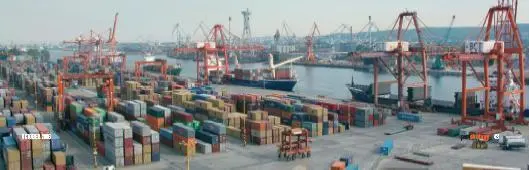
The Polish port of Gdynia stepped up a gear on June 17 with the official inauguration of its second box handling facility, Gdynia Container Terminal (GCT), whose majority owner is Hutchison Port Holdings.
GCT, which received its first vessel on March 24, is a partially renovated general cargo terminal, on which $30m is being spent. Current capacity is 150,000 teu, which will rise to 400,000 teu as more of its projected 550m quay is brought into service.
With alongside draught of just 10.5m, GCT has modest initial aspirations of simply boosting feeder trade between Poland and Hamburg, Bremerhaven, Antwerp and Rotterdam. However, an upgrade to regional hub status is mooted, since the facility could both handle larger, 4,000 teu vessels at its present site, while also boosting annual throughput to 750,000 teu if required.
Gdynia Port as a whole has been a significant beneficiary of rising traffic throughout the Baltic region.For 2002,2003 and 2004,it reported throughput hikes of 16%, 22% and 22% respectively. Last year’s 6% growth, which saw traffic volumes top 400,000 teu for the first time, was a little more manageable, although the arrival of GCT could heat things up considerably over the coming months.
To date, it has been International Container Terminal Services Intl’s 600,0000 sq m Baltic Container Terminal (BCT) that has benefited most from the local box boom, which has resulted in no less than 78% of all current Polish box traffic now being handled by the port.
Nevertheless, the upper size of vessels calling remains just 1,300 teu, despite the capability to handle up to 4,000 teu mainline vessels, although productivity of 25 moves-per-crane-hour remains tempting. But Gdynia has good reason to cast worrying glances towards neighbouring rival Gdansk, whose new state-of-the-art container terminal becomes operational in June 2007.The privately built facility will consist of 320,000 sq metres of reclaimed area, offering 710m of linear quay with alongside draught of 13.5m- 16.5m, not to mention key ro-ro berthing facilities. According to Gdansk DCT chief executive James Sutcliffe,the $200m Phase I development will equip the terminal to handle at least 500,000 teu, while a second expansion phase could eventually boost this to 1m teu.
Traffic projections for the first three years suggest throughput of 60,000 teu-80,000 teu, growing to 200,000 teu by the end of the third year. This will be generated mostly by Poland’s domestic market, which is currently served by feeder, short-sea or ro-ro vessels of little more than 1,200 teu capacity.
Nevertheless, the decision to acquire three Liebherr post-panamax quayside gantry cranes capable of spanning 19 rows of stowed containers clearly hints at DCT’s broader ambitions to serve a much larger hinterland, which encompasses 300m people. Mr Sutcliffe confirms that part of the terminal’s potential market is in Western Russia, Belarus and the Ukraine, with Gdansk’s year-round deepwater ice-free facilities having the potential to provide a vital bridge to markets in Western Europe.
Polish ports are not alone in upgrading facilities with the burgeoning regional market in mind. However, while box traffic remains interesting, ports in the Baltic States seem somewhat keener on enhancing lucrative dry bulk infrastructure, given a perceived capacity shortfall in this area in neighbouring Russia.
Riga’s Baltic Container Terminal is seeing steady growth in throughput. This rose 15% in 2004 and 10% last year on reaching 166,851 teu, with managing director Aldis Zieds forecasting a further 10% gain in 2006. However, this is still well below the engineered terminal capacity of 325,000 teu.
Muuga Container Terminal in Estonia is going ahead with its second phase development, which will boost capacity from 150,000 teu to 500,000 teu, as throughput last year reached 127,585 teu, up 13% over 2004.In addition to new berths,an industrial area and a new breakwater construction are also planned.
Finally, at Klaipeda sea port in Lithuania, traffic volumes are now beginning to slow, having grown by 65% and 47% in 2003 and 2004 respectively, with 23% reported last year as the box terminal logged throughput of 214,000 teu, dropping to just 1.9% for the half year to June 2006.
Related Articles
 PORT & TERMINAL NEWS
 EXPANSION & DEVELOPMENT
 PORT & TERMINAL NEWS