![PortStrategy[GreenPort]](https://www.portstrategy.com/wp-content/uploads/2026/09/PortStrategyGreenPort.svg)






Room for investment
“Investment is a difficult question for those managers sitting in a European port,” says Richard A Butcher, group marketing and sales director of IMS UK.
“At present, they will argue their case until they are blue in the face: yes there will always be a demand for ports in the Southern markets, but the dynamics of the business has and will continue to change.”
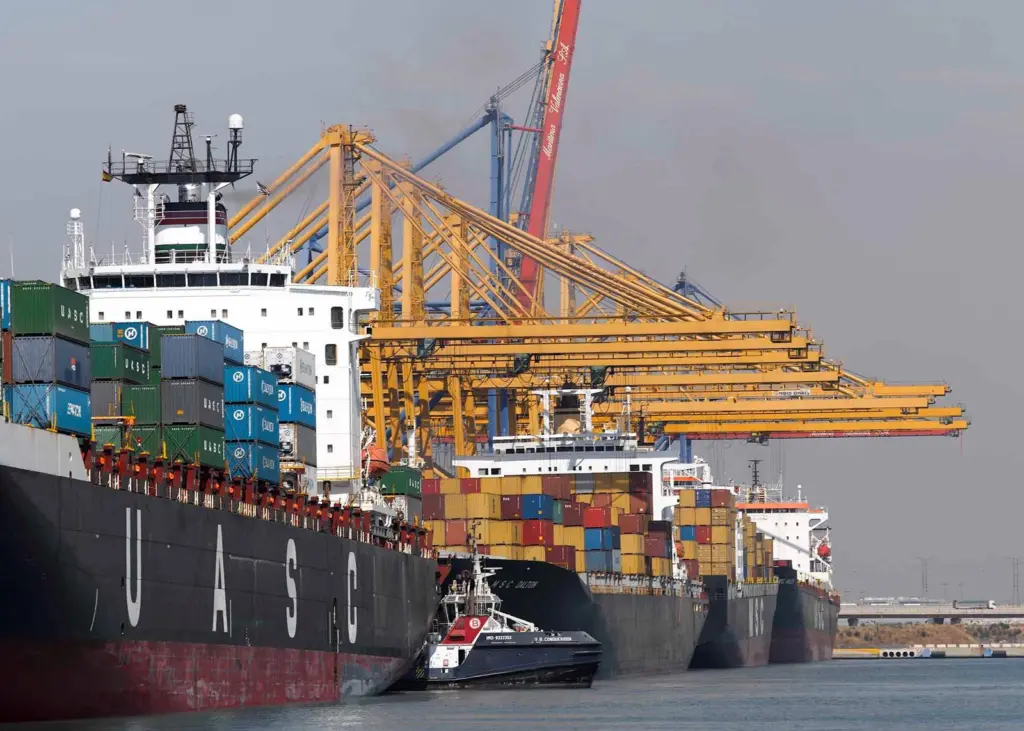
So which Southern European countries have seen investment interest? In terms of container terminal business, Spain has seen the most growth – with attention spotlighted on the terminal of Algericas. Last year, Hanjin Shipping committed to a new green field site which represents an investment of €189m ($273m).
“This means that the port can now handle 1.5m teu,” says Mr Butcher. “Further investment from the Korean company of €209m ($302m) is expected between now and 2015.”
Algericas aims to reclaim the mantle of busiest container port in Spain from Valencia, since it will no longer be restricted by lack of space, with the new Isla Verde Exterior terminal.
The largest user of Algericas, Danish container company Maersk has also indicated that it will divert some of its business across the Strait to the new terminal in Tangiers, because of cheaper processing costs in the city. Mr Butcher adds, however, that is likely to be more than compensated for by the new terminal.
In Italy, there has been some level of interest for investing in ports. Mr Butcher says that the Strategic Container Terminal in Trieste is garnering potential interest as a result of its strategic location into Eastern Europe and its close proximity to Italy’s main cities, Milan and Turin. It also offers potential access into the Eastern Med regions and has good rail and road connections into the Northern European heartland.
Another Italian example of investment is the terminal at Gioia Tauro, a premier transhipment hub in the Mediterranean. Its location means that there is little deviation for vessels travelling between the Suez Canal and the Straits of Gibraltar. It is also at the heart of a feeder network which spans the Mediterranean, and is also directly linked to the Italian highway and railroad systems.
Mr Butcher concludes: “The Global Terminal Groups will stay focused on their core client base and although they have large capital investments tied up in their fixed assets, they can spread these costs across their global reach so that their financials can reflect better results than those individually managed and owned – thus generating the potential for raising further capital investments.”
Related Articles
 PORT & TERMINAL NEWS
 EXPANSION & DEVELOPMENT
 PORT & TERMINAL NEWS