![PortStrategy[GreenPort]](https://www.portstrategy.com/wp-content/uploads/2026/09/PortStrategyGreenPort.svg)





Rotterdam sees mixed 2017 results
The Netherlands Port of Rotterdam recorded mixed results for 2017, witnessing growth in areas including total cargo throughput, turnover and investments by its port authority while also seeing a fall in net profit and certain cargo volumes.
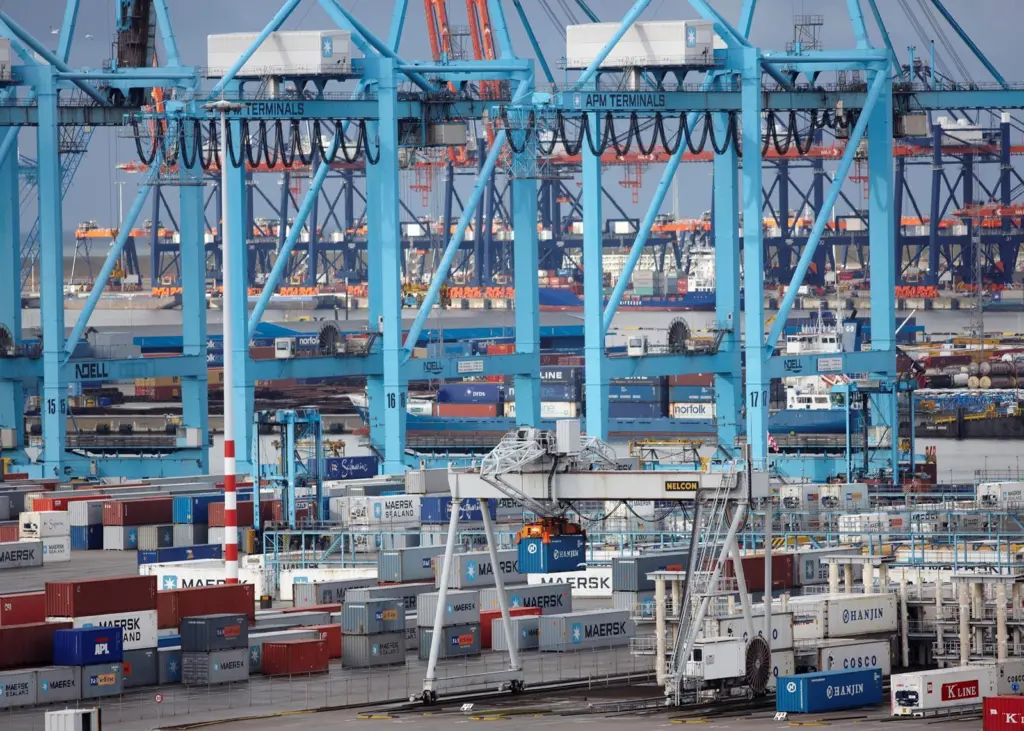
According to a release, 2017 saw the port return to the growth trend observed prior to 2016, with total cargo throughput increasing by 1.3%, while total tonnage went up from 461m to 467m.
Additionally, the Port of Rotterdam Authority’s turnover was €712.1m last year, marking a 4.6% hike compared with 2016.
Furthermore, investments by the authority increased by 18.9% to €213.8m, while land leases increased by a tenth to €377.3m — with the port putting this latter result down to new contracts and indexation or existing contracts being renewed at revised costs.
Other income for the port rose by 8.7% to €30.9m.
With regards to specific cargo volumes, container throughput went up by 10.9% to 13.7m teu, ro-ro grew by 6.2% and other breakbulk rose by 9.8%.
Not all ideal
However, the port’s gains were also matched by falls, with net profit decreasing 16.6% to €187m— with the port attributing this to the imposition of corporation tax on its authority from the start of last year.
The revenue from port dues also went down slightly — by 1.7% — to €303.9m because of an average price-per-tonne drop and a discounts increase, the port said.
The port’s operating expenses went up by 9.3% to €261m.
Liquid bulk volume dropped 7.3%, while dry bulk went down 2.6% to 80.2m tonnes.
Port of Rotterdam Authority anticipates a further increase in throughput volume in 2018, with container sector-growth less than that of 2017.
“The Port of Rotterdam has had a good year,” said Allard Castelein, Port of Rotterdam Authority chief executive. “Led by the container sector, goods throughput rose to a record level.
“The container sector is particularly important because it plays an essential role in creating added value such as employment in the port and the hinterland.”
Mr Castelein also said that he was pleased with the high amount of investment by the port’s authority and that the port could be happy with the pace at which it is implementing its energy-transition and digitalisation plans.
Related Articles
 PORT & TERMINAL NEWS
 EXPANSION & DEVELOPMENT
 PORT & TERMINAL NEWS