![PortStrategy[GreenPort]](https://www.portstrategy.com/wp-content/uploads/2026/09/PortStrategyGreenPort.svg)






RUSSIAN COAL EXPORTS ON FIRE
Coal reserves in Russia are generally agreed to be some of the best currently available, despite having problems with contamination from iron. Demand is nevertheless growing, with production increasing in 2003 by around 12% to 285m tons. Alex Hughes investigates.
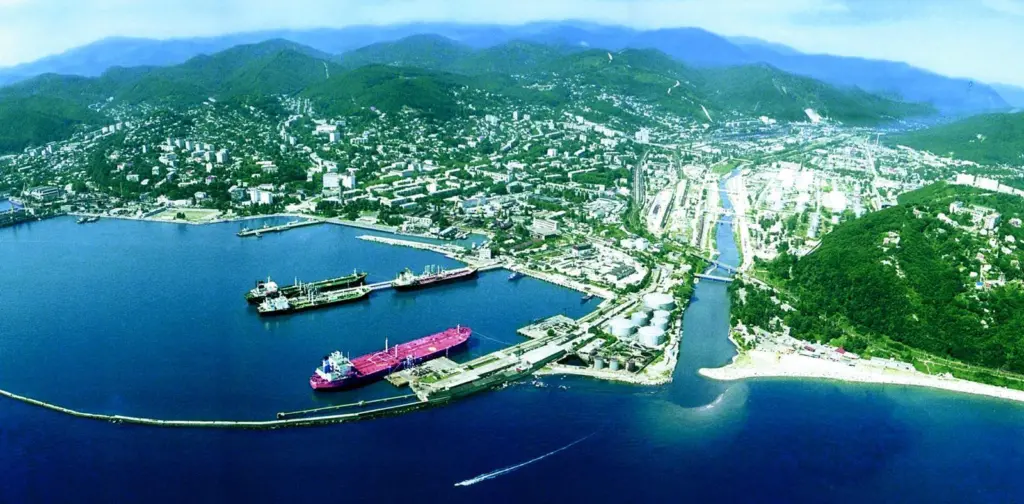
Producers in western Russia have focused much of their attention on the highly lucrative markets that exist in Germany but the ongoing problem remains how to get the coal to the end user when domestic ports clearly lack the capacity to handle the vast quantities involved.
Amsterdam and Rotterdam have long marketed themselves as natural gateways to Germany and have understandably tried to grab a share of what could potentially be the highly interesting movement of coal to power stations in northern Germany. According to Piet van Poelgeest of Rotterdam stevedoring company EBS, 70,000dwt80,000dwt vessels are now being deployed on shuttle services bringing Russian coal from such diverse regional ports as Murmansk, Spitsbergen, Riga and Ventspils to Holland.
Little screening of Russian coal takes places at its point of origin, he notes, effectively forcing importers to ensure that incoming consignments undergo a de-contamination process to extract unwanted traces of iron. To do this, EBS makes use of magnetequipped conveyors, which effectively weed out impurities.
“This system was in place before we began dealing in Russian coal, although we have increased the number of magnets on the belt system to better cope with Russian consignments, ” explains Poelgeest. “Our particular advantage is that our conveyor system can remove iron deposits either when transhipping from a mother vessel to a barge, or if we are bringing the coal ashore to add to our stockpile. Furthermore, if our detection system spots iron ore in a coal consignment, the whole conveyor can be stopped and unwanted elements removed.”
To date, quantities handled by EBS have been relatively modest, with around 80,000 tonnes passing through the terminal in 2003, although Poelgeest anticipates an improvement of up to possibly 200,000 tonnes in 2004.
A HIGHLY COMPETITIVE MARKET Baltic State ports, which have historically played a pivotal role in rotating Russian coal out to regional users, are now investing heavily to ensure they remain the gateways of choice in what is becoming a highly competitive market. The Port of Tallinn for example is already an important player, handling 1.83m tonnes in 2003, up from 1.17m tonnes in 2002. Consignments arrive at the port by rail where they then pass into the competence of two main stevedoring companies:
Stivis, which operates in Muuga Harbour, and Petromaks Stividori, which is located in Paljassaare Harbour.
Stivis currently handles coal traffic in excess of 1m tonnes annually.
It also undertakes grading of coal in accordance with fractions requested by customers and can do this at a rate of 1,000 tonnes per day. The terminal area (including a covered warehouse of 5,200 sq m and open storage of 44,500 sq m) is equipped with 10/20t and 16/20/32t cranes.
Stivis can accommodate and handle five vessels simultaneously, although draught is limited to 10.5 metres. Meanwhile, in Paljassaare Harbour, where Petromaks operates, the draught is a shallower 9m.
NEW TERMINAL IN MUUGA However, new facilities in Muuga Harbour are due to come on line in May 2005, when a dedicated coal terminal opens. The project, which is being financed wholly with Estonian capital, is scheduled to reach its design capacity of 5m tonnes in 2006. The two main promoters are AS Coal Terminal and Estonian state company AS Tallinn Sadam, although Russia’s second largest coal mining company, Kuzbassrazrezugol, which annually produces 35m tonnes of coal from 13 mines, of which 35% is exported, is also a key component in the project. It signed a contract in September 2002 guaranteeing to route a minimum level of coal exports through the new facility. A separate management company, AS Worldwide Invest, will own the terminal, which will have required _38.3m in infrastructure spend, with matching funding anticipated in terms of superstructure spend.
In terms of product handling, the terminal will be capable of unloading up to 20 coal wagons or 1,800 tonnes per hour. Storage will take place at a 750,000 cu m stockpile, while three vessels ranging in size from 20,000dwt to 120,000dwt will be able to dock simultaneously at the quay, which has an alongside draught varying between 11 and 17 metres. Ship loading and stockpile equipment is being provided by Thyssen Krupp Fordertechnik.
The decision by Kuzbassrazrezugol to commit major shipments of coal to the new Estonian project came as a huge surprise to the port of Ventspils in neighbouring Latvia, which had put together a reputed war chest of some $20m to fund a rival project, which depended totally on output from the huge Russian coal producer.
Kuzbassrazrezugol, oddly, also has a stake in a new domestic coal port terminal under development at Ust-Luuga, some 125miles south west of St Petersburg, where construction of dedicated coal handling facilities began in February 1997. Although being built by rival producer Rosterminalugol, the Russian government also holds a vital 50% in the project. The eventual capacity should be in the region of 8m tonnes.
Riga also intends to remain a major player in the Russian coal export market. It has two stevedoring groups vying for the traffic on offer. Strek shifted 2.5m tonnes of export coal in 2003, compared to 2.17m tonnes by rival Riga Central Terminal, although forecasts throughput of 3.5m tonnes for 2004.
Strek, a joint venture between Latvian, Russian and French interests, first began trading in 1991 and soon built up an annual trade of around 900,000 tonnes of export Russian coal from producers in the Kuzbas region. However, inadequate facilities resulted in the loss of much of this trade and prompted a redesign of the terminal with paved open storage areas of 25,000 sq m, new access roads and better technology, including a coal crusher.
Nowadays, the two-berth terminal can accommodate vessels up to 40,000dwt, although draught is limited to 9.3m-11m. Director General M.Ganev estimates that 12,000 tonnes of coal can nowadays be loaded during any 24-hour period.
BLACK SEA OUTLETS In terms of Black Sea outlets, Russia’s second largest port of Tuapse is the major player, functioning as an outlet for export commodities from the south and south-east of Russia, as well as Donbas, Northern Caucasia, the Southern Urals and Western Siberia. Bulk commodities are handled at the Tuapse Commercial Sea Port area, where coal is concentrated on the Broad Mole at berths 10 and 11. The former is 180 metres long with an alongside draught of 11.5 metres, while the latter is both longer, at 191 metres, and has a deeper draught of 13.5 metres. 24,600 sq m of open stockpile space is available.
According to port spokesperson Olev Drozdov, coal is shipped into the port by rail with a 5.2km spur connecting the port with Russia’s main trunk route network. Vessel size at the coal berths can vary from 9,000dwt to 19,000dwt.
“Exports of coal are continuing to rise, ” notes Drozdov. “In 2001, throughput amounted to 1.77m tonnes, increasing to 2.27m tonnes the following year and 2.78m tonnes in 2003. Our main markets are to be found in the Near or Far East, although demand from markets in China, for example, has no real effect on our activities here.” Main regional rival is the Ukrainian port of Yuzhny, which reported a record throughput of 3.54m tonnes in 2002, while some Russian coal is exported through Izmail, which also handles indigenous exports.
THE CHINA FACTOR On Russia’s Pacific coast, domestically produced coal competes for overseas markets in the Asia Pacific region with highly competitive rival mining groups in neighbouring China. However, Chinese mining companies appear to be even more desperate to find available terminal capacity than their Russian counterparts. Indeed, recent industry reports note that officials have reportedly approached authorities in Russia requesting permission to buy into established privately owned ports at Posyet and Zarubino. Their aim is to take control of the ports on long-term leases.
Negotiations are said to be “ongoing”, but the fact that these ports would then actively compete for the same foreign coal markets as those currently wooed by Russian producers throughout the Asia Pacific region would seem to be something of a sticking point! Posyet, for example, is controlled by the Moscow-based MDM Group (65%), which intends to increase facilities there to enable other group companies to push ever larger consignments of export coal through the port. Indeed, while capacity was effectively doubled in 2002, MDM is now seeking additional investment to boost throughput still further.
Meanwhile, the port of Zarubino, which is controlled by Universe Holding, is being targeted by Chinese exporters, which are seeking a 49-year lease. However, while the majority stake holder is said not to be averse to joint ventures with cross-border rivals, it remains highly dubious about the prospect of ceding long term control of what could eventually turn out to be a highly strategic facility.
However, the regional powerhouse in the Russian Far East remains the port of Vostochny. Port authority press secretary Alex Dovbish explains that total coal throughput at the port in 2003 reached 12.07m tonnes, down from 13.48m tonnes in 2002. Of this, 11.18m tonnes were handled by the specialist Coal Terminal, which had accounted for 12.69mt the previous year. “The main export constituent of Vostochny is coal, ” emphasises Dovbish, adding that a downturn in demand in its crucial Asia Pacific coal markets had resulted in a 12% decrease in trade at the Coal Terminal, which mainly handled output from the Kuzbass coal producer.
“Significantly though, we saw an increase of 30% in total traffic at the port during January 2004, when coal traffic rose by 15% from 748,000 tonnes to 860,000 tonnes, of which 848,300 tonnes was for export.” Dovbish claims that the throughput of coal in 2002 actually exceeded the terminal’s nominal capacity of 12.6m tonnes, while a record daily volume of 108,000 tonnes was achieved during October 2003. “Productivity at the Coal Terminal depends on the interaction of all transport modes involving the railway company, consignor and consignee, ” insists Dovbish, who nevertheless emphasises that the port has every reason to be proud of its recent achievements in this area.
Part of the reason for its success is derived from the level of automation that has been introduced, which Dovbish claims to be now around 99.8%. A new IT system now oversees discharge of coal onto unloading conveyors to ensure that coal is evenly distributed. “The system was designed by the Australian company Famako, ” says Dovbish. “Although similar systems are not uncommon in Europe, ours is unique from Primorye to the Urals.”
Export coal arrives at the Coal Terminal by rail. It is not uncommon for a staggering 800 rail wagons a day to be unloaded at the two rail wagon dumpers whilst the daily average is in the region of 700. Given difficult winter operating conditions, the Coal Terminal has an unfreezing station, which can simultaneously warm up 72 four-axle wagons laden with incoming frozen coal. From the wagon dumper, coal can either be placed directly on the stockpile by means of a conveyor, or loaded directly to the vessel, again by use of the belt system. The terminal has four stockpile areas with a total storage capacity of 600,000 tonnes. Loading of coal from these areas to the vessel is carried out using four reclaimers, which operate at individual productivity levels of 3,000 tonnes per hour. Thanks to the complex network of conveyors, 25 grades of coal can be produced within the port area itself.
Vessel loading takes place alongside a double-sided pier, giving a combined berthing line of 762 metres. Alongside draught is in the order of 16.5 metres, allowing vessels of up to 150,000dwt to dock. Up to four vessels can be loaded simultaneously thanks to the deployment of four ship loaders, whose operation and management is totally automated, enabling operations to take place around-the-clock.
Related Articles
 PORT & TERMINAL NEWS
 EXPANSION & DEVELOPMENT
 PORT & TERMINAL NEWS