![PortStrategy[GreenPort]](https://www.portstrategy.com/wp-content/uploads/2026/09/PortStrategyGreenPort.svg)





Russian recovery
The ‘Russian factor’ means strengths and weaknesses for the region’s ports, says Stevie Knight
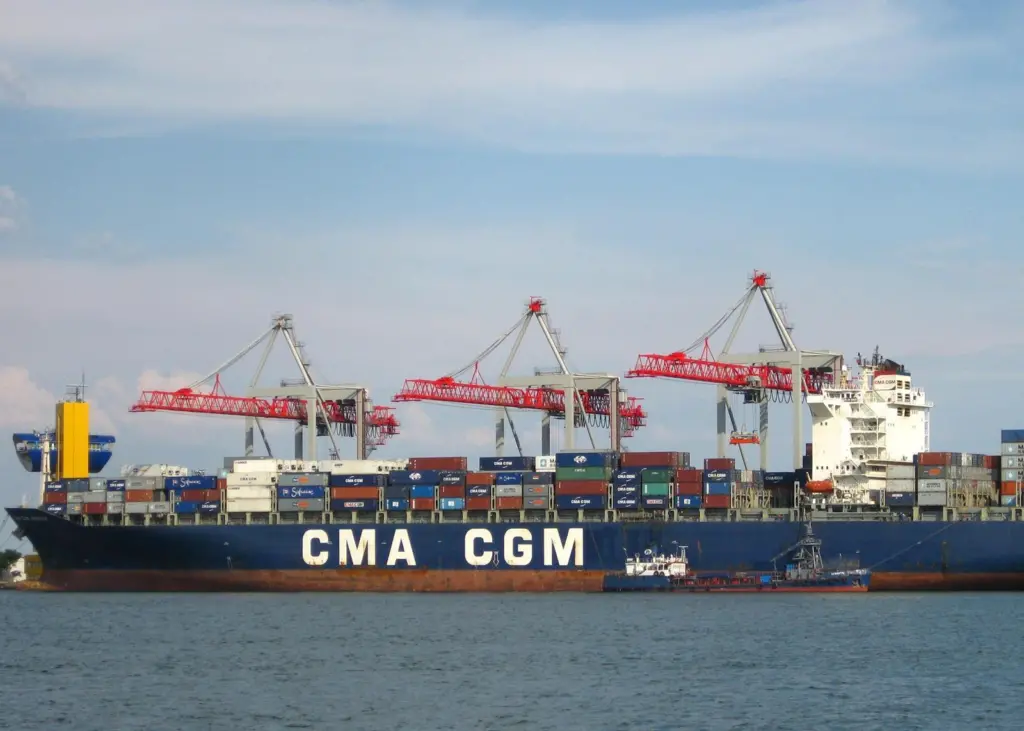
Many ports in the Baltic region are picking up: notably those in Estonia and Latvia, and that hardy lot in Poland. But analyse the region’s main strengths and weaknesses, and you might find that both are called Russia.
Russia has been investing heavily for some time in its ports in order to recapture its own cargo, says Roman Poersch of Wilhelm Borchert – but for some shipments it may have a hard time convincing people, as St Petersburg is still haunted by the old spectre of queues and Riga, for example, is actually closer to Moscow than any Russian port.
Despite this, St Petersburg’s First Container Terminal has been expanding for over a decade and the new facility at Ust Luga is seeing its plans revived since a shareholders’ dispute was sorted out. It is notable that while the Russian state is to invest $513m in port developments by 2015, it is looking to private companies to put in another $2.85bn.
However, some believe that Russia’s plans to upgrade its infrastructure are over-ambitious, and that it simply lacks experience in the involvement of private investment, which will slow things down.
Alexander Voronkov, of the National Container Company, disagrees and says that although some years ago NCC’s role was trailblazing and taking on many of the problems associated with an emerging private sector, recently it has had to work in an increasingly competitive environment both in St Petersburg and Novorossiysk as new terminals are put into operation.
However, Mr Voronkov admits that despite this: “Investors still face many problems, especially with bureaucratic procedures that take too much time.”
It’s partly because of this that Richard Morton of Jura Associates thinks the Baltic ports will gain in value as gateways, since although they belong to the European Union, they understand the Russians on a fundamental level. “There’s a huge cultural barrier to be overcome,” says Mr Morton, citing some of the very Russian “tests” of adequacy that can involve delegates drinking large quantities of vodka.
Mr Poersch agrees, and says that Western European parties can sometimes get the sharp end of Russia’s somewhat protectionist policies. Already both Finland and Poland act as translators and doormen to the Russian market, he says, adding: “A large proportion of the volatility of Finnish throughput is directly connected like a seesaw to the friendliness, or otherwise, of Russian policy.”
Despite this, Russia is pulling in some names. A new joint venture between Gulftainer and the financial arm of the Russian state is starting to pursue logistics opportunities in the region, with a fund of $500m to acquire port and logistics assets.
Still, it seems that there will be plenty of scope for development nearby. Mr Morton says: “The opportunities are huge, I believe. There are some 90m people west of the Urals, a market that is so far untapped.” And long-term growth is looking good for outbound traffic, too. He explains: “What people haven’t caught on to is the sheer scale of Russia’s economic resource,” something which will push Russian exports at an increasing pace.
Bulk cargo such as coal was one of the few things that escaped the worst of the downturn in Eastern Europe, when high-value goods in boxes were falling sharply across the whole area. But now containers may well have the opportunity to catch up.
According to Mr Voronkov, there is one thing which will ensure the growth in container traffic, and that is the level of cargo containerisation. This has reached 80-90% in Europe, while in Russia containerised cargo is still only 30-40% of cargo totals. “This leads us to believe in a stable development for the foreseeable future.”
Further south, the Black Sea, after a period of stunning year-on-year increases, fell foul of the 2009 downturn in a very big way. Total Black Sea ports throughput plummeted by about half, although a return is now predicted, with private investment being the order of the day as people realise that it may yet become a challenge to the Baltic route.
There are a couple of obstacles getting in the way of a wholehearted recovery. Mr Poersch says the political scene is, compared to Western Europe, relatively unstable with an agenda that can too easily shift around “to the detriment of private investors”.
Secondly, there’s the old Bosphorus bottleneck. However, because of a number of policies aimed at hinterland connectivity, it is possible that a route through the Ukraine is on the cards – something which the Ukrainian government is making the most of as it plans to attract private investors for major projects in Illichivsk and Yuzhny ports.
There is also the possibility of Turkish ports acting as a challenging hub, rerouting completely away from the Bosphorus. This would not please Romania and Constanta, but it may just come off.
So, if investors get in early, they could find quite a good deal. But, as one industry source says, lessons from the past show that even quite big companies can get their fingers burned. It has been known to happen that, just as a new project hits the runway, the local partner is found not to have the back-up for its proposal, either in a legislative or financial sense.
Related Articles
 PORT & TERMINAL NEWS
 EXPANSION & DEVELOPMENT
 PORT & TERMINAL NEWS