![PortStrategy[GreenPort]](https://www.portstrategy.com/wp-content/uploads/2026/09/PortStrategyGreenPort.svg)






Second chance for Sines
Sines is another Iberian port to have experienced a rollercoaster ride in its fortunes in recent years.
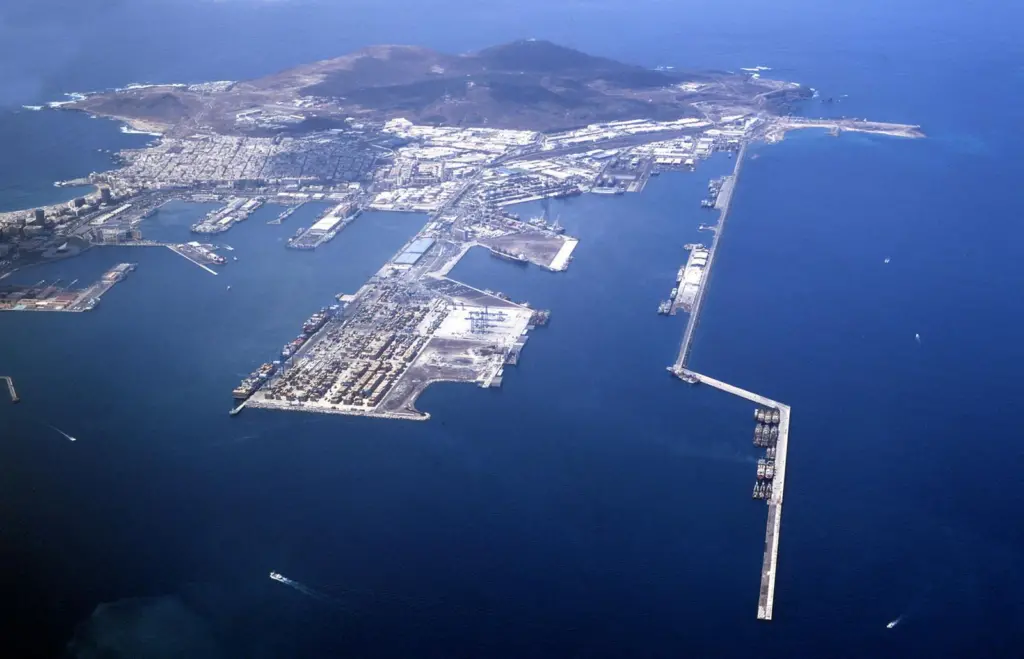
Long established as a major coal importing facility, the port authority decided to diversify its activities through the creation of a multi-purpose terminal whose main target traffic would be containers. The snappily named Terminal XXI was put out to tender as a concession and was acquired by PSA.
Senior managers back in Singapore clearly saw the port as a potential transhipment hub especially for the growing market in north-south box trade linking Europe with both Africa and South America. However, the development of Sines also coincided with major infrastructure spend taking place in the Canary Islands, where Opcsa, a joint venture between local investors, MSC and Dragados-SPL, effectively stole the Portuguese port’s thunder.
Nowadays, the Las Palmas terminal handles truly massive amounts of north-south trade mostly generated by its shipping line shareholder. The port as a whole has benefited tremendously, consistently outperforming average growth across all Spanish ports, reporting a further 10% increase in traffic in 2006 on reaching 1.43m teu.
Opcsa is now seeking to increase its own terminal area, while La Luz container terminal, previously restricted mainly to import-export traffic, is doubling its own surface area. It also has new owners – the Boluda group – whose own star is in the ascendancy thanks to the opening of a new container terminal in Alicante, whose main purpose is to boost box trade with North Africa.
If that were not bad enough for Sines, the neighbouring Canary Island of Tenerife is going ahead with construction of a deepwater port of its own, at Granadilla, which is unashamedly also seeking to cash in on the growth in trans-Atlantic container trade.
To make matters worse, two new transhipment container projects are to go ahead further north at the Spanish ports of La Coruña and El Ferrol. These are located smack on the main north-south shipping lane and require virtually no deviation. We can but hope that traffic growth in this region will eventually make these viable.
Given such competition and with no customers, it would have been entirely understandable had PSA cut its losses and pulled out of Terminal XXI. However, after having parachuted in several high profile managers from Singapore in recent years with seemingly little effect, out of the blue, the terminal received a major fillip with the decision by MSC to switch its operations from Liscont to Terminal XXI.
This move was prompted following a short term capacity contraction at Liscont during major engineering work ironically aimed at boosting throughput potential by upgrading yard handling from reachstackers to RTGs.
The impact of MSC on Sines has been dramatic. In 2006, throughput rose 139% to 121,956 teu, which the port notes was better than even its most optimistic forecast. First half box traffic in 2007 is up by 33.3% (in fact, up 61% in the second quarter alone) The expected return by MSC to Liscont doesn’t now look as though it is going to happen any time soon.
In the meantime, Liscont has been given permission to undertake a major expansion of its own, now that the adjacent cruiseship terminal is to be relocated to the centre of town. In 2007, Lisbon as a whole reported an 8.2% rise in first half throughput to 273,031 teu; Liscont itself saw traffic grow by 10.8%.
Related Articles
 PORT & TERMINAL NEWS
 EXPANSION & DEVELOPMENT
 PORT & TERMINAL NEWS