![PortStrategy[GreenPort]](https://www.portstrategy.com/wp-content/uploads/2026/09/PortStrategyGreenPort.svg)





Tough get going
Ports in the Benelux face crisis head-on and investments continue to ensure they emerge stronger than ever. Helen Hill reports
When the going gets tough, the tough get going seems to be the best way to describe the mentality of the Benelux ports.
Faced with severe declines in cargo throughput, the Dutch and Belgian ports have faced these tough times head-on and put a number of measures in place to ensure they are ready when the upturn comes.
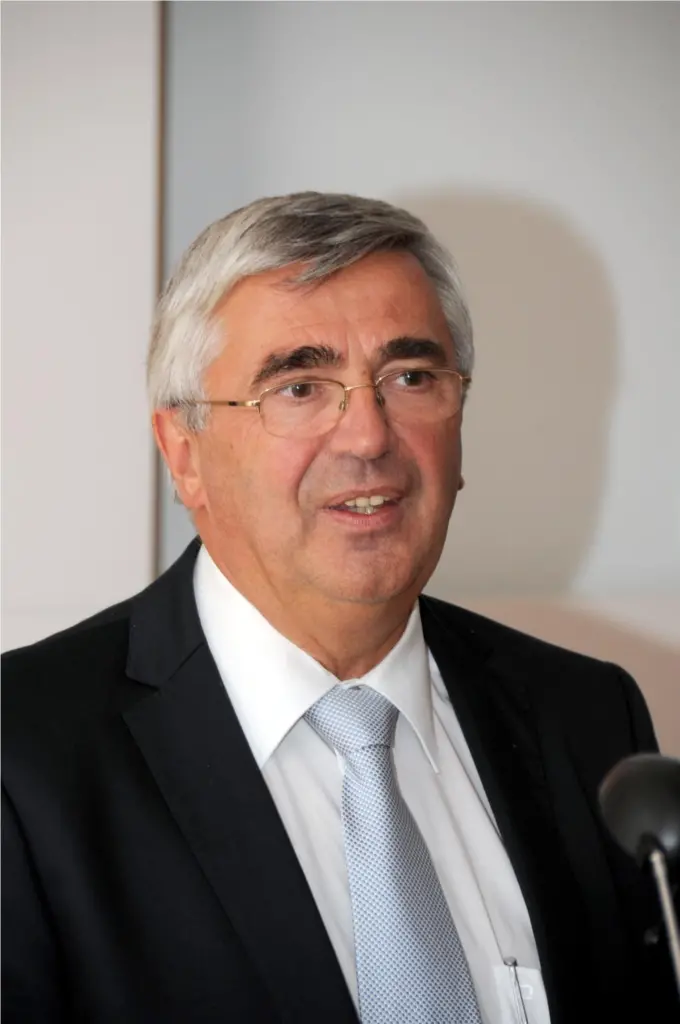
In mid-November last year, Eddy Bruyninckx, chief executive officer of Antwerp Port Authority, presented the plans for tackling the crisis to the board of the Belgian port. He was keen to stress that this was not an “anti-crisis” plan but one that is designed to strengthen the port and make it more competitive for the future.
Several initiatives are now underway and it is not just the port authority taking action. In early February, five covenants were signed by Alfaport Antwerp, which represents some 400 port companies, the port authority and five trade associations in a bid to ensure that the port will make an extra push to attract new, conventional trade to the port. The convenants cover steel, fruit, forest products, project cargo and ro-ro.
These agreements are part of the so-called “Total Plan” for a more competitive port whereby “10+1” working groups have been created. The +1 concerns port labour and this is handled within existing social talks.
Mr Bruyninckx tells Port Strategy that the whole port community is looking into the competitiveness of the port and coming up with new initiatives, so it can recover as soon as possible. The Total Plan working groups will report around June time.
Antwerp is “the” breakbulk port in Europe and it aims to maintain and expand this leading position and its position as Europe’s second-largest port overall, he adds.
“The basic ambition is to maintain and strengthen the port’s multifunctional image and role. We are the first port for conventional cargo and the second in the container sector, even after this terrible year. Antwerp is strong in liquid bulk and an important petrochemical centre, with a huge amount of warehousing space. We want to be multifunctional in logistics and cargo-handling.”
An important point the port is keen to make concerns its position in the hinterland. But this is not just talking geography, Mr Bruyninckx stresses. “Antwerp is the closest port to the main production centre in Europe. But we do not measure this just in terms of miles but in terms of frequency of services, in money and in terms of CO2 reductions. This is a real competitive advantage.”
Of course, one issue that has been in the headlines much of late is the deepening of the River Scheldt. At last, after more than a decade of wrangling, deepening of the River Scheldt on the Dutch side of the border started on February 12 and work is set to finish early 2011.
This is a very important programme for the accessibility of the port, says Mr Bruyninckx. This gives the port a draught of more than 15 m and much wider tide-independent windows. “We are here and we can handle the largest vessels.”
As well as accessibility, Antwerp has addressed its harbour dues, freezing port tariffs on 2008 levels. Additionally, to defend its breakbulk position dues have actually been cut by 10%.
There are signs that efforts are perhaps paying off. For instance, Mr Bruyninckx says that Maersk is giving Antwerp a better position in its new schedule.
Overall traffic fell 16% in 2009 but he says the port is a little more optimistic about prospects for this year. Of course, he adds, all of the measures taken need to translate into structural improvements. “It is very important that we make sure these reforms improve the position and attractiveness of the port.”
Europe’s largest port, Rotterdam, has also been tackling the crisis in a fairly bullish way. Meanwhile, Zeebrugge, unlike many of its counterparts, saw growth in 2009.
The Belgian port handled 44.8m tonnes, which represented a 6.8% increase on 2008.
Zeebrugge too, is investing for the future. The progression of the Albert II dock, which PSA HNN will operate, is pushing on. The first phase is expected to be operational early 2011. Once fully in use, the multi-user terminal will comprise 1,300 m in quay length, with a capacity of 1.2m teu.
A new liquefied natural gas quay is also planned and the port is also pressing for an agreement with Flanders on the construction of a new sea lock.
Benelux ports are certainly keen to ensure that they will emerge in good shape when the economy picks up and they are also willing to put their money where there mouth is, investing for the years to come, recession or no recession.
Related Articles
 PORT & TERMINAL NEWS
 EXPANSION & DEVELOPMENT
 PORT & TERMINAL NEWS