![PortStrategy[GreenPort]](https://www.portstrategy.com/wp-content/uploads/2026/09/PortStrategyGreenPort.svg)






Ukrainian port reforms open up privatisation
The port sector in Ukraine is facing landmark reforms as, after ten years of discussions, a new national seaports law has been adopted to come into effect in June 2013, writes Arthur Nitsevych, managing partner, and Olena Losevska, counsellor, Interlegal, Odessa.
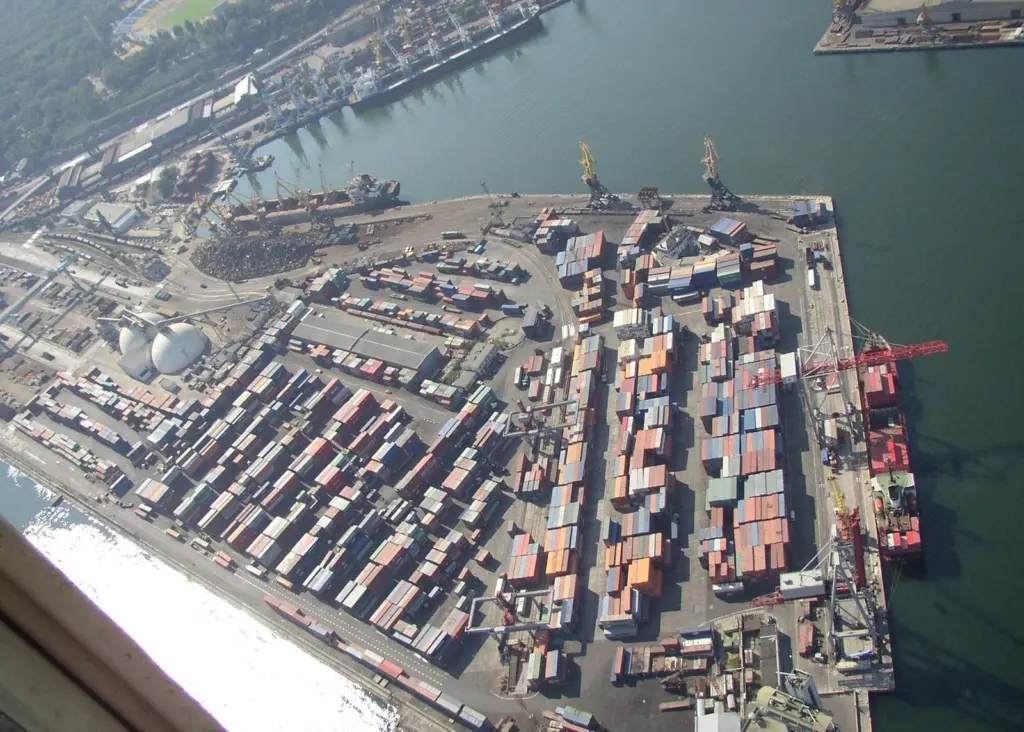
In future, Ukrainian seaports will be treated as limited territories and equipped for vessel, passenger and cargo services, transportation, forwarding and other commercial activities. This is a new approach as previously ports were public state-owned companies.
The new law means that port territory will include private, state and municipal property land plots – a fundamental difference because before ports could be situated only on state-owned land. Private terminals sited on a privately-owned areas will now be allowed with the Ukrainian ministerial cabinet determining port territory boundaries.
This means that port privatisation will be possible for the first time since the independence of Ukraine.
The new law means that all port infrastructure facilities can be privatised – with only a few exceptions – a water area, rail and motor driveways, communication lines, heat, gas, water and power supply facilities, service media, hydrotechnical structures, navigation equipment, traffic control systems and the like.
A number of set options for privatisation will be made available including the option to privatise the whole port property, so-called ‘unified property complexes’.
Shares in joint companies will also be allowed to be incorporated on the basis of the separate port subdivisions.
State owned shares in joint ventures created on the basis of property constructed by state and private investment under Joint Activity Agreements or other Investment Agreements before the law was introduced will also be allowed.
Lastly, seaport property rented out before the law was introduced whereby the tenant had invested the cost of not less than 25% of its residual value, will also be an option.
Obviously, the last two options only apply to current tenants and investors.
New investors can purchase unified property complexes of state enterprises and have shares in joint companies incorporated between the separate port subdivisions. Both these options are subject to a competitive basis tender.
In order to put the new law into place, the ministerial cabinet had to make amendments to some legal acts, adopted in the last century, which regulate the privatisation procedure.
Reorganisation of state enterprise and creation of joint-stock companies will take place within a special pre-privatisation project being developed by a working group which includes representatives of the Ministry of Infrastructure, Ministry of Economic Development, State Property Fund and port authorities – which will be approved by the Ministry of Infrastructure of Ukraine.
We suppose that privatisation will mainly touch on small ports. In large ports, handling terminals already belong to private investors and privatisation will allow them to buy out state property for use within the given terminal.
Creation of new port terminals or even ports will take place most probably under concession. The concession process will be regulated directly by the ministerial cabinet. A special working group on concession issues has been already created within the Ministry of Infrastructure. It seems that concession will be a priority tool under the port reform.
Related Articles
 PORT & TERMINAL NEWS
 EXPANSION & DEVELOPMENT
 PORT & TERMINAL NEWS