![PortStrategy[GreenPort]](https://www.portstrategy.com/wp-content/uploads/2026/09/PortStrategyGreenPort.svg)





UKS SOUTHERN DISCOMFORT TOO LITTLE BUT NOT TOO LATE
New facts and figures underline that the UK Government still has time to take a more coordinated approach to adding new containerport capacity. Mike Mundy reports.
The clock is ticking on when the UK Government has to make a decision where new container port capacity should be installed. But is it ticking quite as fast as some parties would like to suggest?
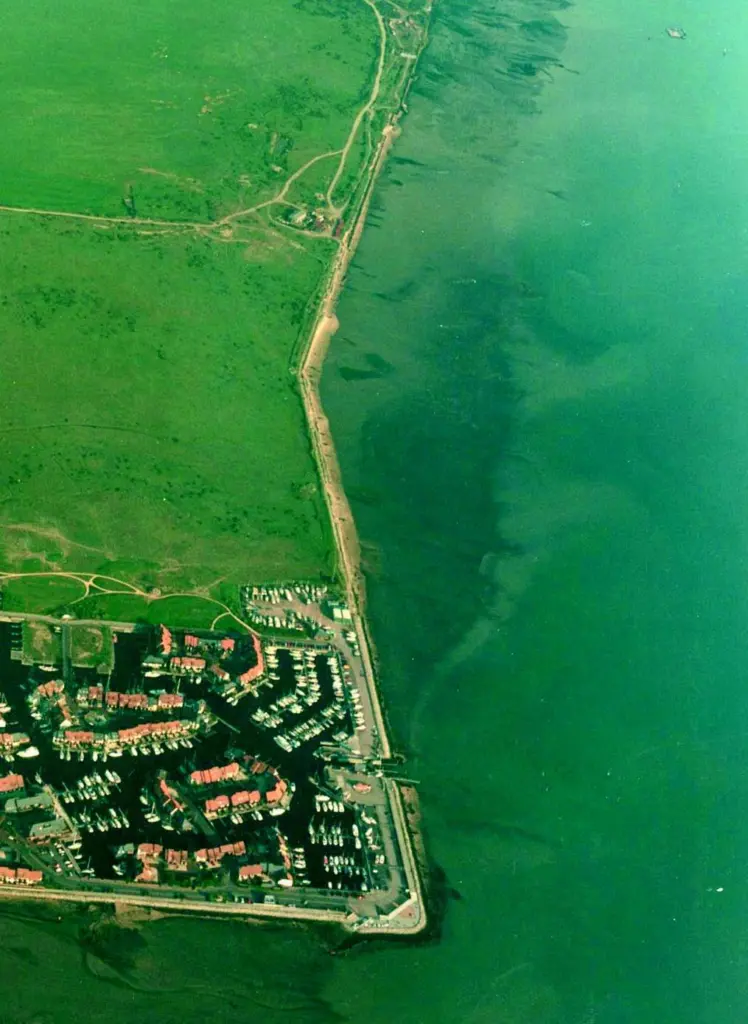
Go back to the last quarter of 2003 and it was the case that the southern UK container terminals, and Southampton in particular, were the subject of quite severe congestion. And, against this background, an increasing clamour was heard for the UK Government to get on with the job of approving new containerport capacity. It was a “priority” was the message coming out of the shipping line sector and out of Southampton in particular where Associated British Ports (ABP), the largest port operator in the UK, is backing the Dibden Bay new containerport project located in the environmentally sensitive Southampton Water Special Protection Area and an area to be designated as New Forest National Park.
Dibden Bay is the first of three major port schemes to have a Report submitted on it to the UK Department for Transport (DfT) by the Independent Inspector. It was submitted following a Public Inquiry that concluded in December 2002.
The Report for the London Gateway project, promoted by P&O Ports at a brownfield site in Thurrock, Essex, is also now with the DfT having been recently submitted. And the Report for the Hutchison Ports backed Bathside Bay Terminal in Essex, like Dibden Bay located in an environmentally sensitive area, is expected by the end of the year at the latest.
Traffic congestion in the southern terminals has, however, now eased and at the same time new statistics on last year’s traffic throughput and recently announced capacity expansion plans suggest that the pace that the UK Government needs to proceed at in order to assess, approve or not approve, the various new development projects is not quite so rapid as suggested, particularly in the frenetic climate of the last quarter of last year. Indeed, serious questions have to be asked about both the timing and approach of the UK Government to the new container port planning/approval process.
The figures shown in Table 1, compiled by the Royal Society for the Protection of Birds (RSPB) from figures supplied by Hutchison Port Holdings (HPH) UK and P&O Ports, clearly show that there was a significant drop in container throughput moving via the four south eastern UK container terminals in 2003 – in fact, a drop in total traffic compared to 2002 by almost 2%. The cause is also plain to see: rapidly falling transhipment volumes, which dropped by over a third compared to the previous year’s volumes.
The RSPB is a member of PortsWatch, a new association of environmental interests, which includes other well known names such as Friends of the Earth, the Wildlife Trusts and The Marine Conservation Society, that has the stated aim of stopping the “needless destruction of important coastal sites by port developments.” Implicit in this objective is the idea of making the UK Government take a more responsible approach to port planning because, as it states in its Manifesto, “Government strategy and guidance are nonexistent.”
It could thus be construed that the RSPB is “cutting its cloth accordingly to make it fit” as regards the new traffic figures it has generated. This, however, is clearly not the case with such learned analysts as Neil Davidson, director, Drewry Shipping Consultants, confirming the downturn in UK container traffic moving via the four south eastern terminals in 2003.
“There was definitely a drop in transhipment traffic in 2003.
Clearly, the leading UK terminal operators have had to increasingly use their capacity for handling import/export traffic plus other competitive factors have combined to entice transhipment away to the Continent, he says.
“We would also agree with the 5.2% growth in import/export traffic, which concurs with the upper end of our long term forecasts.
And he continues: “Taking into account all these factors, we believe that it will be a few years before the demand for capacity in the southeast returns to the 4-5% growth range.”
The current operating position is also a barometer of this situation with, as touched upon above, the liner sector, reporting that congestion is no longer a problem, even in the “hot spot” of Southampton and with vessels coming in full again on the Asian trade after the traditional dip in import volumes during the Chinese New Year. APL, for one, does add the caveat that the real test will be in August when the peak season begins but for the time being at least it seems that normal operations are the order of the day.
Alistair Baillie, Chief Operating Officer, P&O Ports, further suggests that the exodus of transhipment traffic is unlikely to be a temporary phenomenon.
“The fact that continental terminals have their infrastructure funded by their respective governments enables them to offer lower prices for transhipment traffic, ” he states.
Equally, it is well known that the impact of earlier congestion problems has led to a number of lines – for example CMA CGM – pursuing the approach of feedering from the Continent direct to northern UK ports, and thereby reducing the volume of UK cargo pushed through the southern ports.
The reality also has to be taken into account that shipping lines tend to exaggerate the urgency of the need for more capacity as they want enough spare capacity so that they can berth a vessel whenever she arrives in port. This is the same as expecting a train will always be departing from the station whenever we turn up, nice to expect but a little unrealistic!
OTHER SIDE OF THE EQUATION Baillie also brings into focus the other side of the equation as regards the easing of pressure on the southern containerport gateways – the expansion of capacity at the existing terminals. An activity that, significantly, has been much in evidence since the Inspector submitted his report on Dibden Bay – a fact in itself worth noting.
He says: “The developments on the traffic front together with the expansion scheme just announced for Southampton Container Terminals (SCT), as well as other infrastructure and equipment developments in the southeast, mean that utilisation levels in the southeast terminals will be less this year than they have been for a number of years.”
At the end of February, SCT, 51% owned by P&O Ports and 49% by ABP, announced a £15m investment in new container handling equipment, to be implemented over the next 15 months, which will raise its capacity by 200,000TEU to approximately 1.6mTEUs. The company also indicated that it would be possible, if demand necessitated it, to further build its throughput capacity up to the 2mTEU level.
In the same week, the HPH owned and operated port of Felixstowe, took delivery of a new ship-to-shore gantry and 10 RTGs as part of capacity expansion initiatives in its existing port area. Two further ship-to-shore gantries will also be delivered shortly.
Overall, it is estimated that around 0.9mTEU of new capacity per annum will be added at the existing southeastern terminals in the near term including capacity resulting from factors such as the delivery of two more quay cranes at the new berth development at Tilbury.
And, it is reasonable to expect the so-called Felixstowe South – another project announced after the submission of the Inspector’s Report for Dibden Bay – will add a further 1.5mTEU of new capacity within the existing port infrastructure. This site, formerly used by P&O Ferries, has a planning application submitted to convert it to container handling usage and with the site already zoned for port usage no major problems are anticipated.
The net effect of all this then – traffic patterns and capacity expansion – is to push back the time envelope in which the UK Government needs to make decisions concerning new port capacity.
Even more important, however, it provides the potential to kill the somewhat ridiculous idea of the UK Government deciding on each of the mooted new port projects on an individual basis rather than in a coordinated manner in line with best practice worldwide. The Government’s disjointed policy was highlighted by David Jamieson, shipping minister, in a written response to questions raised in the House of Commons on the 26 February when he said: “It is the Government’s policy to consider each proposal on its own merits having regard to relevant development considerations.”
The major pitfalls of approving projects one by one are basically obvious to any seasoned port planner or even observer, namely:
It creates great uncertainty in investment terms and as regards taking bankable projects to the financial community.
It creates the potential, as PortsWatch rightly points out, for the needless destruction of environmentally sensitive coastline, and Appears to contradict the laws of the European Community as set out in the Habitats Directive.
Dan Clague, director, Transport & Support Services, SG Corporate & Investment Banking, is one well-known banker active in the ports sector who clearly feels that the UK Government can do better in its approach to the introduction of new container capacity in the southeastern UK.
He points out that the effective failure of Thamesport, is not so distant in the minds of the banking community and of the collateral damage it caused across the whole of the industry when it became operational at a time when demand basically didn’t justify its presence.
The original banks behind Thamesport only exited the project by sustaining losses and selling it at a knockdown price to Rutland Trust.
Now, of course, it is owned by HPH and has recovered from those disastrous days.
The point as regards the Habitats Directive is also an interesting one – under this the UK Government appears to be compelled to consider alternatives. It will probably become a fine point of law as to whether it is doing this properly by looking at the different new projects sequentially rather than alongside each other. Commonsense, however, appears to suggest it will be the latter rather than the former.
“Watch this space” is the message on this one with murmurings in the industry that legal challenges will emerge under EU law if the Government continues on its current course.
TIME IN HAND?
So exactly how much time does the UK Government have to consider the various development proposals. Richard Pearson, md, HPH answers this point well: “Even with a five per cent growth rate new capacity in the UK will not be needed until 2008. New capacity can be introduced in three years. The Government doesn’t need to decide anything until the first quarter of 2005, ” he underlines.
Taking this fundamental factor into account it is, therefore, clear that the time window is available for the UK Government to view the various container port capacity options alongside each other and not in an uncoordinated fashion.
With other key industry sectors in the UK being told by the Government of the need for coordinated planning – witness the time and trouble taken with airport capacity planning in the southeast in this respect – why should the important container handling industry be treated any differently?
Related Articles
 PORT & TERMINAL NEWS
 EXPANSION & DEVELOPMENT
 PORT & TERMINAL NEWS