![PortStrategy[GreenPort]](https://www.portstrategy.com/wp-content/uploads/2026/09/PortStrategyGreenPort.svg)





Unlocking its huge potential
With Turkey having just announced its first containerport privatisation and Egypt showing signs of more interest in this direction, will the eastern sector of the Med at last come of age, asks Mike Mundy .
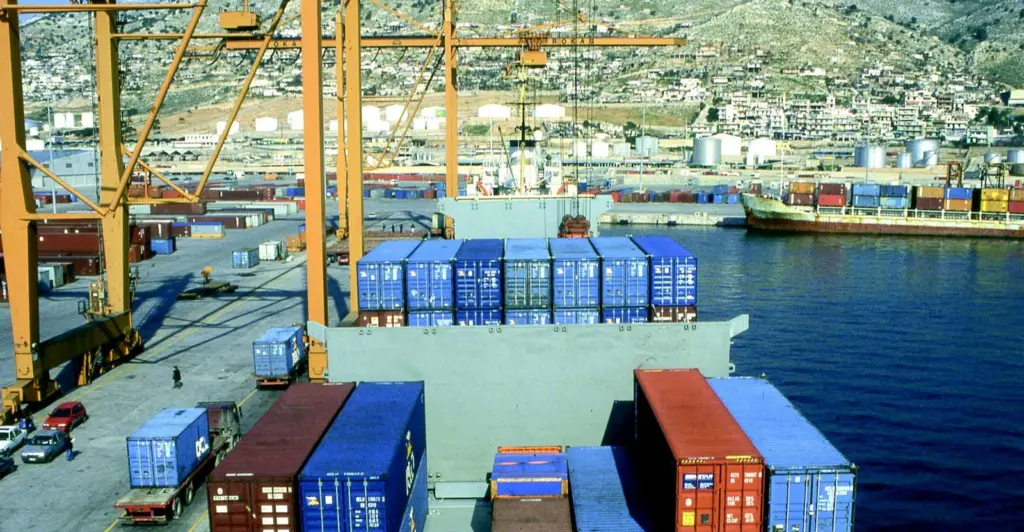
In May this year Thomas E. Falknor, Senior Vice President, International Container Terminal Services Inc (ICTSI), presented a paper in Athens entitled Port Privatisation & The Eastern Mediterranean, Real Prospects or Theatre of Dreams?
atitle which effectively highlights how, compared to the west and central Mediterranean areas, the eastern Mediterranean has lagged behind in modernising its ports and particularly in a container handling perspective.
It was something of a brave move on the part of a developer, manager and operator of container terminal facilities to offer such a view and doubtless, in part at least, it stemmed from recognising on the one hand the great potential that the eastern Mediterranean holds and on the other the frustration experienced as an investor trying to gain a foothold in a market that in many areas doesn’t appear to recognise the numerous benefits that port privatisation can bring.
Not to say, as Falknor acknowledged, that the region hasn’t seen any port privatisation at all, but it hasn’t always been full-on privatisation, the kind that delivers front line service benefits to shipping lines and port users generally. One example of this is in Greece itself where privatisation so far has only seen the ports of Piraeus and Thessaloniki placing part of their respective port management bodies’ equity on the local stock exchange.
Equally, it is true to say that privatisation has been patchy and not always perfect around the eastern Mediterranean. Certainly, there is no way the region as whole matches the worldwide statistic of 80% of container handling capacity being provided by the private sector.
And in terms of the quality of those privatisations that have been undertaken, Beirut in particular stands out as one location where they didn’t get it right first time and it is doubtful as to whether they have got it right at the second attempt!
The first attempt saw the management contract awarded to Dubai Ports International who eventually withdrew. Late last year, second time round, the concession was awarded to a consortia including Mersey Docks & Harbour Company, now about to be purchased by Peel Holdings, but the structure of the concession awarded points to a lot of potential landmines and it will be very interesting to see how events unfold on this occasion. Indeed, the recent concession exercise in Beirut is yet another testament to the value of having an arm’s length body involved in (a) structuring the opportunity offered and (b) overseeing its implementation. Beirut lacked this expertise.
Having said all this, the eastern Mediterranean continues to attract the interest of international terminal operating groups, underpinned by their recognition of the significant container trade growth potential.
POSITIVE PROSPECTS Andrew Penfold, Director, Ocean Shipping Consultants, speaking at the Medtrade Conference , provided an insight into the strong container trade growth prospects for the eastern Mediterranean. He noted that total container traffic moving via the east Mediterranean and Black Sea comprised nearly 10mTEUs in 2003 and that by 2015 the total regional market is set to reach 17mTEUs, with this demand “dominated by import/export flows into Turkey and high transhipment demand in Egypt.” And, he elaborated: “Within this total figure, transhipment demand is seen as just crossing the two million TEU mark in 2003 and increasing by some 75% in 2015, ” although he additionally noted that:
“The availability of deepwater transhipment capacity in Egypt and elsewhere, and the increasing opportunities for expansion in the Black Sea, may well cause us to revise these projections upwards.”
Egypt does, of course, now have the Suez Canal Container Terminal (SCCT) on-stream, a brand new facility, developed, managed and operated by SCCT, a local Egyptian company whose major shareholder is APM Terminals, which provides new transhipment capacity offered by the private sector. Located at the northern entrance to the Suez Canal, the facility commenced operations in October 2004 and is steadily widening its client base to include big names other than Maersk Sealand, big sister to APM Terminals, such as China Shipping.
Clearly, SCCT is to-date the exception to the rule in Egypt, being wholly private-sector run, although in recent months the Egyptian Government has been banging the privatisation drum and one result of this is the comparatively recent announcement that the Hutchison group has entered into agreements with a consortium led by the Alexandria Port Authority for the, “construction, operation and management of two terminals – one at Alexandria and the other at El Dekhelia.”
As part of these agreements, a new joint venture company, set up between Hutchison and the consortium Alexandra International Container Terminals, will develop existing general cargo handling terminals in the two ports into modern container handling facilities.
Turkey, at long last, also seems set to dip its toe in the water with port privatisation, having just announced its intention to privatise container handling operations in Mersin. This follows on from some rather “different” ideas floated in Turkey whereby apparently one scheme was to offer all the public containerports to an individual container terminal operating group by means of a negotiated agreement and then as a secondary idea to offer all the containerports for tender at one time – i. e. to all interested parties with the expectation of appointing just one winner.
With the announcement that Mersin is to be privatised on a solo basis, however, it seems that commonsense has prevailed; neither of the latter schemes promised much of a competitive service to port users comprising both shipping lines and cargo importers/exporters alike. Monopolies never do!
Having said this, it seems reasonable to expect that there will be a steep learning curve in both Egypt and Turkey as they get to grips with port privatisation, and on the downside, in particular, there are no signs yet that independent advisors have been brought in with independent specialist knowledge. To the contrary, in Turkey it is understood that the advisors appointed by government have only broad-based expertise and none of the specialised knowledge that time and again has proved so helpful in achieving a positive port privatisation. Turkey’s tardiness in embracing port privatisation is also further reflected in the rise and rise of entirely private sector developed container handling operations in the country alongside the public, TCDD, containerport operations.
Undoubtedly, private sector operations have prospered to a great extent as a result of public sector malaise.
MORE COMPLICATED As ports in the eastern Mediterranean move to unleash their potential via privatisation and harness the specialised expertise and investment that this brings, it is also the case that they now have a more complicated privatisation picture to understand, a reality that Falknor summed up in his recent Athens presentation.
“Ten years ago, ” explained Falknor, “selecting a terminal operator was a much more straightforward business. Back then a terminal operator was basically an entity like ICTSI – a company whose business was cargo handling and which had had the foresight and entrepreneurial drive to take its expertise overseas into the international markets.
“Today, however, ” he pointed out, “there is a big interest on the part of shipping lines in investing in terminal operations and their motivation to get involved in this aspect is rather different. The motivation of a company such as ICTSI, ” he elaborated, “remains basically the same as it always was, i. e. to grow its business by taking its expertise into new markets and provide a neutral container handling platform for use by all shipping lines and cargo exporters/importers.”
In the case of shipping lines, however, he suggested that even though lines might try to present a neutral face, through, for example, sister companies branded as terminal operators or with a neutral international terminal operator fronting the operation, ultimately a line owning a stake in a terminal operation provides it with an edge over its shipping line competition, particularly where terminal capacity is limited – a very relevant point in these congested times. “It can, for instance, ” he underlined, “achieve the benefit of operational and rate priorities, and in the most extreme cases can use its control of a terminal facility to win market share in the ocean freight markets.”
And, of course, shipping lines tend to bring with them cargo which is very seductive to many port authorities but ultimately may represent short-term gain for long-term pain, and especially in the case of where shipping lines seek to take over existing common user terminals which offer the majority of gateway capacity to given country or region. Dedicated terminals for shipping lines or consortia in a large multi-terminal port environment, acknowledged Falknor, do not present a problem.
Related Articles
 PORT & TERMINAL NEWS
 EXPANSION & DEVELOPMENT
 PORT & TERMINAL NEWS