![PortStrategy[GreenPort]](https://www.portstrategy.com/wp-content/uploads/2026/09/PortStrategyGreenPort.svg)






Zagreb Pier questions
A second tender has been issued for the Zagreb Pier Container Terminal in Rijeka, Croatia, but the way it has been let and the operator selection criteria fall far outside the norm, A J Keyes reports.
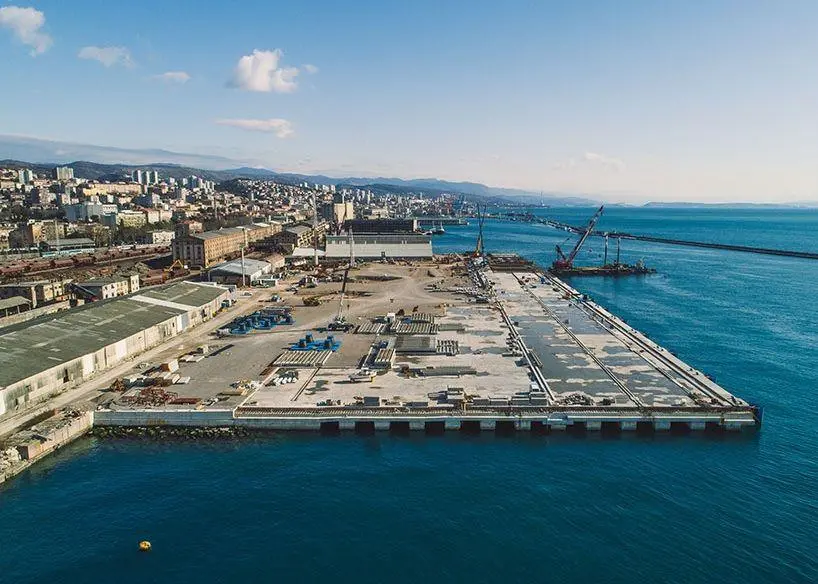
After an initial failed tender process concluded in 2020 a second tender process for the Zagreb Pier Container Terminal, Rijeka, is back on the table but that’s where the similarity between the two processes ends.
The first tender process, reportedly cancelled due to a multiplicity of reasons extending from the COVID-19 crisis through to interfacing road issues, ran from early May 2019 through to March 9, 2020 when the official opening of the submitted bids took place – nearly a year.
The second tender process, taking place at the time of writing, runs for just 35 days and concludes on April 26 – an unusually short period for a capital-intensive project of this magnitude.
The operator selection criteria for the first tender was broad-based, as is typically the case with a new container terminal platform. It was essentially a multi-criteria bid based on a technical submission and a financial one. Points were awarded within the technical submission across a number of criteria – business plan, operational set-up, performance criteria etc., these type of factors – and of course points were awarded for the financial bid. Whichever entity secured the highest number of points across both elements won.
The current tender process is in name a multi-criteria tender but if the truth be told in reality it is not. It is not sufficiently broad in its evaluation criteria to justify such a classification. It is striking that guaranteeing container traffic volume is basically the over-riding point of influence in the bid criteria accounting for 90 per cent of the points awarded. It is, when weighed against normal container terminal tender criteria, highly unusual to have one criteria exerting such a big influence.
WHAT IS GOING ON?
There are decades of experience now with container terminal tenders and what this experience tells us is that when bid submission arrangements and tender selection criteria of the type referenced above are in play then they are there for one reason only, namely, to push the result in a preferred direction. In this case it seems to have shipping line or shipping line affiliated terminal operator written all over it!
This supposition is further supported by the financial arrangements in the second tender – for example, the annual concession fee is fixed at a much higher level than the original tender, over five times higher than the minimum concession fee in the original tender which could be bid higher. There is also a variable fee component related to turnover, with both these elements realistically only being commercially acceptable to a shipping line or shipping line affiliate that is in a position to guarantee throughput including by diverting it from another gateway port or terminal, with the latter possibly including the existing container terminal in Rijeka, the Adriatic Gate Container Terminal.
BIG QUESTIONS
The ‘rules of engagement’ with the current Zagreb Pier tender process are such that they pose big questions.
The funding behind the project has come from the World Bank (over €100 million for the terminal development) and the European Union via its Connecting Europe Facility to provide rail linkage to the terminal (over €28 million) as well as 85% of the €68m for the D403 road connection to Zagreb Pier.
Both these institutions strongly promote the presence of a level playing field in order to maximise competition in tenders and especially in high value tenders. The World Bank, for example, says: “Standards and technical specifications quoted in bidding documents shall promote the broadest possible competition” and on recommended tender durations, “Where large works or complex items of equipment are involved, this period shall generally be not less than 12 (twelve) weeks…”
It is clear that the latest Zagreb Pier tender process is not compliant with these values. It is highly unusual for this to be the case, especially for an EU country.
Bottom line, there appears to be a case to be answered as to why the latest tender process is structured to favour a shipping line category bidder and why the tender timing arrangements also work to discourage a broader base of bidders? Does this mean the winner has already been decided?
Related Articles
 PORT & TERMINAL NEWS
 EXPANSION & DEVELOPMENT
 PORT & TERMINAL NEWS