




Cash in the coffers
AJ Keyes looks at why the drivers behind the mass sell-off of terminal assets in Australia
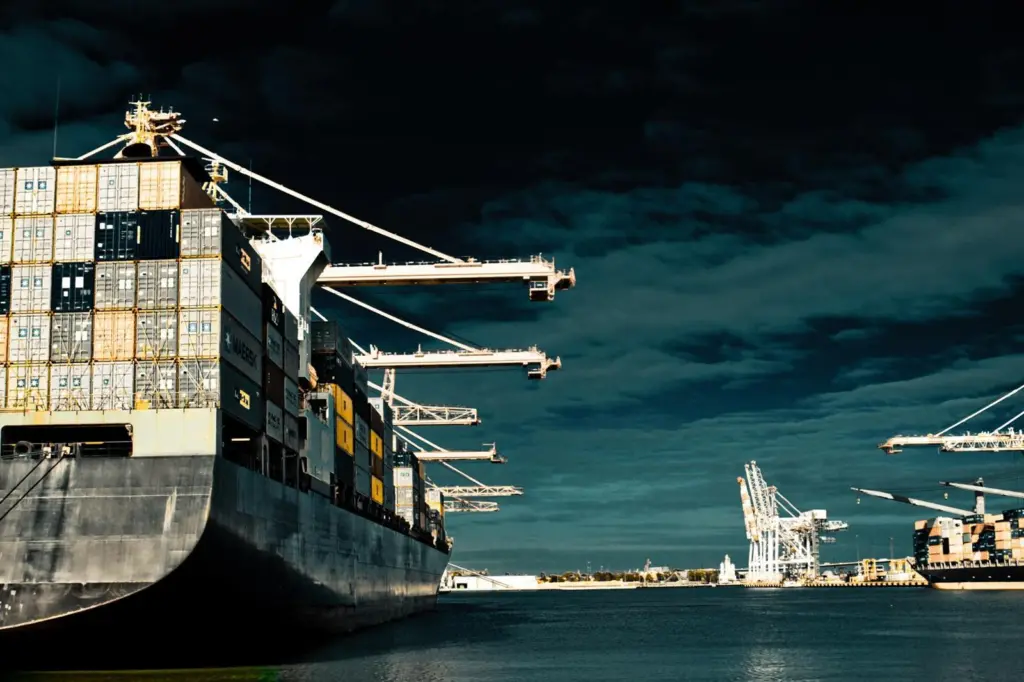
Port privatisation is not a new phenomenon in Australia. Since the late 1990s successive processes have followed an international trend of seeking to reduce governmental involvement in maritime infrastructure to improve port performance and efficiency – and, crucially, raise money for the national coffers.
Australia has seen stronger momentum since 2010 with privatisation for Newcastle, Port Botany, Port Kembla and Brisbane, with each deal resulting in significant funds being generated.
So the news that Melbourne is being sold off is not surprising. It is a significant port and if the reported value of the deal reaches up to A$6bn then it will represent the largest ever port privatisation or sale in the country.
From a fiscal point of view there is an obvious, and immediate, attraction to the Victoria state government to push through this process for such a major port asset: it can utilise the substantial funds to help with other infrastructure projects. This has happened before in Australia.
The sale of the Port of Brisbane generated A$2.1bn, with the successful bidder Q Holdings also agreeing to fund a future upgrade of the Port of Brisbane Motorway for a further A$200m. And the sale of Port Botany and Port Kembla gained the New South Wales government around A$5.1bn and these funds are playing an important role in improving other state infrastructure. This includes upgrades to the Princes and Pacific Highways, providing the government’s A$1.8bn share of the West Connex Motorway linking the M4 and Port Botany (albeit that the total project cost is A$10bn), offering A$100m for projects in the Illawarra region and the chance to invest in repairs/upgrades to 17 different bridges.
Fund allocation
If the Melbourne privatisation process is completed and it reaches the anticipated value, then it will certainly generate funds for use in other projects. One of these could be the Hastings Port development, the proposed longer-term container capacity solution once Melbourne (including the new Webb Dock expansion) is maxed-out in around 10-15 years, based on current estimates.
Ironically, this means that the successful winner of the Melbourne port privatisation basis could be playing a key role in helping to fund what might subsequently be deemed as a competitor for business – even if such competition doesn’t come to fruition for up to two decades. Nevertheless, with the Melbourne port privatisation likely to be based on a typical 99-year term arrangement, there will, in time, be defined competition for the same container traffic.
Balancing the books must be a key driver for the Victorian State Government in its desire to push ahead with the Melbourne port privatisation process. In addition to raising funds to help the Hastings container development there will always be other areas of fiscal need. For example, the decision of the state government to cancel contracts for the East-West Link road project has resulted in a reported bill of A$339m, according to the national government, although if the cost of planning, preliminary works and associated fees are included, then the net cost could surpass A$400m. Irrespective of the exact final cost, it is a big financial hole that needs to be filled, somehow.
The significant question for the privatisation of Melbourne, as it is for any port undertaking the process, is why do it? Ports are generally sold for either efficiency gains as part of increasing competitiveness or for political and budgetary reasons. The second example seems to apply to Melbourne.
The flip side
In terms of gains in competitiveness and efficiency, there is always a cost component to be considered too, meaning that port privatisation is not always greeted with uniform glee. In March 2015, Asciano chief executive, John Mullen, noted that port privatisation means price increases, when he said: “it’s a golden gravy train for state governments, investment banks and consultants, but ultimately it’s local industry and consumers that are left to pay the bill.”
This is a view shared by others. The Maritime Union of Australia, perhaps unsurprisingly, has supported this opinion, using the privatisation of Darwin Port as an example. Branch secretary, Thomas Mayor, noted how fees for ships increased in February 2015: “Based on the results of privatisations in other ports, rent increases for stevedores are likely to follow. It will also have a detrimental effect on the remote communities that rely on the port for their goods and services,” he said.
Mr Mayor might have a point. When major changes are made to a port, whether it is sold or there are new concessions, it can have an impact on the status quo, as the rental rate issue in Melbourne shows. The award of the new concession for the Webb Dock terminal meant that existing rents were re-considered, with potential rises of up to 750% mooted for existing operator, DP World. The threat of legal action by this operator, creating a potential stalling of the privatisation process, meant that it needed to be resolved quickly.
Assuming the rental issue in Melbourne does not derail the process, it is reasonable to expect a high degree of interest from a range of different parties, especially from the financial sector.
Yet there is clear proof that Australia can undertake, and successfully complete, a privatisation process of key port assets; Melbourne is simply the latest in the line. It will allow a one-time significant contribution to be made to the state government’s finances and can allow the private sector to invest in the longer-term future of a key port.
However, once this item of key infrastructure has been sold off, then it has gone, aside for the remaining royalty payments. So, short-term fiscal gains have to be judged carefully in relation to the longer-term impact on the port industry and its users.
The appeal of Melbourne
Is Melbourne an attractive port for privatisation or is the process simply being followed because many other ports have been privatised?
Well, from its role as a key entry or exit point for trade and contribution to the local and national economies, this is an important port. Overall there are 34 commercial berths, 7km of quayline, around 2.5m teu annually (about 35% of total Australian port volumes), 1,000 new ro-ro vehicles handled daily and, according to the port, 15,700 full-time jobs supported and a value-added contribution of A$1.8bn to the Victorian economy.
For Melbourne almost all of the port’s container traffic, for example, moves to/from localised areas and as this is not cargo that is able to switch to other regional ports in the South East Australia region it remains captive to Melbourne directly. Hence the port will always have a strong, staple base cargo and the local economy will continue to benefit from the key role played by the facility.
Moving forward, the shift to larger vessels has been the most significant recent feature for deepsea containerisation globally, with the search for scale economies the key driving factor. As such, the ‘cascading’ of vessels on to secondary routes, such as Australia, will continue to occur.
It is apparent that larger vessels will seek to call at Melbourne and that consignment sizes will increase, driving up volumes and, therefore, potential revenues.
At Melbourne, the primary constraint has been the air draft issues controlling access to the Swanson Dock. However the new Webb Dock expansion will allow deployment of larger vessels onto the Australian trades. This will constitute a major competitive advantage, made more pronounced by the pace of accelerated cascading of tonnage. It is realistic to assume that vessels in the size range to 9,000 teu will seek to call at the terminal.
With potential container growth as the future catalyst, Melbourne will be viewed as an attractive option to private investors – which is just as well because the existing political climate is to cash in on such a key asset.
Related Articles
 WORLD
WORLD
 PORT & TERMINAL NEWS
 PORT & TERMINAL NEWS