![PortStrategy[GreenPort]](https://www.portstrategy.com/wp-content/uploads/2026/09/PortStrategyGreenPort.svg)




More Heat than Light
Debate has raged in Australia over who was asleep on the job when more coal terminal capacity should have been under construction. But it has turned out to be more complicated than many believe, writes Kevin Chinnery from Sydney.
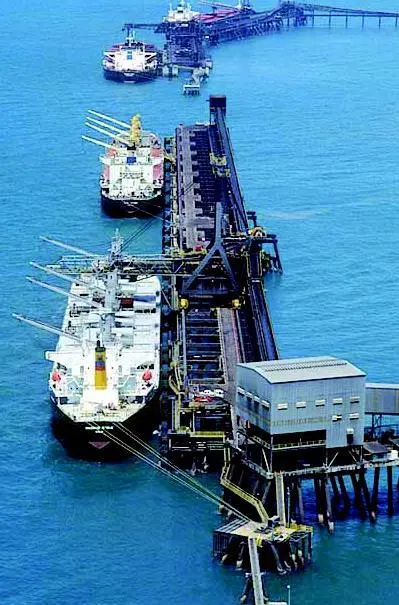
Is it just Australian politicians who are fascinated by coal terminals? For the past six months, the country’s major coal export facilities and congested Dalrymple Bay in particular, have become footballs in the game of blame that sometimes passes for politics in Australia’s Canberra vs the states federal system.
Australia is enjoying a major commodity surge thanks to China.
But there is a strong fear – albeit exaggerated by the needs of political point scoring – that some of the bounty has been squandered by inadequate investment in export infrastructure.
Many economists, and even the Reserve Bank of Australia, have fretted that the economy has run out to the limits of its manpower, mine and coal port capacity, bringing a strong inflation risk into the resources boom – not to mention the loss of immediate sales and a feared demurrage bill on delayed coal ships approaching US$381m a year. One analyst suggested that Australia lost 17m tons of potential coal sales last year in shortages of terminal space, or perhaps the equivalent of one additional smaller-size export terminal.
In Australia, the ports are the responsibility of the states – politically, all Labour – which Canberra now blames for ignoring port development while using their port corporations and their handsome annual dividend payments as cash cows for their general revenue accounts. But the state governments also resent being blamed, in particular, for jeopardising the conservative federal government’s promise at last year’s national elections to keep interest rates low. It was the surprise interest rate hike in March for this housing-sensitive nation, which really pushed the port issue into national headlines and made Dalrymple Bay, where a 40-strong offshore bulker queue has stood since mid-2004, into the telegenic symbol of the issue.
The row was also sharpened by the fact that Dalrymple Bay’s main problem appeared on the face of it to be state bureaucracy. In 2001, the Queensland government sold a 99-year lease on the terminal to listed Prime Infrastructure – collecting US$457m for its coffers in the process. It then put the privatised facility under the supervision of its independent pricing and fair trade watchdog, the Queensland Competition Authority (QCA), unlike most Australian ports where price regulation is governed by state transport ministers.
RETURNS FAR TOO LOW But last year, the QCA ruled to reduce the terminal’s charges to its mine customers to what it considered to be a fair return on the asset, which it fixed at 8.2%. Prime claimed that these returns were far too low to justify investing beyond the current upgrade from 45m to 60m tons. The decision was then reviewed, with coal handling charges raised to US$1.31 a ton from US$1.17. This is still short of the US$2.11 that Prime wanted, but the US$457m project to start increasing capacity towards a potential100m tons now looks possible.
But in the 20 months it took the pricing decision to be made, the 40-strong ship queues began to form, with mining companies, as charterers, daily shelling out US$1.52m in demurrage to keep the ships there.
One of the results of a hurriedly convened prime ministerial taskforce on ports and infrastructure is that export facilities, where after all it is foreigners who eventually foot the bills, will be taken out of domestic price regulation all together. Ports instead, says the task force, should get a light regulatory hand, with pricing between port owners and users to be worked out commercially, and national pricing and competition regulator, the Australian Competition and Consumer Commission (ACCC), brought in as regulator of last resort.
This may turn out to be useful one day. But despite the taskforce, and the great posse of opposition politicians, media, and industry associations which rode out after Dalrymple Bay and the regulatory row, port veterans say that the price regulation issue was almost unique to Dalrymple Bay and the delays still hard to have avoided.
In reality, Dalrymple Bay’s shortcomings could only have been fixed if expansion work had started four years ago – when no-one could have foreseen the current spike in demand. Some pointed out that Newcastle suffered from coal ship queues in the 1860s – yes the 1860s, and are inevitable in a cyclical commodity market. “Everybody got caught with their pants down, including the steel mills. It’s all very well for politicians to run around saying we could have got more coal out if we’d had more infrastructure. That’s easy to say”, says coal watcher Graham Wailes of AME Mineral Associates.
The government has indeed figured that its main task now is to ensure that these inevitable planning lags are kept as short as possible. In May, federal transport minister John Anderson also proposed that the ports be brought into AusLink, a national scheme for planning and funding major road and rail links. His plan naturally pressed the button for another states’ rights row, as he knew it would, but there seems to be little logical about having national plans for road and rail links which stop at the gates of the ports they serve because they are state government territory.
Resources minister Ian Macfarlane backed him up saying that without more integrated planning the country would simply move bottlenecks elsewhere in the chain rather than get rid of them. The task force too has backed the connection of AusLink with the ports, which only seem to have been left out of the AusLink scheme in the first place out of excessive deference to the states.
On the positive side of regulation, the ACCC has played a key role in developing schemes to ration out space at Newcastle’s Port Waratah Coal Terminal (PWCS). Mines had been selling based on what they could produce rather than what they could get through the transport chain, and the regulator stepped in to allocate space in the terminal based on miners’ earlier forecasts.
QUEUES ELIMINATED The scheme was unpopular with both BHP Billiton (which is not a major shareholder at PWCS) and many small miners who feared serious loss of profits. But the queues which had peaked at 56 ships in early 2004 were eliminated within three months. The miners are also allowed to sell quota to each other to keep the system in balance.
In April, the ACCC authorised a similar capacity management system at Dalrymple Bay. There is no substitute for digging more coal and building more terminal capacity. The sly view is probably that congestion did nothing to harm record-high prices in the short term, even if it has hurt in demurrage terms.
But infrastructure rather than mine production now clearly dictates the limits of Australian coal exports. With demand still rising, more infrastructure is needed or Australia will lose market share to those who build more quickly – and after the rows of the last six months, the government knows it.
While the iron ore chain has plenty of spare capacity, the Reserve Bank said late last year that Australia needs to increase its coal port and rail capacity by 17% in the next two years to meet demand.
Already there are questions of whether they can really keep up with mine development. AME’s Graham Wailes said that a staggering 18 new mines and 25 “brownfield” mine expansions will expand production by 87m tons between 2005 and 2008.
But a count of new port capacity coming on line through 2007 shows 15m tons at Dalrymple Bay, 12m tons at Gladstone, and 13m tons at Newcastle by 2007 – plus 9m tons, which Newcastle might add from de-bottlenecking its rail network. By 2008, Abbot Point should have another 10m tons of capacity. But this only adds up to 59m tons of new terminal capacity against the 87m tons of mine capacity – and means that the percentage gap noted by the Reserve Bank is not going to close in the next few years. Only some of the major projects which kick in post-2008 look set to do that.
Nor is it just a matter of adding on more terminal space because the problems extend up the chain to the rails and mines. Unlike the vertically integrated iron ore industry, dominated by just two huge players, the coal chain is a patchwork of common user railways and terminals that is not built to react quickly to changing demand.
In the coal sector, multiple competing mine owners on a coal field use a mix of state government or third party owned rail rolling stock on state or federal government owned track. The owners haul their coal to either a mine-owned, a government-owned, or like Dalrymple Bay, a private but third-party regulated terminal. To confuse things more, the three main coal supply chains, in the Hunter Valley, central Queensland, and northern Queensland, all use a different combination of systems.
Then there are operational inefficiencies as well, with some rail networks in Queensland accused of running trains to timetable rather than to demand – with coal trains running partially laden or empty despite the shortfalls in port loadings. No wonder some feel that having a national port regulator on top of this might solve one problem, but simply create more confusion and cost in the context of the chain as a whole.
Related Articles
 WORLD
WORLD
 PORT & TERMINAL NEWS
 PORT & TERMINAL NEWS