![PortStrategy[GreenPort]](https://www.portstrategy.com/wp-content/uploads/2026/09/PortStrategyGreenPort.svg)


A Broader Approach To Risk
Effective fire response on car carriers saw new guidelines released in 2025. Dean Davison looks at feedback subsequently received and what stakeholders need to do next to help minimise issues in the maritime transport of vehicles.
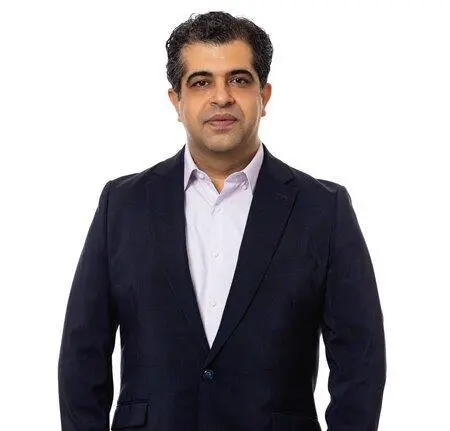
“Effective fire response on vehicle carriers is highly dependent on preparation, clarity of decision-making, and coordination. No single measure is sufficient in isolation. Safe outcomes depend on the combined effectiveness of procedures, training, equipment and collaboration across industry stakeholders, explains Capt. Akshat Arora, Regional Loss Prevention Director – Singapore, Thomas Miller, Managers of UK P&I Club.
This is a view endorsed by Hendrike Kühl, Policy Director of Hamburg-headquartered International Union of Marine Insurance (IUMI), which represents 42 national and marine market insurance and reinsurance associations, who states: “The growing level of cooperation across the maritime industry is encouraging to see,” before he adds, “Ultimately, each insurer takes their own view on risk assessment and risk appetite, just as shipowners do. Each company must take their own decisions and evaluate the information and advice that’s available.”
BEST PRACTICE GUIDELINES
During 2025, both the Vehicle Carrier Safety Forum (VCSF) and IUMI released guidelines connected to fires on car carriers and best practices to help mitigate future incidents.
“The guidelines are contributing to improved safety primarily by helping to inform vessel operators’ planning and response policies and procedures. As they have been developed by the VCSF, which is a consortium of cross-industry participants spanning ship operators, insurers and other experts, the guidance is based on a breadth of experience and insights which can be adapted for individual operational requirements,” confirms Capt. Arora.
Similar feedback was offered by Kühl on behalf of IUMI: “With our guidance paper, we intend to inform IUMI members about the most significant aspects which must be considered when planning the safe transport of electric vehicles (EVs).”
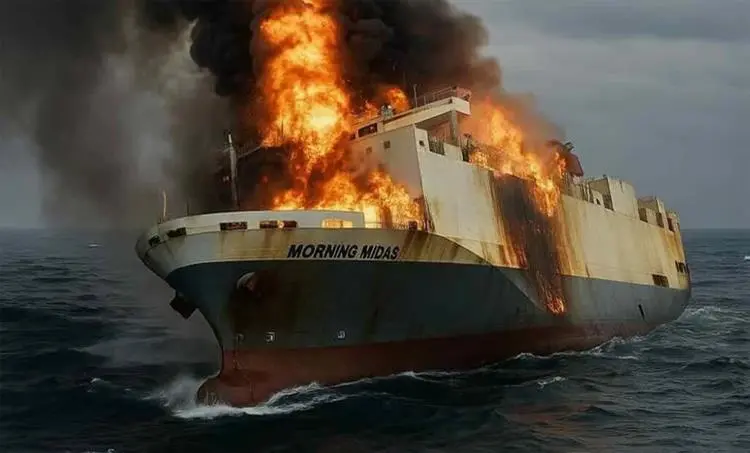
The fact that strategically important organisations are further tackling this subject is endorsed by a number of examples of highly-publicised fires on car carriers hitting the headlines, as Table 1 summarises.
| Date of Fire | Ship (Operator) | Vessel Route / Location | Car Capacity On Board | Outcome / Damage |
|---|---|---|---|---|
| Jan-26 | MS Thames Highway | Germany to UK | 1294 vehicles (incl. 477 EVs) | Engine room blaze, vessel abandoned unable to manoeuvre |
| (K Line) | ||||
| Jun-25 | Morning Midas (under charter to SAIC Anji Logistics) | China to Mexico | 3159 vehicles (incl. 65 EVs & 681 hybrids) | Sank – 3 weeks after fire |
| Jul-23 | Fremantle Highway | Germany to Egypt | 3783 vehicles (1000 were salvaged) | Damaged ship sent to China for repairs |
| (K Line) | ||||
| Jul-23 | Grande Costa D’Avorio (Grimaldi) | Berthed at Port Newark, NY/NJ | 1200 vehicles (no EVs) | Fire extinguished after 6 days |
| Feb-22 | Felicity Ace (MOL) | Germany to US East Coast | 4000 vehicles (luxury brands) | Sank |
| Jun-20 | Höegh Xiamen (Grimaldi) | Berthed at Blount Island, Jacksonville | 2420 vehicles (all used) | Total loss of cargo and vessel |
| May-19 | Grande Europa (Grimaldi) | Italy to Spain | 1687 vehicles (new) | No structural damage ultimately confirmed |
| Dec-18 | Sincerity Ace (MOL) | Japan to Hawaii | 3800 vehicles | Abandoned 1800 nm from Oahu – towed back to Japan |
| Feb-17 | Honor | UK to US East Coast | 5000 vehicles (used, personal and military) | Extensive damage to hold |
| (ARC) |
Source: International Press Reports, collated by PS
To help combat concerns over fires on car carrying vessels, new guidelines were announced in 2025, including:
- · April 2025 – VCSF published its second industry good practice guidelines entitled “Fire Response – High Level Guidelines” to reduce the risk to the safety of crews, passengers, the environment, the vessel and the cargo to be better prepared to meet the challenges presented by vehicle fires.
- · September 2025 – IUMI updated its 2023 best practice and recommendations for the safe carriage of electric vehicles with the release of “Risk mitigation for the safe ocean and short-sea carriage of electric vehicles.”
An interesting point to note in both releases is the acknowledgment of increasing numbers of EVs being shipped, as Lars Lange, Secretary General, IUMI explains: “The volume of cars being shipped by maritime transport globally is around 20 million units per annum. EVs have been transported in ever larger numbers since 2017.”
Kühl at IUMI expands on the implications of this trend: “As an industry association, it is one of IUMI’s primary roles to raise awareness for major and emerging risks for marine insurers. The carriage of EVs has been identified as such a priority. Our members were therefore eager to develop a guidance paper which is of the benefit not only to marine insurers but the broader maritime industry.”
He adds that the IUMI represents the marine property insurers, i.e. marine cargo and hull & machinery (H&M), and so the role adopted by the organisation and its practice paper must be viewed through this lens. However, there are benefits: “The authors who have helped develop and draft the recommendations have seafaring experience (and some of them are even firefighters),” Kühl explains.
Capt. Arora also adds to this subject matter, noting that the increase in the carriage of electric vehicles has introduced new and evolving risk considerations, primarily associated with lithium-ion batteries. “Significant risk factors include the potential for thermal runaway, leading to sustained heat release and the emission of flammable and toxic gases; the possibility of reignition, even after initial fire suppression and the presence of vapour cloud risks, which may introduce explosion hazards under certain conditions,” he opines. Indeed, while he adds that there is currently only limited publicly available data conclusively linking EVs to a higher frequency of fires at sea, the over-riding summary is that the nature and behaviour of EV-related fires differ significantly from those involving conventional internal combustion engine (ICE) vehicles.
POSITIVE FEEDBACK
Feedback to the new guidelines has been positive. “Stakeholders have particularly welcomed the practical and operational focus of the guidance, which complements the existing regulatory framework. Rather than prescribing rigid procedures, the guidelines provide a flexible framework that operators can adapt to their specific procedures, vessel design, equipment and trade. Importantly, the guidance has encouraged more structured dialogue between various industry participants, particularly in relation to emergency preparedness and response coordination,” notes Capt. Arora of VCSF.
Kühl at IUMI endorses this positivity, also highlighting potential industry-wide benefits: “The most encouraging feedback we received has been an invitation from the International Maritime Organization to submit our paper to the IMO’s Sub-Committee on Ship Systems and Equipment as a source of information for delegates of Member States and observer organisations (IUMI is an observer organisation of the IMO ourselves).”
However, it is important to stress that while feedback is positive, the need for tangible safety improvements remains the primary objective. Capt. Arora stresses that while a central message to reinforce time-critical and decision-driven approaches to fire response is essential, it is “time” that is still the decisive factor because fire can escalate within minutes: “By encouraging early assessment and, where necessary, prompt deployment of fixed fire-fighting systems within defined timeframes, the guidance supports more effective containment and reduces the risk of escalation and encourages a more proactive approach to managing risk through providing advice on stowage plan considerations, including the identification and grouping of EVs to prevent fires spreading.”
He also adds how the guidelines are targeting a pro-active approach: “Importantly, the guidelines promote a shift towards a more structured, risk-based response philosophy, balancing the objective of fire control with the safety of the crew and the protection of the vessel. Although crew training requirements or the use of technologies such as CCTV and detection systems are not included in the guidance, it is envisaged that the stronger internal policies become, the more these aspects will also be prioritised.”
WHAT ELSE IS NEEDED?
Capt. Arora offers a simple response to the question of what else is needed?
“While the VCSF guidelines represent an important step forward, and they are an excellent example of cross-industry collaboration, given the evolving risk landscape, it is widely acknowledged that continued and deeper collaboration will remain essential to ensure that guidance, operational practices, and regulatory frameworks remain aligned,” he notes.
He further adds that there needs to be development of stronger engagement with terminals, port authorities and emergency responders because there is an “essential extension of onboard risk mitigation and requires pre-agreed in-port response plans and clear command structures.” This will deliver closer alignment between ship operators and vehicle manufacturers, especially in relation to EVs and other alternative fuel vehicles.
Kühl at IUMI highlights that there are noted practical consultations underway, but challenges are faced: “There are ongoing discussions about trying to introduce more space between vehicles as they are loaded on the deck. This might help slow the spread of fire from one vehicle to another. However, commercial imperatives (i.e. the need to pack as many vehicles as possible onto the vessel) is likely to impede this.”
CONTINUED COLLABORATION
Capt. Arora provides a succinct conclusion. “The guidelines are designed to complement, not replace, existing regulatory requirements and company-specific procedures. In particular, they emphasise the importance of company-level implementation, including clear policies, training, and empowerment of the master. They also highlight the need for integration between onboard response and shoreside support, especially in port environments.”
The IUMI perspective also highlights a need for flexibility moving forward. “In our paper we refer to the growing share of electric vehicles which are being carried by sea compared to conventional internal combustion engine vehicles. The trend is obvious: There is no way back. The industry is keenly aware that risk assessments must be reconsidered and adjusted to account for the risks of EVs. At the same time, it is equally clear that many “unknowns” persist….the maritime industry, including marine insurers, must be open and innovative to incorporate new loss prevention measures,” confirms Kühl.
Clearly, progress is being made but the need for further and continued collaboration amongst all stakeholder remains a basic requirement.
Related Articles
 EQUIPMENT
 OPERATIONS
 OPERATIONS