![PortStrategy[GreenPort]](https://www.portstrategy.com/wp-content/uploads/2026/09/PortStrategyGreenPort.svg)



Bilbao automates hazardous cargo checks
The Port of Bilbao has transformed the way it manages hazardous cargo, deploying artificial intelligence and machine vision technology to automate access control, improve traceability and strengthen safety across one of Spain’s busiest logistics hubs.
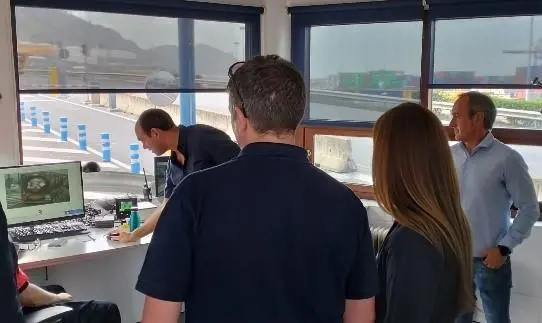
Handling around 16.6 million tonnes of cargo annually, the Port of Bilbao has completed the rollout of AllRead’s automatic recognition system across ten road and rail access lanes.
Integrated with the port’s enterprise resource planning system, the technology automatically verifies whether hazardous cargo is authorised to enter the port, allowing barriers to open or remain closed without human intervention.
The project represents the culmination of a 25-year digital transformation journey, replacing telephone checks, paper records and manual inspections with real-time automated decision-making powered by computer vision, deep learning and secure data integration.
The system automatically reads container identification numbers, hazardous goods placards and UN numbers before cross-checking the information with the port’s management systems in milliseconds. Port Police officers also benefit from the technology through the PortuTel mobile application, which allows instant verification of containers and tanks directly from handheld devices.
Reduced waiting times
The deployment has significantly reduced waiting times, improved traffic flow and strengthened traceability throughout the logistics chain while enhancing safety protocols for hazardous cargo.
Iñigo Imaz, head of telecommunications and cybersecurity at the Port of Bilbao, said the technology had delivered measurable operational and environmental benefits.
“The reduction in queues at the port’s road accesses has led to shorter waiting times, reducing both costs and emissions,” he said.
He added that the automated identification of hazardous goods had fundamentally changed security operations.
“Before, this was a manual process where the port police officer had to visually verify the plate. Now, depending on the type of hazardous goods, special protocols are deployed, such as escorting the container with a patrol,” Imaz said.
A spokesperson for the Bilbao Port Authority described the project as a landmark in the port’s digital transformation strategy.
“This project represents one of our most ambitious digital transformation initiatives in the field of security, with the aim of replacing manual data entry with automatic data extraction using Machine Vision and Deep Learning technologies,” the spokesperson said.
The port plans to further expand the system during 2026, extending AI-powered monitoring to additional access points while enhancing real-time alerts and strengthening integration with its digital infrastructure.
Related Articles
 EQUIPMENT
 OPERATIONS
 OPERATIONS