![PortStrategy[GreenPort]](https://www.portstrategy.com/wp-content/uploads/2026/09/PortStrategyGreenPort.svg)

Bilbao takes centre stage in short sea shipping
The Port of Bilbao will host the 2025 Coastlink Conference where the optimisation of supply chain performance in the context of short-sea shipping, intermodal initiatives and the drive for sustainability are firmly on the agenda.
These are just some of the key issues that will feature on the packed programme to be discussed at the two-day annual conference which runs from 29 to 30 April.
The conference aims to promote debate on the challenges and opportunities affecting the industry of short sea shipping and the intermodal transport networks that support it.
On the first day of the conference, Andima Ormaetxe, the operations, commercial, logistics and strategy director of the Bilbao Port Authority, will be a panelist in a round table discussion on the importance of collaboration in the development of green corridors.
In the afternoon, he will also speak in a session on the benefits of modal shift to deliver more resilient supply chains.
“Despite the negative economic environment and geopolitical changes, we are growing and making significant strides to respond to the new supply chains that are emerging. Sustainability, energy transition and rail intermodality, supported by digitalisation and innovation, are our key strategic development areas,” Mr Ormaetxe told Port Strategy.
“Sustainability is at the core of our values, as we work to create an environmentally and socially responsible port of the future. We are pleased to be working with the Coastlink conference to host the 2025 event.”
A dynamic port
Bilbao is more than well qualified to play host to this year’s conference.
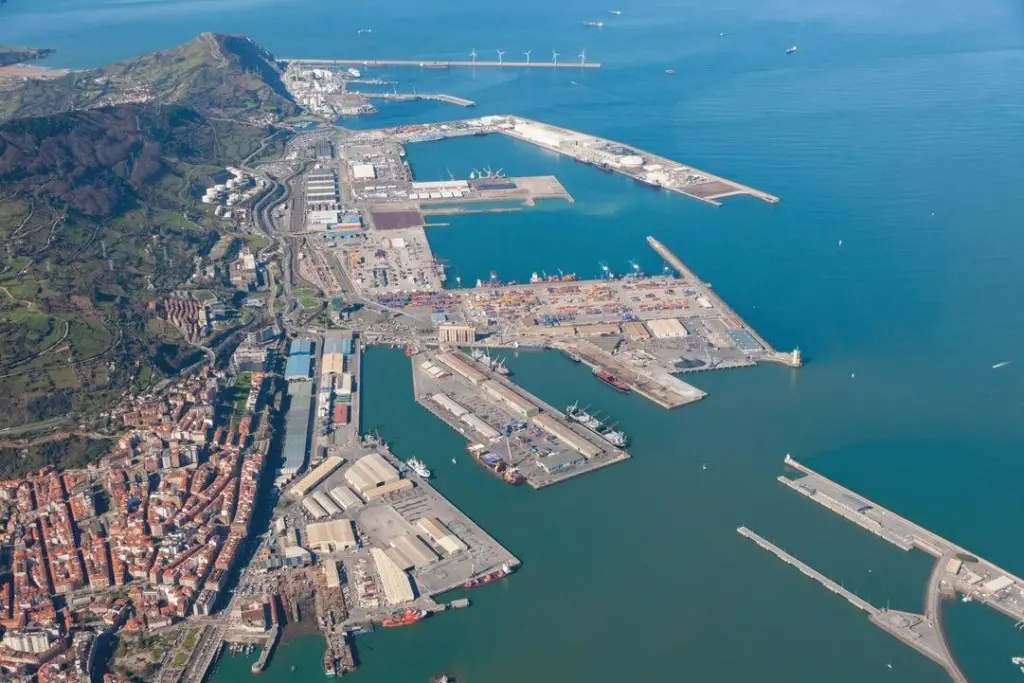
With more than 700 years of history and a privileged position on the Atlantic Arc, the port prides itself on being able to receive any type of vessel or cargo, with specialised services for all types of traffic.
Bilbao is the main port in the north of Spain for short sea shipping and is the leader among Spanish ports in terms of intermodality – 27% of containers are transported by rail.
One key strategic focus of the port is the development of greener and digital maritime corridors to improve supply chains.
This strategy has been strengthened by the newly announced collaboration between the Port of Bilbao, the Port of Amsterdam and the Port of Duisburg, whom, together with the Basque Government Energy Agency (EVE) and other partners, have signed a Memorandum of Understanding (MoU) to combine their efforts in developing a European renewable hydrogen corridor.
By 2026, Bilbao will have a green hydrogen plant within the port. It has signed agreements with the ports of Amsterdam and Duisburg for both the fuel’s production and distribution.
Shortsea focus
Bilbao holds a leadership position in shortsea traffic, as evidenced by the fact that 47% of container trade flows by sea between Spain and Atlantic countries use the port.
The port’s vision for cargo movement in Europe is to make it increasingly intermodal to create more environmentally friendly logistics chains.
“We believe that in the medium term, there will be a greater demand for services in maritime and rail motorways. That’s why we are leading corridor-focused actions in the areas of energy transition, renewable sources, digitalisation and connectivity,” says Mr Ormaetxe.
In the last two years, ferry and ro-ro traffic have experienced the highest growth at the port.
Bilbao offers weekly connections with the UK, Ireland and Belgium, which continue to attract increasing interest from international hauliers.
In 2024, the number of ro-ro operations grew by 29, so it’s a lucrative area for the port going forward.
Automation and digitisation
Automation is a key area for the port and one that will affect all areas of business including short sea shipping.
With a track record of more than two decades, the port uses e-puertobilbao, a digital integration platform that enhances logistics, management and cargo traceability.
It is a strategic technological tool aimed at boosting competitiveness by streamlining and simplifying document exchange processes for port services.
The Bilbao Port Authority is also further expanding its collaboration with AllRead to further automate the port’s road and rail entry points.
By deploying AllRead’s artificial vision technology, the port aims to achieve more efficient access control and real-time traceability of goods, vehicles and rail wagons.
“The reduction of queues at road entrances to the port has led to shorter waiting times, which in turn has led to cost savings and lower levels of emissions,” explains Iñigo Imaz, head of telecommunications and cybersecurity at the Port of Bilbao.
“In addition, the automatic detection of hazardous goods optimises safety and compliance with protocols.”
As Spain’s fourth-largest port and the main multimodal hub in the north, the Port of Bilbao handles around 32 million tonnes of freight annually.
The port is using this technology to address the growing traffic demands because it captures vital data such as container codes, vehicle plates and hazardous goods labels.
Since 2020, the system has automated entry points, expanding from two to ten fully automated lanes, reducing waiting times and improving efficiency.
Electrification and shore power
Electrification is another area at the top of the priority list for the port and inherent to the port’s goals of electrification are its plans for shore power.
As a core port of the Atlantic Corridor, the European Commission requires it to have the infrastructure ready for ships to connect to shore power for energy supply.
It is investing in the implementation of 11 onshore power supply (OPS) points at its ro-ro, container and cruise terminals.
The entire OPS system will be fully deployed by 2027, enabling emissions reductions of up to 40%.
To guarantee that the energy provided by the OPS services to the shipping lines is green and resilient, the BilbOPS project includes the production of renewable energy in the port as a synergetic element.
Initially, four photovoltaic plants will be installed at the ferry and cruise terminals, along with two wind turbines and a battery-based energy storage system.
This green energy production hub, which is also open to wave projects, will be integrated into the OPS electrical network for ships and the port’s own use.
The European Investment Bank (EIB) has recently signed a €80 million loan agreement with the Port Authority of Bilbao to finance the expansion and electrification of the port.
The BilbOPS project has also secured a €14.2 million grant from the European Commission as part of the CEF Transport 2021-2027 funding programme.
This project is part of the port’s broader energy transition plan, aligning with its 2023-2026 strategy plan to become a greener, more sustainable port.
The first phase of electrification, awarded in December 2023, is focused on Dock A5 and is expected to be operational in early 2026.
The BilbOPS initiative was recently recognised at COP29 for its resilience and environmental goals.
Coastlink 2025
Coastlink is for Bilbao, integral to the work it is trying to achieve both in the growth of its short sea and feeder shipping market and its environmental objectives.
“We decided to host Coastlink this year to bring the benefits of short sea shipping and intermodality closer to our port community and customers and to discuss the challenges for a broader deployment of this transport system,” explains Mr Ormaetxe.
“It serves as a key forum to discuss the challenges of freight transport in Europe and an excellent opportunity to connect with the various stakeholders in the multimodal chain and its users.”
This year’s event taking place at the Port of Bilbao, Spain on 29 – 30 April, will be chaired once again by Nick Lambert, director and co-founder of NLA International.
In addition to the conference’s packed programme, a highlight of the two-day event will be the conference dinner, held this time at Jatetxea Restaurant in San Mames Stadium.
Within the last several years the conference has taken place in a range of key European ports such as Southampton, Antwerp, Liverpool and Amsterdam.
Participants include ports and port operators, short sea shipping lines and shippers, intermodal operators, terminal operators, cargo handlers, stevedores and freight forwarders, as well as logistics specialists, shipping agents, port consultants and industry associations.
Book your delegate place at the 2025 Coastlink conference now. Contact Ellie Minshull on eminshull@mercatormedia.com or the events team on +44 1329 825335 email info@coastlink.co.uk for more information.
Related Articles
 EQUIPMENT
 OPERATIONS
 OPERATIONS