![PortStrategy[GreenPort]](https://www.portstrategy.com/wp-content/uploads/2026/09/PortStrategyGreenPort.svg)






Brazilian terminal goes digital with container stowage
Wilson Sons has opted for ABB’s Optical Character Recognition (OCR) system to improve the efficiciency of its ship-to-shore cranes at its Rio Grande container terminal.
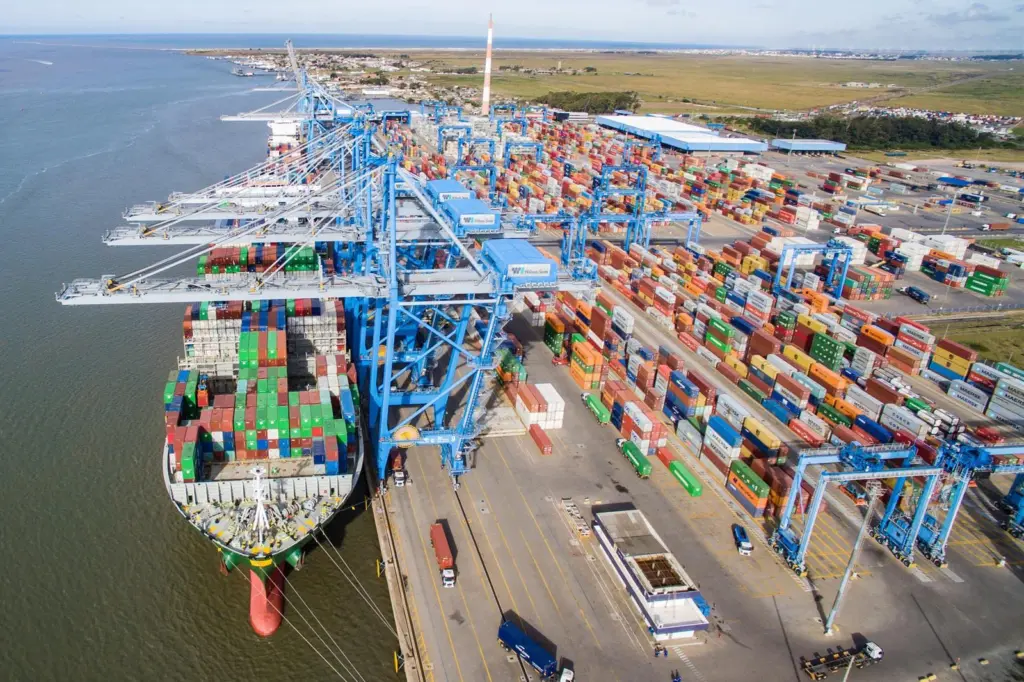
The terminal will be also the first in Brazil to leverage ABB’s QuayPro Software to digitalise container stowage confirmation processes.
“ABB Crane OCR gives us an efficiency edge while the ability to streamline the stowage process automatically represents a productivity differentiator,” said Giovanni Phonlor, operations director of the Rio Grande terminal.
“Minimising the risk of error on data entry means more efficient operations. Technology works hand in hand with leaner, greener operations, ready for growth in traffic and in vessel capacity.”
Automation benefit
Wilson Sons has been using ABB’s automated gate systems both at its Rio Grande and Salvador container terminals since 2013. Adding Crane OCR with QuayPro to the existing gate system supports the operator’s vision to automate and digitalise terminal processes.
With the new QuayPro module, the Crane OCR system not only automates the identification of containers but also confirms the final stowage location on the vessel
The ABB Crane OCR solution automates the process of capturing data as containers are loaded and discharged by STS cranes. Using ABB’s advanced AI imaging technology, the system captures container numbers, ISO codes, door orientation, bolt seal presence and hazardous material labels, as well as recording images for damage inspection purposes.
With the exception management system clerks can correct or adjust transactions in real time from a remote location. The solution also includes ABB MatchMaker which identifies the terminal trucks, allowing for the automated handoff between crane and terminal vehicles.
The combination of ABB Crane OCR and the QuayPro module makes it possible to streamline the stowage confirmation process, with increased productivity as a result. The module determines the actual stowage position of containers during vessel loading operations, providing input to the terminal operating system to create an accurate outbound BAPLIE (bayplan/stowage plan occupied and empty locations message) file, in addition to confirming the accuracy of inbound stow positions.
Any deviation from the load or discharge plan is reported in real time enabling the terminal to adapt to dynamic variations. In addition, crane drivers get audio-visual work instructions.
Related Articles
 EQUIPMENT
 OPERATIONS
 OPERATIONS