![PortStrategy[GreenPort]](https://www.portstrategy.com/wp-content/uploads/2026/09/PortStrategyGreenPort.svg)





Congestion highs
Port congestion has reached new highs, finds new research.
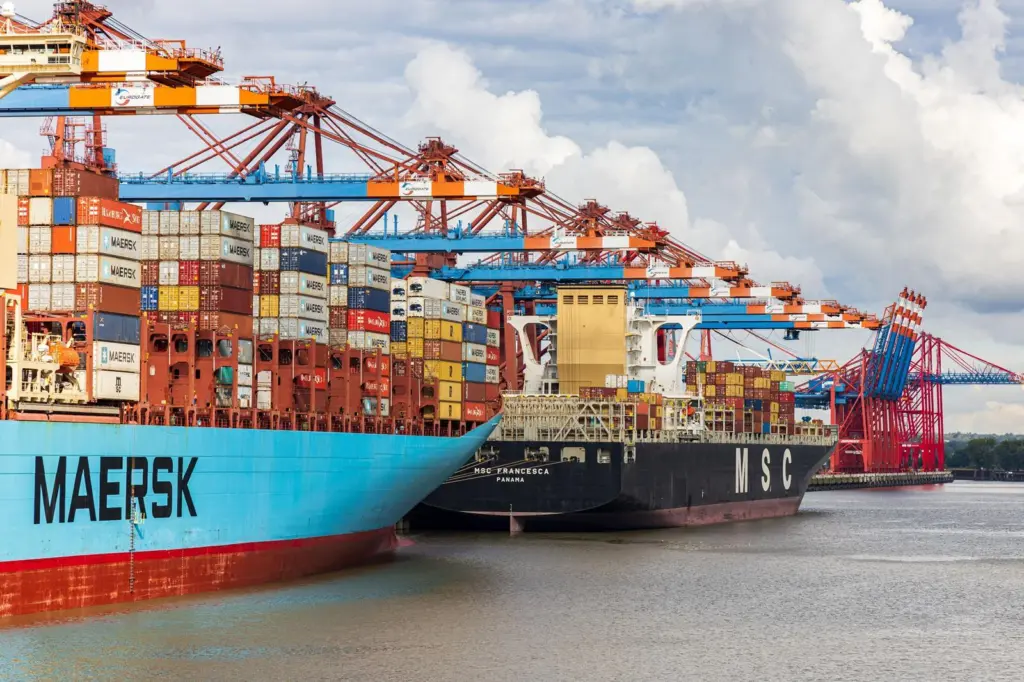
This is according to the latest Clarksons Port Congestion Index, which found key congestion “hotspots” across the container network include China and the West Coast of the US.
Steve Gordon, managing director of Clarksons Research, commented: “Congestion trends at containership ports are most acute, with the Clarksons Containership Port Congestion Index (representing the level of fleet capacity globally in port or an associated anchorage each day) reaching a new high of 37.3% of containership fleet capacity on 21st October (on a 7 day moving average basis), compared to a pre-Covid-19 (2016-19) average of 31.4%.”
China and US West Coast worst
He said in China, containership capacity at port totalled 2.6m TEU on 21st October, up more than 50% on the 2016-19 average of 1.7m TEU. On the West Coast of the US capacity at port totalled 0.87m TEU on 21st October, almost three times the 2016-19 average of 0.32m TEU.
In the UK, the level of containership capacity at port reached 0.22m TEU on 17th October (7dma), up 50% on the average in the year to date, though this has since eased back to 0.15m TEU on 21st October.
“Our port congestion index shows that at 10th Oct, on a 7dma basis, 9.0m TEU of containership capacity was at port (within a port or anchorage “shape”), 36.7% of the fleet,” found the Clarksons Shipping Intelligence Weekly report for 15 October.
“This compares to a ‘pre-Covid’ average across 2016-19 of 31.4%, so more than an additional 5% of the fleet ‘tied up’ as a result of bottlenecks, part of the ‘perfect storm’ driving extraordinary container shipping markets and showing no sign of winding down as yet.
Related Articles
 EQUIPMENT
 OPERATIONS
 OPERATIONS