![PortStrategy[GreenPort]](https://www.portstrategy.com/wp-content/uploads/2026/09/PortStrategyGreenPort.svg)



Connectivity Critical
Graham Wilde, Head of Private Networks at Three Group Solutions, a CK Hutchison group company, underlines the importance of connectivity in the modern port era
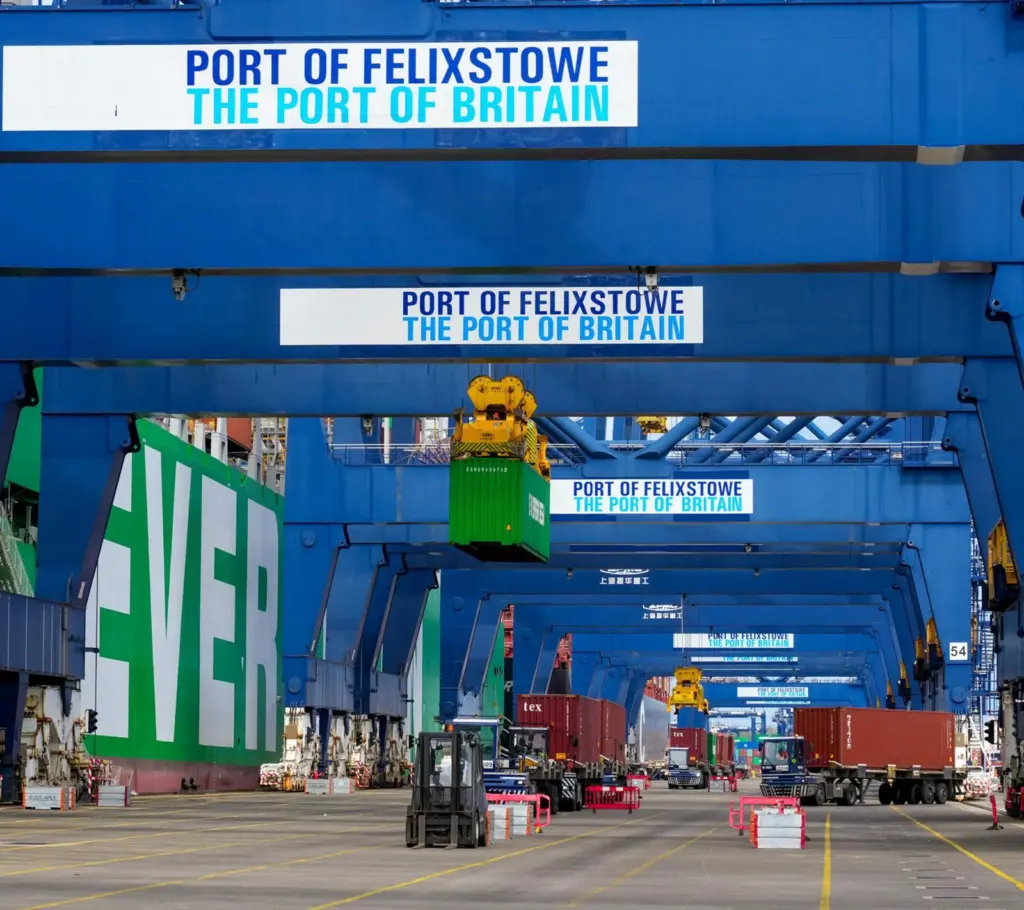
Ports are entering a period of structural change. While automation, remote operations and data driven decision making are often discussed as future ambitions, real challenge is not adopting individual technologies but designing a system that can support them safely and reliably at scale.
Across the sector, pressures are intensifying:
- Vessel sizes are increasing, concentrating risk into fewer port calls.
- Supply chains are less predictable as geopolitical tension and extreme weather disrupt schedules.
- Safety expectations and decarbonisation targets are rising.
- Experienced operators are retiring faster than they can be replaced.
Taken together, these forces point to a clear conclusion. Incremental efficiency gains are no longer enough. Ports need operating models that are more adaptive, resilient and inherently safer than those of the past.
From assets to systems
Historically, ports were built around physical infrastructure supported by discrete IT systems. Cranes, yards, gates and rail connections were optimised individually, with terminal operating systems coordinating activity.
The emerging port model looks very different. It treats the terminal as a single, integrated system in which assets, people, automation and data continuously interact. Equipment is connected by default. Decisions are informed by live operational data rather than static plans. Safety is enforced dynamically rather than through rules alone.
Automation does not remove people from ports, but reshapes their role. Machines take on repetitive and hazardous tasks, while human operators focus on supervision, planning and judgement. Remote operations allow skills to be shared more flexibly.
What enables this shift is not any single application, but a communications backbone capable of moving data securely and predictably between systems, machines and people. Without that foundation, even well-designed automation struggles to deliver consistent results.
Private 5G as critical infrastructure
Public mobile networks were never designed to carry operationally critical traffic. If the connection between the terminal operating system and cranes or vehicles fails, operations stop. As a result, private 5G networks are emerging as the dominant communications platform for automation led ports.
As automation and sensor density increase, expectations of the network rise sharply. Autonomous and semi-autonomous vehicles generate multiple video and safety data streams. Drones and mobile cameras require coverage across the entire estate. Remote controlled equipment demands the low latency, resilience and predictable performance that private 5G networks are designed to provide.
At this point, private 5G connectivity becomes part of the port’s core infrastructure, alongside power and rail. It must be designed with resilience, redundancy and cybersecurity built in, and integrated cleanly with both IT and operational technology environments.
The future
In a port designed around this system level approach, enabled by private 5G connectivity, planning becomes continuous rather than episodic. A live digital model reflects the state of the terminal using vessel arrivals, truck appointments, rail schedules and weather forecasts. Human oversight focuses on exceptions rather than routine changes.
Autonomous vehicles circulate without fixed start or stop points, joining tasks as required. Remote operators supervise equipment from control rooms using multiple camera views and guidance systems that improve accuracy and reduce fatigue.
Safety controls operate persistently. Geofenced zones protect high risk areas, triggering alerts or automated slowdowns when boundaries are breached. Wearables provide immediate feedback, while drones conduct routine inspections with only anomalies escalated for review.
Remote operations can improve visibility by combining camera feeds and sensor data into views clearer than line of sight from a cab, while real time analytics reinforce safe behaviour continuously. Crucially, these safety improvements rely on the same foundations as efficiency gains. Private 5G connectivity, data and intelligent systems deliver both outcomes together.
Condition monitoring systems analyse vibration and temperature data to predict failures and schedule maintenance between vessel calls. The combined effect is fewer unnecessary moves, less waiting, improved asset utilisation and fewer people exposed to harm.
Where port leaders should focus
The lesson from early adopters is not that ports must pursue a single vision immediately, but that foundations matter. Treat private 5G connectivity as a strategic asset rather than a background service. Start with targeted use cases that deliver operational and safety value. Design systems that can scale.
Ports that make those choices now will be better positioned to adopt future waves of automation and decision intelligence. Those that delay may find the real bottleneck is no longer physical infrastructure, but an invisible layer that cannot support the demands placed upon it.
The port of the future will be defined by how effectively it turns information into action. Designing that capability deliberately is now a leadership decision.
Related Articles
 EQUIPMENT
 OPERATIONS
 OPERATIONS