![PortStrategy[GreenPort]](https://www.portstrategy.com/wp-content/uploads/2026/09/PortStrategyGreenPort.svg)

Critical Enablers
Energy transition is a key initiative for ports in North Europe. Dean Davison looks at various projects and investments being made across several major ports
“To be ready for future operations in Europe, industry needs the infrastructure, access to low-carbon energy and materials and space to be able to decarbonise,” explains Mandy Ros, Spokesperson for Port of Rotterdam.
Energy transition for the port industry is a highly common but crucial objective, but why is this? Well, Johan-Paul Verschuure, Director, Rebel Group offers a good synopsis to answer the question.
“Ports are recognised as critical enablers of the energy transition process and are well-placed to support decarbonisation and introduce sustainable practices. There is a global shift to cleaner energy and ports can support, and indeed help facilitate, this shift. As a result, the port industry has a strategic role to play. It is already underway in North Europe,” he confirms.
PILLARS AND TRANSITION
A review of current and planned activities at some of the major ports in the north European continent endorse Verschuure’s summary.
“Our climate transition plan has an integrated approach to reducing greenhouse gas emissions in the port area. It covers our plans to reduce the emissions of the Port of Rotterdam Authority itself (vessels, the energy purchased, travel movements) but also relates to emissions from shipping and companies located in the port area; this last category of emissions is most extensive. As a landlord, we can contribute to enhance reduction actions and new investments in sustainability of these companies and liners, but these emissions are not under the control of the Port of Rotterdam Authority.” says Ros.
The port continues to push ahead with its plans in this area, part of its approach via its Four Pillars (of Efficiency and infrastructure, A new energy system, New raw materials and fuel system and Making logistics chains more sustainable). Ros confirms that the following projects each contribute to energy transition:
- CCS Porthos is nearing its completion and will make it able to store 2.5 million tons captured CO2 from industry in the port annually in depleted gas fields for the coming 15 years. It is future-ready for 10 million tons annually.
- The hydrogen network in the port is ready for use.
- Two 200MW green hydrogen production plants (Shell, Air Liquide) are under construction and nearing completion.
- One third of all offshore wind farms come on land in the Rotterdam port area.
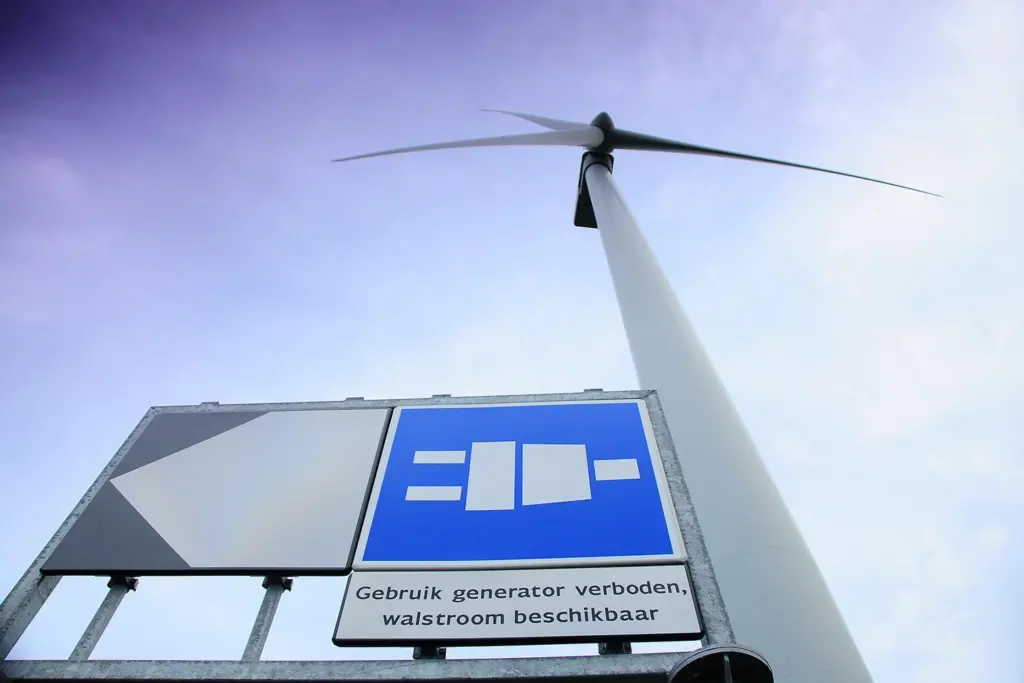
- Shore power is going to be installed at the large container terminals and already in use in other places in the port (cruise, roll on roll off, large offshore vessels).
- The cross border Delta Rhine Corridor for H2 and CO2 is being developed (2032/2033).
The Port of Hamburg is adopting a similar approach to support to the energy transition process.
Axel Mattern, CEO, Port of Hamburg Marketing, explains further: “Hamburg is the first port in Europe to offer shore power for container ships and cruise ships and is several years ahead of the regulatory requirements. The energy transition is another pillar of the Port Development Plan 2040. A development area within the port has been designated for companies in this sector, known as the Sustainable Energy Hub. Among other things, an import terminal for hydrogen derivatives—primarily ammonia—and an electrolyser are planned or currently under construction here.”
Antwerp, too, has ongoing energy transition projects. “We have launched the hydrotug (on hydrogen), methatug (on methanol) and Voltatug (a full electric one) to prepare our port for the bunkering of all these alternative fuels (impact on operations, storage, legal framework etc), as examples of our ongoing initiatives,” summarises Tineke van Ginneken, Key Account Manager Consumer Goods, Beverages and Forwarders, Port of Antwerp-Bruges.
She adds that the port has also launched a new area with the port to be a “hotspot for players in the circular industry,” and is called the NextGen-District. “This area is bustling with new ideas and creative entrepreneurship with the aim of supporting entrepreneurial innovators who show us that we can achieve our goal by challenging the status quo and fighting for a world without climate change,” says van Ginneken.
Hamburg Port Authority is adopting a similar approach by supporting companies seeking to make a positive impact in such areas as energy transition. “The goal is to actively promote innovation and adoption. In addition, numerous individual projects are being pursued to further reduce emissions in the port, notes Mattern.
HAROPA PORT has a clearly stated ambition of being a “port of reference for the ecological and energy transition” as Kris Danaradjou, Deputy Director of Development, HAROPA PORT explains: “We have launched a major shore power program for both maritime and inland terminals, significantly reducing emissions from vessels at berth. The first cruise terminal quay in Le Havre has already been electrified, and container terminals will be progressively equipped from 2028. In parallel, the “Borne & Eau” program has deployed over one hundred water and electricity supply points along the Seine axis, from Le Havre to Paris via Rouen.”
WELCOMING SUSTAINABILITY
Vos at Port of Rotterdam Authority sums up current objectives succinctly. “We are aiming for climate neutrality in the port area by 2050. We want to achieve this by investing in energy infrastructure, entering into (global) partnerships, actively welcoming sustainable companies, and helping to make companies and the logistics sector more sustainable.”
Related Articles
 EQUIPMENT
 OPERATIONS
 OPERATIONS