![PortStrategy[GreenPort]](https://www.portstrategy.com/wp-content/uploads/2026/09/PortStrategyGreenPort.svg)


Felixstowe scales autonomous truck fleet
Hutchison Ports Port of Felixstowe has ordered a third batch of autonomous trucks from Shanghai Westwell Technology, expanding its fleet to 100 vehicles.
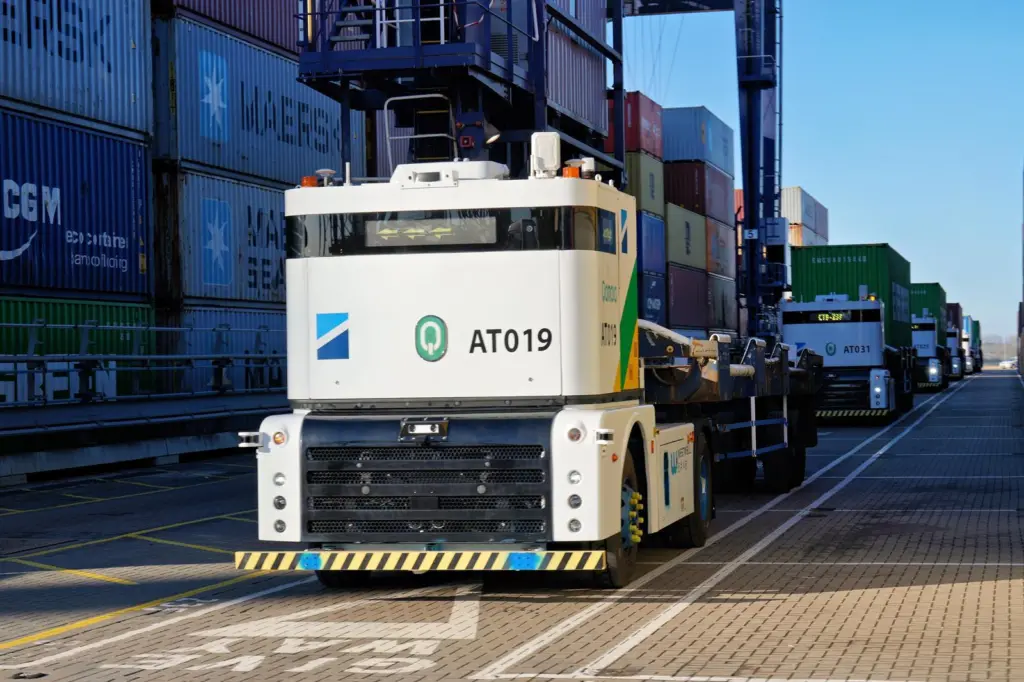
The investment strengthens the UK port’s position as a European leader in large-scale port automation, with the autonomous trucks operating in live mixed-traffic container terminal environments alongside conventional port equipment.
This latest order also includes a second automated battery swapping station and builds on the port’s wider strategy to improve operational resilience, efficiency and sustainability across port operations.
“Expanding our autonomous truck fleet to 100 vehicles demonstrates our confidence in the technology and in the benefits it is already bringing to our customers, colleagues and operations. Felixstowe has led the way in deploying autonomous trucks safely at scale in a live port environment,” said Clemence Cheng, executive director of Hutchison Ports and Port of Felixstowe CEO
Enhanced automation
The new autonomous trucks will feature upgraded sensor and perception systems, including 128-line LiDAR and advanced camera technology designed to improve navigation and operational safety within the busy terminal environment.
This technology supports accurate and reliable movement of containers while operating alongside conventional terminal traffic.
As part of this latest expansion, the contract includes a second automated battery swapping station, enabling depleted batteries to be exchanged for fully charged units in five to six minutes to maximise fleet availability and minimise disruption to port operations.
Supporting the deployment is the port’s private 5G network, described as one of the UK’s largest industrial private 5G installations.
The network enables secure, real-time communication between autonomous trucks, terminal infrastructure and control systems to support safe and efficient port automation.
The fully electric fleet also supports the port’s target of achieving Net-Zero for Scope 1 and 2 emissions by 2035.
Related Articles
 EQUIPMENT
 OPERATIONS
 OPERATIONS