![PortStrategy[GreenPort]](https://www.portstrategy.com/wp-content/uploads/2026/09/PortStrategyGreenPort.svg)



Flip Phone to a Smartphone
Container terminals are critical components in supporting trade and automation on the quay is a vital part of building efficient operations and increasing safety. Dean Davison looks at current trends and activities
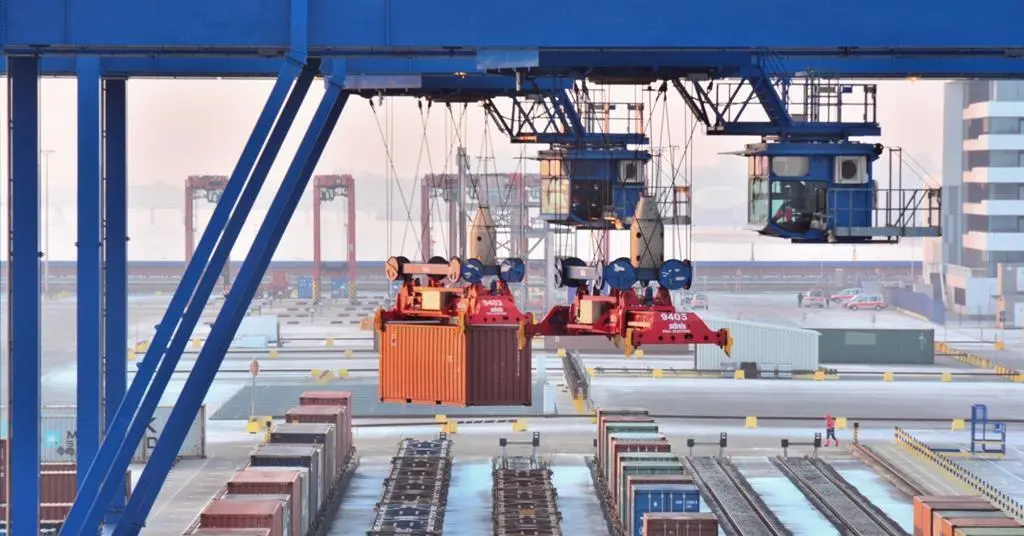
“Automation in ports is like upgrading from a flip phone to a smartphone—once you try it, there’s no going back. With automation, cranes can work with pinpoint accuracy, operators can control them from a distance and there is less downtime and smoother flow of goods. So, a well-run crane system means a well-run port,” according to Yuantai Crane Machinery Import & Export Co., Ltd (Yuantai Crane) of China.
The Zhengzhou East-based manufacturer elaborates: “Automation doesn’t work on its own. It depends on a solid setup. Ports may need to upgrade power systems, improve network reliability, install sensors, cameras, and wireless coverage, build dedicated operator and control rooms – not every port is ready for these changes without serious planning and construction.”
Fredrik Johanson, Head of Sales, Ports in ABB’s division Marine & Ports, offers a comparable view: “The world is becoming increasingly uniform, and so is crane automation. We see that terminals recognise that automation bring benefits far beyond cost savings, such as work environment, reduced equipment wear and tear, better data quality, and digitalisation giving faster access to information. A continued focus on safety and employee wellbeing, moving work from under the cranes to a safe office environment. With new safe solutions under development, processes change and this means new ways of working as well. This will open up for new roles, for example in maintenance and process supervision.”
ENETER AI
Container terminals play a critical role in global trade logistics activities, acting as the primary interface between shipping and inland distribution networks for cargo. This means facilitating a productive efficient transfer of goods from ship to quayside and then on to a storage yard or waiting inland transportation service provider.
Of the equipment used, ship-to-shore (STS) quay cranes are central critical assets to terminal operations because of the direct link between vessel and the quay. As such, there are a large number of different factors, challenges and approaches needed for automation on the quayside to be effective and deliver tangible benefits, often requiring new initiatives and adaptable approaches.
Consequently, optimising quay crane operations is very important in automated container terminals to improve the efficiency of the whole terminal and simultaneously reduce operational costs.
However, container ship-to-shore cranes can be regularly impacted by different disruptive factors, including direct mechanical failures, adverse weather conditions, and system or maintenance issues. For automated and semi-automated container terminals, where system complexity can amplify the impact of downtime, such problems are even more pronounced and of a greater concern. This is because when they occur there can be increased vessel waiting times, longer vessel turnarounds and delays for subsequent landside activities – ultimately leading to reduced terminal productivity and profitability and unhappy shipping line customers.
Johanson explains that ABB has a holistic view of automation and the digitalisation of the processes in conjunction with STS cranes, where safety is paramount of course. “Current industry trends, as well as technology developments, are focusing on increasing productivity on both landside and waterside for STS cranes. A key area is the use of AI, so far implemented in landside operations with integration between various kinds of horizontal transports and the STS cranes, an important factor to further enhance the container handling flow in terminals. But also on the shoreside, developments are progressing and we are convinced that our latest work will overcome barriers and open for further automation.
“Eventually the level of automation is decided by each terminal’s strategy. New solutions can be applied to drive higher levels of automation but can also be deployed to assist crane operators with their workload, for example by enhancing safety through better risk detection and more responsive warnings,” he states.
WHAT IS NEW AND WHO IS DOING WHAT?
So, what are quay automation manufacturers and service providers doing with respect to new products and initiatives to improve operating activities and help ensure potential challenges are overcome?
ABB describes itself as a “system integrator,” which means focusing on providing tested and proven systems rather than separate products. “We guide terminals through each step of their journey to embrace new solutions and strategies. Based on our extensive global experience, we can define solutions that align with goals and strategies, starting small, moving step by step, or going for large-scale automation projects,” confirms Johanson
Oakland (US)-based Liftech Consultants Inc., structural engineers and specialists in the design of container handling cranes and other custom heavy equipment, has conceived a new crane concept, the Balance Crane, for unloading containers from large vessels and subsequently developed the design in collaboration with crane manufacturer ZPMC, Shanghai, China.
The Balance Crane has reduced wheel loads and tie-down loads compared to a standard ship-to-shore container crane but functions similarly. According to the company: “The end results are a stowed crane with a lower centre of gravity and reduced overturning moment due to stowed wind loads. In the operating position, there will be reduced trolley rail hinge maintenance due to fewer trolley cycles crossing the hinge relocated to the landside.”
One possible vision for the future of STS automation is that as sensor technology improves, new possibilities open up, such as performing automatic identification of containers and people working on a ship and safely performing automatic landing on the vessel.
An example here is the Crane Advance Remote Monitoring System (CARMS) offered by Mitsui E&S Co. Ltd. This system collects and assesses key data related to cranes using sensors, which is then accumulated in the Cloud managed by Mitsui E&S Co. Ltd and can be visualized and viewed through a web browser. Importantly, it is then possible to monitor crane status on a 24/7 basis on a remote basis, including focussing on equipment lifespans and signs of failure.
Automation reduces variability and human error, but it shifts, it does not eliminate, friction. Faster STS cycles expose yard and landside weaknesses. Better STS duty cycles are only valuable when the yard architecture and landside throughput scale accordingly.
ABB says it will continue to push the frontier for automation systems aiding terminal operators all over the world to maximise their profits through increased productivity at a lower cost, as Johanson summarises: “Opinions vary on the desirability for further automating ship-to-shore cranes. To be successful, technology solutions must contribute to the goals of the terminal, and the needs of all stakeholders. All parties need to work together to agree and implement solutions that increase safety and productivity. Inevitably, this will come with new ways of working, but when everyone involved works towards the same goal, the road to success is open.”
Related Articles
 EQUIPMENT
 OPERATIONS
 OPERATIONS