
Skip to content
PortStrategy[GreenPort]
Sign In Subscribe

Sections

  • News
  • Events
  • Buyers Guide
  • GreenPort
  • Subscribe

News

  • Africa
  • Asia
  • Concessions & Investments
  • Container & Cargo Handling
  • Digital
  • Equipment
  • Europe
  • Expansion & Development
  • Insight & Opinion
  • Mergers & Acquisitions
  • Port & Terminal News
  • Terminal Operations

Port Strategy

  • About
  • Advertise
  • Contact
  • Subscribe
  • Sign In

Featured

  • Allison logo Allison unifies brands following Dana takeover 18 November 2026
  • Port of Gothenburg aerial shot Port of Gothenburg awards major dredging contract 18 November 2026
  • Picture2 Widespread container securing system innovation 16 November 2026
  • Picture1 AI commercial returns questioned… 16 November 2026
  • Screenshot 2026-11-16 154838 Albayrak: Falling short 16 November 2026

Buyers Guide

Port of Oakland

Put your company in front of 37,000 industry professionals every month using our targeted Buyers Guide.

Buyers Guide
  • News
  • Events
  • Buyers Guide
  • GreenPort
  • Subscribe
Home Operations Green credentials tested
OPERATIONS

Green credentials tested

3 years ago

The word greenwashing has risen from a rarely used word to one in common usage today. What does it mean?

In common parlance, greenwashing is widely understood to be the exaggeration of a company’s environmental credentials or to put it more crudely bigging up such credentials through marketing spin or media hype.

There are, however, three specific categories of greenwashing identified by Business for Social Responsibility (BSR), the consultancy and business network whose actions are founded on creating a world in which all people can thrive on a healthy planet. These three categories of greenwashing sit around the base line of Effective Environmental Communications as can be seen in Table 1.

Table 1

CATEGORY #1: EFFECTIVE ENVIRONMENTAL COMMUNICATIONS

Effective communication and good environmental value

Sustainability is built into a business’s strategy and core mission statement. Every organisational process and operation is considered, challenged, and improved to reduce an entity’s environmental and social impact. Efforts and successes are then communicated accurately using an evidence-based approach to back claims made. These brands operate as green leaders.

CATEGORY #2: MISGUIDED GREENWASH

Poor communication, some environmental value

In this instance, corporate greenwash is not used intentionally but is rather the result of ineffective communication that undermines the substantial efforts made to improve a company’s environmental performance. Most often, misguided greenwash includes the use of sweeping generalisations, using terms such as natural, eco, or environmentally friendly with the absence of data to back these statements up. A revised communication strategy is needed here to deliver data-driven and focused marketing messages.

CATEGORY #3: GREENWASH NOISE

Poor communication, poor environmental value

These are companies who try to shout louder than their competitors about how green they already are. These brands spend more time and money presenting themselves as green relative to the actual time and money spent on making a change and becoming more sustainable. Much work needs to be done to move these brands into the Effective Environmental Communications category, but this is possible by:

1. Addressing the brand’s environmental impact through the value chain.

2. Developing and implementing an effective environmental strategy.

3. Communicating environmental efforts accurately using a scientific, data-driven approach.

4. Achieving third-party certification.

CATEGORY #4: UNSUBSTANTIATED GREENWASH

Effective communication disguises poor environmental value

These brands are involved in positive environmental projects and provide data to back up their claims. However, these claims mask a company’s damaging environmental impacts. Brands that fall into this category cause the most harm to the environment because their behaviour could lead to public disillusionment and disengagement from the environmental debate.

DOSE OF SCEPTICISM
The categories shown in Table 1 very effectively cover the whole spectrum of greenwashing and perhaps even more significantly signpost a certain lack of real commitment to achieving decarbonisation efforts against an agreed timeline.

It is then not so surprising that a large dose of scepticism about companies’ Environmental, Social and Governance (ESG) credentials was identified as one of the key findings of a recent UK survey of the subject among 2072 business leaders, entrepreneurs and marketing professionals. Specifically, key findings were:

  • More than a third (36 per cent) said that messages supporting ESG credentials had “no effect” on them whatsoever.
  • Seventeen per cent said they questioned the validity of ESG claims made by businesses.
  • Just 16 per cent said that they look more favourably on those who regularly share updates on their environmental and social responsibility initiatives.

The survey’s originators Bath-based Clearly PR, notes: “…the extent to which many businesses are talking about their ESG credentials has become frenzied.” And that: “This is clearly alienating many customers…” plus “There is, it seems, too much banging on the green and purpose drum and there is evidence to suggest that customers view excessive ESG communications as hyperbole rather than authentic. As such, in many cases, they have either become immune to the ESG messaging emanating from businesses or destring of their validity.”

Tags: BSR Business for Social Responsibility Environmental, Social and Governance ESG Greenwashing

Sponsored

Oceanscore Spon 4 3 - Komprimeret - Containerterminalen 1

Environmental incentives: How winning ports shape shipping trends

In partnership with OceanScore

Related Articles

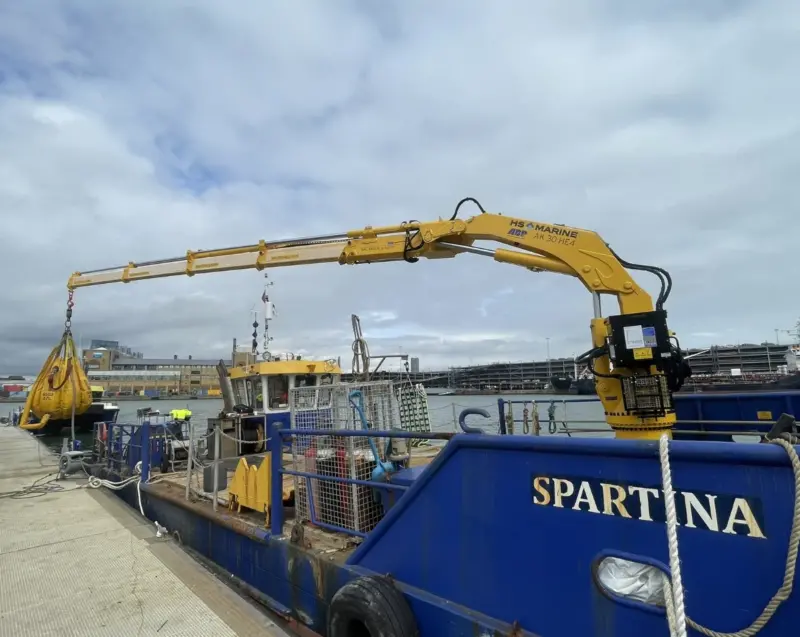
deck crane on board workboat 'Spartina' at the Port of Southampton EQUIPMENT
EQUIPMENT

ABP has installed a new marine deck crane on board a Southampton workboat, strengthening safe harbour operations and capability

23rd September 2026

ABP upgrades Southampton workboat crane

23rd September 2026

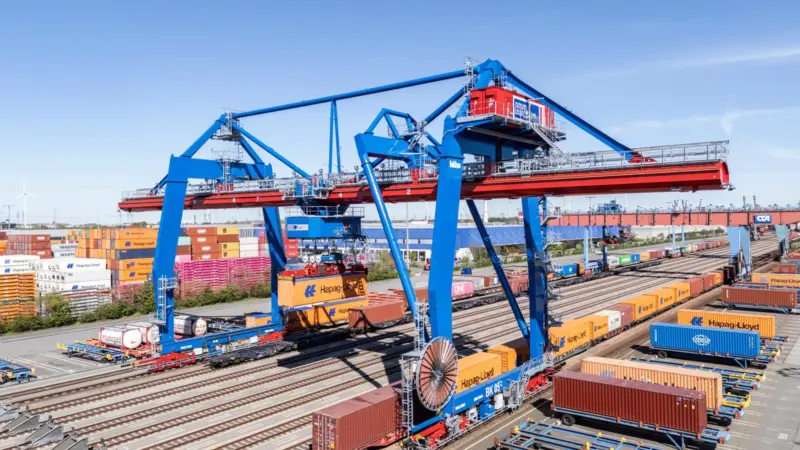
remote control rail gantry crane at the HHLA CTA OPERATIONS
OPERATIONS

HHLA has commissioned remote-controlled rail gantry cranes at its Container Terminal Altenwerder (CTA) in Hamburg, marking another step in the terminal’s ongoing automation programme.

26th August 2026

HHLA advances remote rail crane operations

26th August 2026

liebherr-cbg-310-rocktree-LQ OPERATIONS
OPERATIONS

Liebherr Maritime Cranes has introduced the CBG 310, a new four-rope grab crane designed to improve high-performance transshipment operations while building on the established CBG 300 platform.

20th August 2026

Liebherr’s new crane boosts performance

20th August 2026

Sponsored

Oceanscore Spon 4 3 - Komprimeret - Containerterminalen 1

Environmental incentives: How winning ports shape shipping trends

In partnership with OceanScore

Q4 2026 Read the latest edition Read Now Port Strategy Q4 2026 (opens in a new tab)

Most Popular

  1. 1 A fragile peace in Uruguay 2 months ago
  2. 2 Allison unifies brands following Dana takeover 6 days ago
  3. 3 Port of Gothenburg awards major dredging contract 6 days ago
  4. 4 Widespread container securing system innovation 1 week ago
  5. 5 AI commercial returns questioned… 1 week ago
  6. 6 Albayrak: Falling short 1 week ago
  7. 7 Global container trade maintains strong growth 1 week ago
  8. 8 EDECS wins major Luanda quay upgrade contract 1 week ago
  9. 9 STS 10: Elusive as ever 1 week ago
  10. 10 Shipping rollercoaster 1 week ago

Stay Informed

Get the latest maritime news delivered to your inbox

Subscribe

Latest Press Releases

  • Shipping Energy Transition: TIPC Reaches Sustainability Milestone with Launch of Alternative Fuel Bunkering

    23rd November 2026

  • Customized Fender Systems for Limited Mounting Space at Port of Narvik, Norway

    20th November 2026

  • Responding to Evolving Shipping Industry Trends, Port of Kaohsiung Looks to Strategically Allocate Available Wharves

    19th November 2026

  • Newly Launched Bilingual TPNet 2.0 App Delivers Smart, Streamlined, Intuitive Access to TIPC Services and Data

    19th November 2026

  • Taylor Machine Works Expands Reach Stacker Line with High-Capacity Container Models

    12th November 2026

  • Sailing Toward a Net-Zero Future: Port of Kaohsiung Launches Marine Biofuel Bunkering for Green Shipping

    12th November 2026

  • Vertical Cylindrical Fender Design for Tugboat Operations at Port of Sept-Îles, Canada

    11th November 2026

  • Penghu Port’s Transformation into a Model Cruise Destination Attracts International Inter-Island Cruise Itineraries

    11th November 2026

  • Taiwan Green Energy Milestone: Ørsted Finishes Wind Farm Installation via Port of Taichung Base

    11th November 2026

  • Optimizing the Fender Design for LMT2 at Port of Lumut, Malaysia

    2nd November 2026

  • Lease Adjacent to Port of Kaohsiung Wharf 121 Sets Stage for New Nonferrous Metals Storage and Delivery Center

    10th August 2026 · By Taiwan International Ports Corporation

  • Customized Donut Fender Solution Supports Ferry Terminal Upgrade at Sjællands Odde, Denmark

    5th August 2026 · By ShibataFenderTeam

  • Smart LED Street Light Upgrade at Port of Taichung Makes Port Roads Safer with Significantly Less Power

    3rd August 2026 · By Taiwan International Ports Corporation

  • Port of Tampa Expansion Implements PIANC-Recommended Cone Fender Design

    28th July 2026 · By ShibataFenderTeam

Port Strategy

Insight for port executives

Sections

  • Europe
  • Products & Services
  • Equipment
  • North America

Resources

  • About Us
  • Contact
  • Advertise
  • Subscribe

Legal

  • Privacy Policy
  • Terms & Conditions
  • Cookie Policy
© 2026 Port Strategy. All rights reserved.

Cookie Settings

We use cookies to enhance your experience. You can choose which categories to allow below. Privacy Policy

Essential cookies that enable core site functionality. The site cannot function properly without these.

Help us understand how visitors interact with the site by collecting anonymous usage data.

Used to deliver relevant advertisements and track campaign performance across websites.

Remember your settings and choices to provide a more personalised experience.