![PortStrategy[GreenPort]](https://www.portstrategy.com/wp-content/uploads/2026/09/PortStrategyGreenPort.svg)


Lessons From Ukraine War
Dmytro Barinov, President of the Ukrainian Ports Association (UKRPort), provides a detailed insight into how to build resilience under wartime operating conditions – the key steps taken by Ukraine are set out.
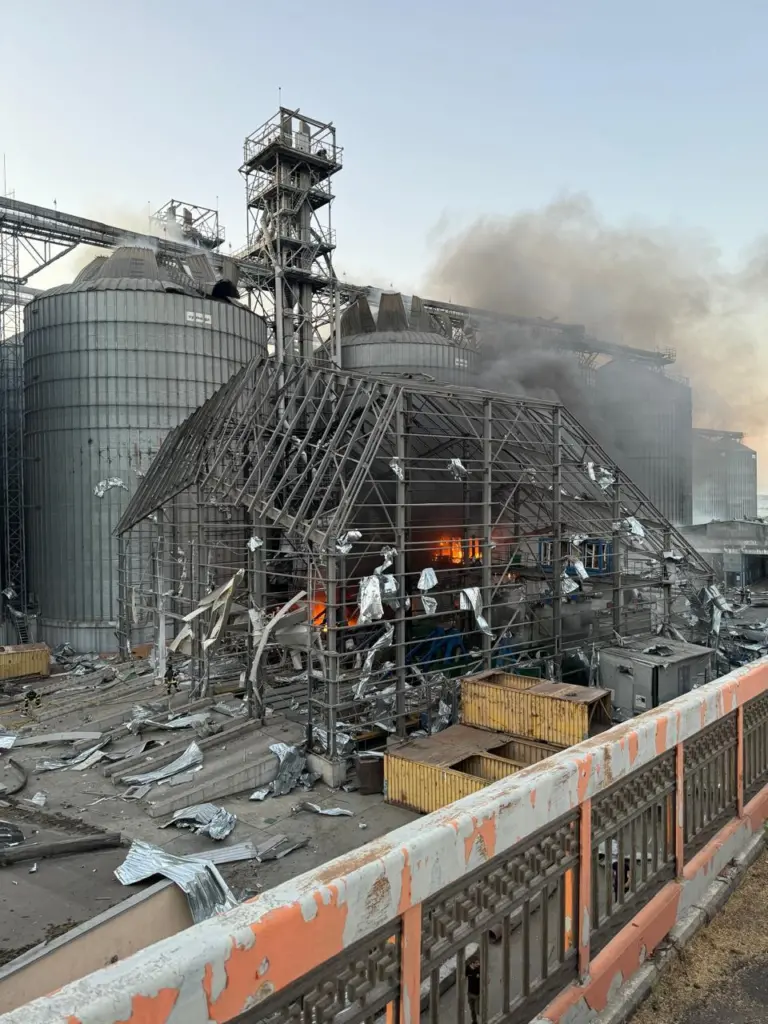
In recent years the global maritime industry has increasingly begun to discuss the resilience of ports and logistics infrastructure under security threats. For most of the modern port industry, however, the idea that commercial ports might continue operating during a full-scale military conflict once seemed unrealistic.
Ports are designed for efficiency, connectivity and predictable logistics flows — not for functioning under missile attacks, mined sea approaches, large-scale power outages and constant security alerts.
Yet since February 2022 Ukrainian ports have had to operate precisely under such conditions. Over the past four years the Ukrainian port sector has developed a set of operational practices aimed at maintaining maritime trade despite severe security risks. While these solutions emerged under extreme circumstances, they are increasingly attracting interest from the global port community as maritime trade faces growing security challenges in several regions.
STRATEGIC INFRASTRUCTURE
When the full-scale invasion began in February 2022, Ukrainian ports rapidly shifted from purely commercial logistics hubs to high-risk strategic infrastructure. Sea approaches were mined, airspace was closed and missile strikes targeted port infrastructure and logistics networks.
Port operations immediately required close coordination with the armed forces, naval command and border authorities. Decision-making structures had to evolve quickly, integrating security considerations into everyday port management.
For port authorities and terminal operators, one lesson became immediately clear: in wartime conditions, coordination between civilian logistics systems and national security institutions becomes essential for maintaining even limited maritime operations.
MANAGING A MARITIME BLOCKADE
For roughly six months after the invasion Ukraine’s deep-water Black Sea ports were effectively blocked. Around 130 commercial vessels remained trapped inside Ukrainian ports, many flying foreign flags and carrying multinational crews.
Ports had to ensure that vessels remained safely and well maintained while organising the evacuation of foreign seafarers by land. Shipowners, flag states and port authorities remained in constant communication despite the rapidly changing security environment.
Large volumes of cargo were also immobilised in port terminals. Hazardous cargo such as fuel products and chemicals posed particular risks during missile and drone attacks. Port operators prioritised relocating dangerous cargo where possible or redirecting flows through rail and road logistics networks.
During this period ports were forced to operate more as inland logistics hubs than maritime gateways.
DANUBE PORTS: EMERGENCY EXPORT CORRIDOR
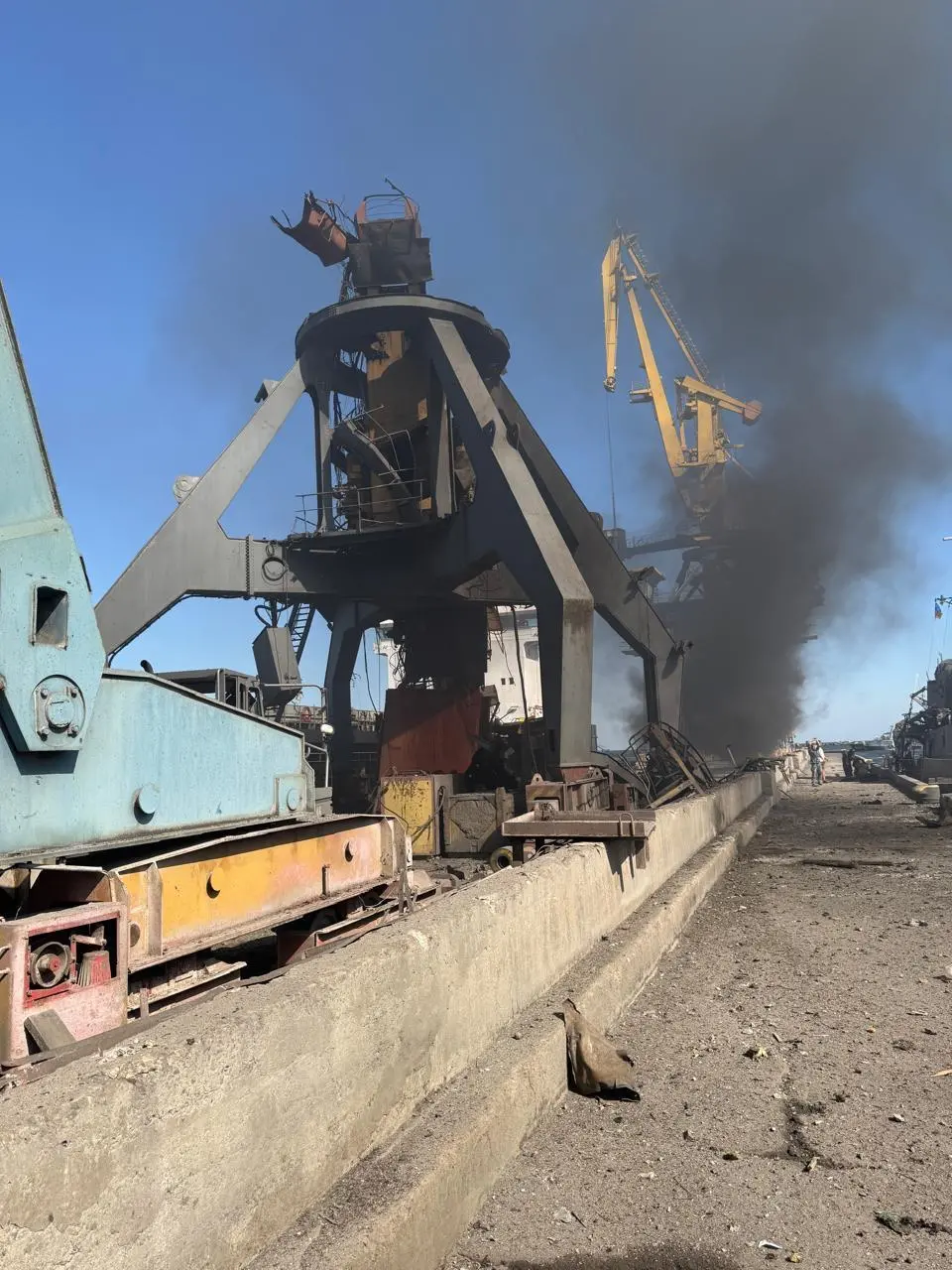
With Ukraine’s deep-water ports blocked, the only operational maritime outlets were three smaller ports located on the Danube River: Izmail, Reni and Ust-Dunaisk.
Before the war these ports had never been designed to handle large-scale agricultural exports. Ukraine’s grain shipments were normally concentrated in the major deep-water terminals in Odesa and Mykolaiv.
However, once those ports were blocked, cargo flows were rapidly redirected toward the Danube region.
The scale of this transformation was remarkable. In March 2022 grain transshipment in the Danube ports was effectively zero. By April volumes reached approximately 400,000 tonnes, rising to 800,000 tonnes in May and about 1.2 million tonnes by June.
The system continued expanding throughout the following year. In May 2023 the three Danube ports handled roughly 3.2 million tonnes of cargo in a single month — a record even compared with the Soviet period.
This rapid expansion resulted from a combined effort by port administrations, private investors and logistics operators. Businesses built new terminals and expanded storage and loading capacity along the Danube.
Rail and road flows were redirected toward the region, while barge traffic transported cargo to Romania’s Port of Constanța, where it was transferred onto ocean-going vessels.
Regional cooperation was essential. Ukraine worked closely with Romania and Moldova to simplify procedures and increase navigation capacity. Pilotage on the Ukrainian section of the Danube expanded significantly — from 14 pilots before the war to around 60 at the peak of operations. Romanian authorities also increased pilot capacity on the Sulina Channel, which connects the Danube to the Black Sea.
These efforts were further coordinated through the European Commission’s Solidarity Lanes initiative launched in May 2022.
Although the Danube ports were never intended to replace Ukraine’s major Black Sea export hubs, they became a critical emergency corridor for agricultural exports during the most difficult phase of the blockade.
INFRASTRUCTURE PROTECTION AND OPERATIONAL CONTINUITY
Maintaining port operations required a combination of infrastructure protection measures and operational adjustments.
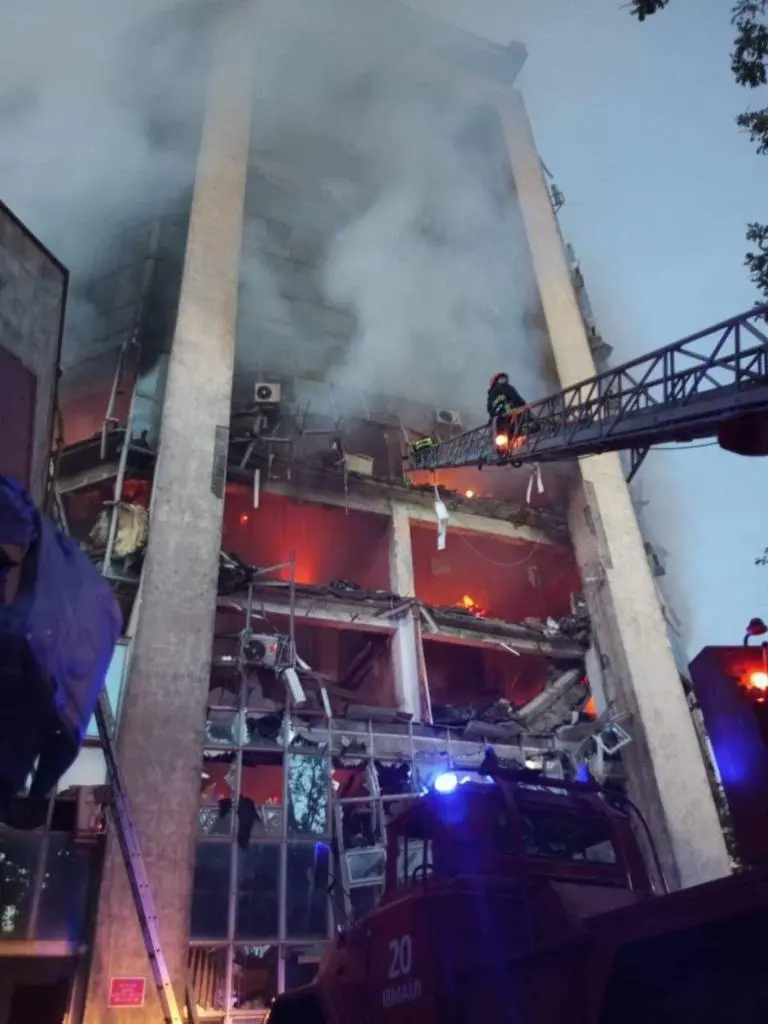
Physical protection measures included reinforced barriers, gabion structures and concrete shielding designed to reduce blast impacts. Floating protective booms were installed in certain approach areas.
Personnel safety also became a central priority. Permanent shelters were constructed across port territories, while mobile shelters were installed directly on berths and operational areas. During air raid alerts cargo operations immediately stop and both port workers and vessel crews move to shelters.
Ports also developed contingency systems for infrastructure disruptions. Backup power solutions became essential as energy infrastructure was repeatedly targeted. Rapid repair teams were created to restore cargo-handling capacity after attacks.
WORKFORCE PRESERVATION
Another strategic decision concerned human capital.
During the initial blockade ports had almost no operating revenue. Vessel calls stopped and cargo flows collapsed. However, many port operators chose to retain their workforce rather than undertake large-scale layoffs.
Port operations depend heavily on specialised skills and experience. Losing trained personnel would have significantly delayed any future restart of operations.
When maritime trade eventually resumed, the presence of experienced teams allowed ports to restore cargo handling relatively quickly.
MARITIME CORRIDORS AND CONTROLLED OPERATIONS
Maritime exports partially resumed under the Black Sea Grain Initiative negotiated in 2022, which enabled more than 30 million tonnes of cargo to be exported during its operation.
After the agreement collapsed, Ukraine established its own maritime corridor to continue exports under persistent security threats.
The corridor operates under strict navigation protocols. Vessels cannot wait at anchorage near ports because they would become easy targets. Instead, ships remain further offshore and approach ports only within designated time windows.
Entry is allowed only once cargo is positioned in the port, a berth is available and loading can begin immediately. This reduces the time vessels spend inside high-risk areas. Search-and-rescue vessels accompany ships during approach and departure.
Since September 2023 the ports of Greater Odesa have handled more than 177 million tonnes of cargo through this corridor, including over 105 million tonnes of grain and more than 7,000 vessel calls.
INSURANCE AND FINANCIAL RISK MITIGATION
War-risk insurance quickly became a decisive factor. Without insurance, shipowners would simply not send vessels to Ukrainian ports.
Restoring maritime trade required cooperation between government institutions, insurers and shipowners. Ukraine introduced a risk-sharing mechanism that allowed part of the war risk exposure to be covered through state-supported guarantees.
This framework gradually restored confidence among shipowners and enabled vessels to return despite the ongoing security risks.
LESSONS FOR GLOBAL PORTS
Ukraine’s experience offers several practical lessons for ports worldwide.
Resilience depends on strong coordination between civilian infrastructure and security institutions. Operational flexibility is essential for adapting vessel scheduling and cargo flows to rapidly changing conditions.
Infrastructure protection, personnel safety and contingency planning must be integrated into everyday port management.
Finally, financial risk mitigation mechanisms — including war-risk insurance frameworks — can play a crucial role in sustaining maritime trade under security pressure.
The operational solutions developed by Ukrainian ports were not created through theoretical planning. They emerged through real-time adaptation to an unprecedented security environment.
Although this experience has been gained at a very high cost, it may help ports in other parts of the world strengthen their resilience in an increasingly uncertain maritime security landscape
Related Articles
 EQUIPMENT
 OPERATIONS
 OPERATIONS