![PortStrategy[GreenPort]](https://www.portstrategy.com/wp-content/uploads/2026/09/PortStrategyGreenPort.svg)





Reducing maritime incidents
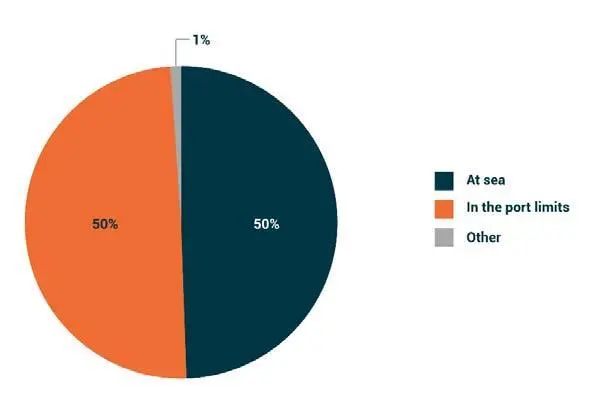
Half of maritime incidents recorded by Rightship in 2022 took place within port limits. Yucel Yildiz, Port and Terminal Manager, Rightship, contends more effective information gathering has a positive role to play in reducing this telling statistic
Detailed analysis of data conducted by Rightship reveals that 50 per cent of maritime incidents that occurred in 2022 took place within port and terminal boundaries; including at berth, using port facilities such as bunkering, waiting at anchorage or during harbour transit.
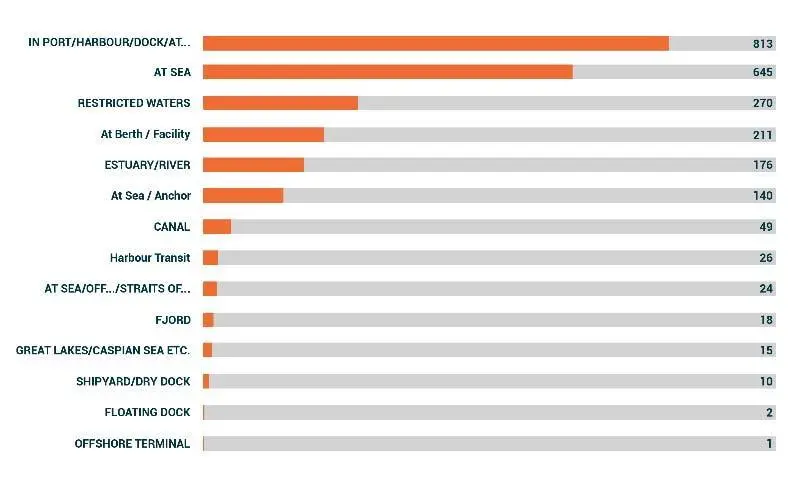
RightShip data shows there were 2400 incidents in 2022, where the location was recorded. Half of these incidents occurred with vessels in port and terminal environments, and most of these (813) were when vessels were docked.
The data shows that the inherent risk while a vessel is within a port’s boundary is much larger than had previously been thought. Certain of these risks are out of a port’s control, but nevertheless ports need to be ready to deal with problems as they occur, while also making sure their operations across all facilities are not disrupted.
Port authorities know that safety gaps cause accidents or worse loss of life to seafarers and shore personnel. Incidents can also result in pollution, property damage, and delays, or a combination of these and other negative factors.
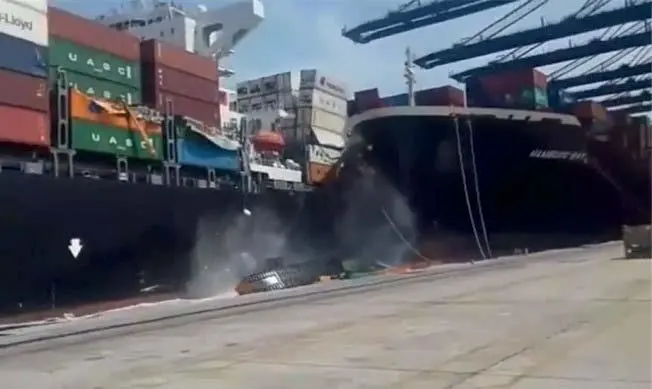
The impact of such incidents on a port’s ability to process vessels at an efficient rate can be severe and costly. For this reason, port authorities and terminal operators and their respective operations teams adopt comprehensive safety protocols and high operational standards. The aim is always to reduce complicated and inherent risks, and maintain high operating performance.
Rightship considers that in pursuit of this excellence data analysis has a potentially much larger role to play.
INFORMATION IS KEY
Ports and terminals need to gather information effectively and to use it to plan and manage risk. If it is possible to evaluate potential issues before accepting vessels on berth, and adopt record keeping on departures, then provisions can be made for mitigating risks instead of simply accepting that “accidents happen”. Trend lines and the associated risk points can be identified, modern analytical tools employed, all of which can play a positive role in risk mitigation.
It is costly to retask shore personnel, endure entire berths being out of action, or in a worst-case scenario, have a vessel clogging up transit routes for multiple berths – all are situations to be avoided. Prevention is better than cure and data is an important key to this.
The present generation of vessel guidance largely consists of written procedures and checklists.
Looking to the future, RightShip sees leaders in the port and terminal sectors tackling incident reduction by using a combination of data focused on pre-arrivals and departures and sharing information as a community to significantly reduce supply chain risk.
*RightShip gathers global incident data from various leading sources, including PSC, MOUs, classification societies, flag states, shipowner and managers self-reporting and other data sources.
Related Articles
 EQUIPMENT
 OPERATIONS
 OPERATIONS