![PortStrategy[GreenPort]](https://www.portstrategy.com/wp-content/uploads/2026/09/PortStrategyGreenPort.svg)




SMART PORT PACESETTERS
Felicity Landon examines the latest work of leading ports to build their smart port credentials – diverse interesting projects are unveiled
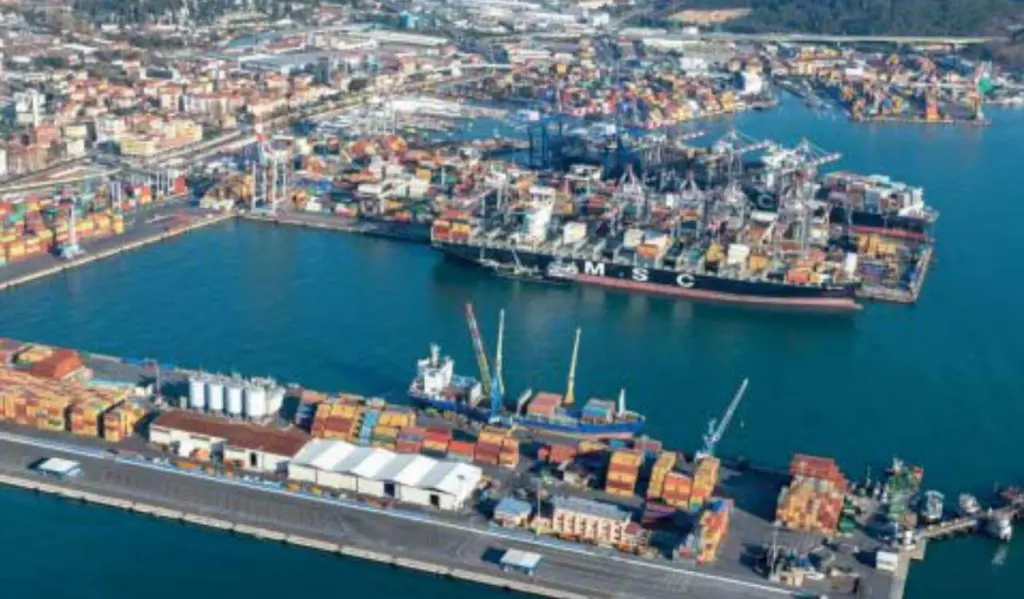
A range of interesting smart port projects are being progressed by leading ports with major emphasis on the use of digital to play a role in hitting emission reduction targets and at the same time boosting effi ciency levels. The ports featured all responded to a recent PS survey – internal traffi c management and managing truck fl ows from/to the hinterland being a major area of activity.
ANTWERP – THREE PRIORITIES
Many people claim they are innovative just because they are using emerging technologies … “but if you ask why they are doing these things, it seems as if they feel they have to do something because everyone else is,” says Nico De Cauwer, Senior Business Architect Digitalisation & Port Community Projects at the Port of Antwerp.
Innovation is not a purpose in its own right – it is a means to an end, he insists. “For the Port of Antwerp, innovation has to be part of our mission, ‘A home port vital for a sustainable future’, and the related strategic priorities. If it doesn’t fit in there, however innovative it might be, we don’t do it.”
Antwerp Port Authority has set itself three strategic priorities: growing and handling more volumes, but in a sustainable way; resilience – Covid-19 has proved the need to be resilient and able to move fast in a changing world both as a company as in its digital infrastructure; and transition, which covers both energy and digital transition.
The port’s digital transformation applies to all three of its identities (or functions): as landlord port; as operator of tugs, bridges and locks, etc.; and as regulator, including the management of vessel traffic.
The focus is on both the internal culture (getting employees aware and working with innovation) and attracting external companies.
An example of ‘outside in’ is Seafar, which controls multiple autonomous barges within Flanders. This operation started with a new partnership five years ago – Seafar bought the tech, while the port provided a dock and vessel for testing the system. The service grew from there.
Antwerp says a key element in being a ‘leading smart port’ is APICA (Antwerp Port Information & Control Assistant). This is a virtual assistant, based on a ‘digital nervous system’ with smart cameras, drones, and sensors for air and water quality, combining all this data into a digital twin of the port. APICA provides real time information on ship movements, flows of dangerous goods, air quality and weather conditions, and also detection of oil spills and inspections of maritime infrastructure. The port authority says APICA allows its staff to have “full situational awareness on any anomality occurring in the port’s eco system” and this helps them make better and faster decisions.
The port has also developed what it says is the first-ever fully automated depth sounding vessel, the Echodrone. Based on real-time AIS and radar information, the Echodrone navigates its way through the port ‘smartly, autonomously and safely’.
Drones are being deployed for a range of services in Antwerp, including the detection of and response to oil spills, and the inspection of fenders, bridges and other infrastructure, highlighting maintenance/damage issues.
CORRIDOR MANAGEMENT PLATFORM
In Italy, the Port of La Spezia’s Corridor Management Platform (CMP) was developed within the European Union project WiderMoS. The CMP has made it possible to manage the information flow throughout the supply chain, at a national and international level, between the port and inland terminals, including multimodal transport operators and ailway companies, involving all operators and interfacing with Customs. The platform is also interoperable with the IT platform of the Italian railways company RFI, for tracking trains along the national network.
The Eastern Ligurian Sea Port Authority, which is responsible for La Spezia, developed, implemented and operates the Port Community System (PCS) which is used in the port’s two container terminals; APNet went online in 2015 and has been steadily developed since then, says Federica Montaresi, Head of Special Projects, Innovation and Institutional Relations.
Work is under way on a module dedicated to trucks which will facilitate access to the port and give drivers information in advance so that they can plan their journey to avoid congestion and/or queuing outside the port gates. There are also plans to upgrade the rail-related aspects of the PCS.
Meanwhile, the port authority is looking at ways to use data gathered through the PCS to develop KPIs and improve efficiency.
Montaresi says the biggest challenge is to combine digitalisation and sustainability. “We believe that the PCS can help the port authority to manage information in order to enable a more efficient and more sustainable logistics chain; for example, the truck drivers’ module will reduce congestion and also save CO2 because drivers will no longer be waiting outside the port or driving around the local roads while they wait.”
PORT OPTIMIZER
The Port of Los Angeles’ ‘Port Optimizer’ is a cloud-based Port Community System (PCS) solution designed to enhance supply chain performance, visibility and predictability. By integrating data from across the port ecosystem and applying machine learning, it helps users across the supply chain – road, rail or water – to monitor and respond to changing conditions, align people and resources, and proactively communicate across functions, enabling ‘maximum port throughput and delivery performance’.
Knowing a vessel’s expected arrival time and what cargo will need to be offloaded/loaded increases terminal operations efficiency, which in turn reduces emissions, says the port authority. A vessel can preschedule the use of shore power or arrange for use of an emission capture control system.
In the Eco-FRATIS project, the Port of Los Angeles is working with project partners to demonstrate near-zero and zero emission cargo handling equipment together with an intelligent transport system technology.
The project involves the integration of ITS technologies with 100 trucks to enhance drayage operations and improve on-road truck efficiency. This involves real-time truck travel and terminal turn times via an automated mobile smart device application and an Eco-Drive application, which uses traffic signal timing information to optimise acceleration and deceleration of trucks.
Eco-FRATIS will enhance market acceptance of advanced vehicle and information technology in yard tractors and drayage truck applications, in turn reducing GHG emissions and fuel consumption, improving energy cost savings and benefiting disadvantaged communities, says the port authority.
BPA CASE STUDIES
Five smart port technology case studies were highlighted in a report by published by the British Ports Association in collaboration with Royal HaskoningDHV and the Connected Places Catapult, as part of the BPA’s ‘Port Futures’ thought leadership programme. The examples include a constantly learning digital twin, remote infrastructure and asset monitoring, and upstreaming of border administration.
PREDICTIVE TRAFFIC ANALYSIS
The Port of Barcelona’s Access Time portal checks the average time between a truck entering the port and its entry into the container terminals. Now the port is working with T-Systems to go a step further, anticipating the volume of traffic two hours in advance.
The system being developed combines AI with a cloud solution and video analytics technologies and monitors trucks passing through different points. The information provided by cameras will automatically establish the time it takes each truck to travel between different points, and the system also takes into account the time of day and port capacity.
The port says the system minimises operational risks, enables traceability, eliminates the use of paper and links the supply chain in a reliable and automated way. The advantages – less waiting time for lorries and optimisation of vehicles, with corresponding savings on direct costs for carriers. As well as increasing the number of moves per vehicle, the system is designed for improved mobility at the port and in its surroundings by limiting queues, reducing CO2 emissions, and improving the competitiveness of land transport, which may find booking systems to be a ‘clear driver of change’.
Barcelona is also using a smart tech solution to record the volume and weight of ship waste (collected in containers) in an automated and reliable way. A laser measures the volume, cameras identify the MARPOL class and infrared technology detects the temperature. The measurement reaches the Port Information System in real time, to enable rapid release of waste.
HYPERLOOP TRIALS
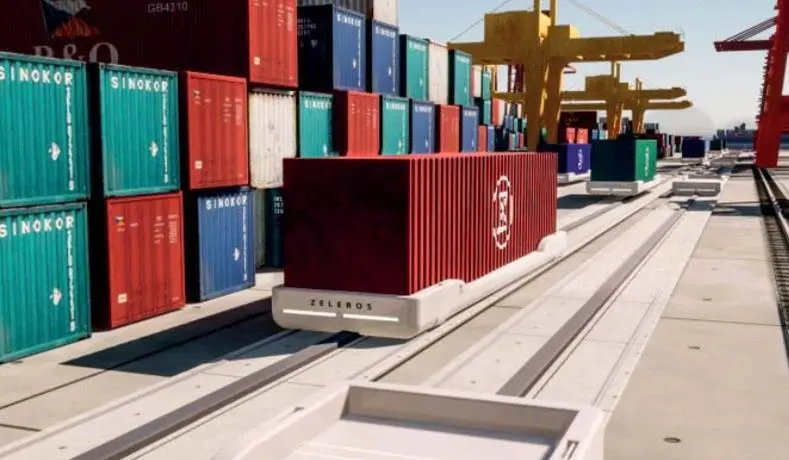
Zeleros is working with Valencia Port Authority in setting up and trialling a prototype hyperloop called ‘Sustainable Electric Freight Forwarder’ (SELF) in the Port of Sagunto.
The hyperloop concept is designed for decarbonising and automating container movements between terminals. The port authority has made the land available for the pilot programme. The system consists of vehicles guided and propelled by the rails where the fully electric linear motor is installed. Zeleros, based in Valencia, compares the system to the intralogistics systems found in warehouses; it says the Port of Sagunto provides “a privileged environment to bring the technology as close as possible to the final application”.
Related Articles
 EQUIPMENT
 OPERATIONS
 OPERATIONS