![PortStrategy[GreenPort]](https://www.portstrategy.com/wp-content/uploads/2026/09/PortStrategyGreenPort.svg)






Two tales from toc: the spreader that assesses container structural integrity… while in lifting mode
Steve Cameron, well known Moderator at the Terminal Operations Conference (TOC) and roving correspondent for Port Strategy, highlights two ‘tales’ from the June TOC in his own inimitable style
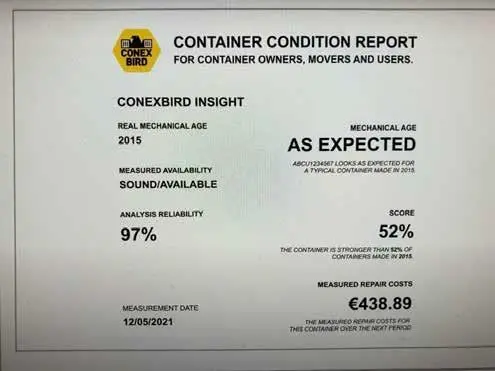
ConnexBird has developed an innovative solution for assessing container structural integrity during core handling processes.
Many years ago as Operations Director of a shipping line that successfully developed and ran a ro-ro / container liner shipping service to West Africa, I was faced with the challenge of the high repair costs to our container fleet due to a combination of the damage caused by the handling of containers with a forklift on ro-ro ships; a lack of container handling equipment in most of the ports and the time spent by staff and managing the administration of heavy repair processes.
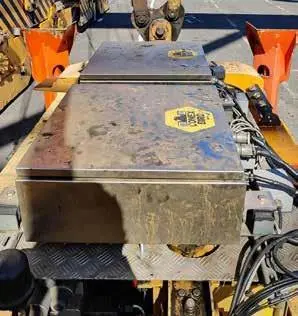
Over 10 years we developed various cost reduction initiatives, from repairing containers in lower labour cost countries (Nigeria & Cote D’Ivoire) to automating the checking of the repair estimate cost and billing process which enabled us to divert the attention of our shareholders towards other issues. So it is with great interest, a few decades later, to find a new approach from a company called ConnexBird, which has developed a container spreader mounted system that pings the container with vibrations, and before it reaches the repair depot, identifies the condition and structural integrity of the container. This takes place during the lift between ship and the quay, or into the stack.
Motivated by these possibilities, my research depressingly revealed that at present, many container damage assessments are still done manually. This incurs delays to the containers – whilst they await inspection, additional container handing costs, and increased fuel consumption for the handing equipment moving them in & out of the stack.
The vibration analysis hardware developed by ConexBird delivers actionable data to the end user enabling decision making on usability and the identification of the long-term repair costs needed to maintain the container.
This innovation potentially opens the door to a big step change in monitoring the condition and therefore safety and repair costs of a container. However, getting people in the industry to change, has always been something of a challenge.
I remember after speaking at an intermodal event, where I had criticised the status quo, and included slides of dinosaurs to underline my point, being collared to lead a pilot project with the Chamber of Shipping and IICL, looking at improving the container inspection and repair estimation processes. Together with P&ONedLloyd, and , we piloted a new approach of spot auditing a sample of containers instead of inspecting every single one of them. This sampling process included the generation of different error codes, to denote various discrepancies relating to the accuracy of the repair estimate. The capturing and analysis of this error data, enabled repair depots to improve the accuracy of their repair standards and processes while reducing repair costs and container delays. A win-win for all the stakeholders involved.
At first the teams of two metre tall, barrel-chested repair inspectors with arms folded, stood resistant to the idea. After a long day of discussions, we finally persuaded them to try this new approach. One month after the trial was launched, they were still standing with arms folded, not this time in resistance to the idea, but because they didn’t want to change back to the original system.
STEP CHANGE POSSIBILITY
It looks as if ConexBird has the possibility to stimulate a similar industry step change, with its condition reporting of containers as they are discharged or loaded from ships, enabling them to be directed straight to their next booking, avoiding the combination of repair depot down time, trucking, and handling, while ensuring focused investment in planned maintenance on units that still offer a commercially viable operating life.
With the UK MD of a global container carrier stating, “We like to keep repairs swift and minimal to keep our containers moving and earning revenue,” Conex Bird looks like an attractive proposition, especially as in Rotterdam, depots are desperately short of storage capacity and turning away containers at present, and where any automation of their repair processes should improve efficiency and therefore increase capacity.
Nicholas Gallie, COO, ConexBird, explains: “One out of five containers in operation are damaged, and the extent of the damage is unknown until it is possible for the container to be unstuffed and then positioned empty to a repair depot for inspection.” Until the container can be inspected in its damaged state, it may affect the condition of the cargo or be the cause of an accident whilst in transit, he underlines.
Gallie further notes: “There has been support from stakeholders such as the TT Club. Also ConexBird has just signed an agreement with international terminal operator DP World, to undertake a proof-of-concept (“POC”) project at Jebel Ali Port. This project involves the installation and operation of ConexBird measurement equipment onto three STS cranes in operation at Jebel Ali, along with analysis and commercialisation of the resulting data obtained.”
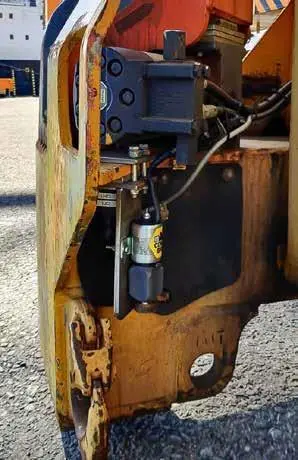
ConexBird expects the POC to demonstrate the value its system brings to container shipping, as well as DP World’s capabilities to make the most of ConexBird’s solution.
Of particular interest is DP World’s central role within the intermodal logistics community in Jebel Ali, which is expected to facilitate a coordinated, holistic approach to container condition management. Gallie particularly suggests that: “Shipping lines, land-side transport, depots and shippers alike will benefit from the cost savings, operational improvements and asset condition knowledge ConexBird and DP World can jointly offer.
The Conex Bird system does not require any upfront investment, the user only pays for the data that is generated.
Related Articles
 EQUIPMENT
 OPERATIONS
 OPERATIONS