![PortStrategy[GreenPort]](https://www.portstrategy.com/wp-content/uploads/2026/09/PortStrategyGreenPort.svg)






Green innovation in the supply chain
Jane Gorick, managing director of LPR – one of the UK’s leading pallet pool operators – discusses how the sector can look at reducing empty running and the combined environmental and cost benefits it can bring.
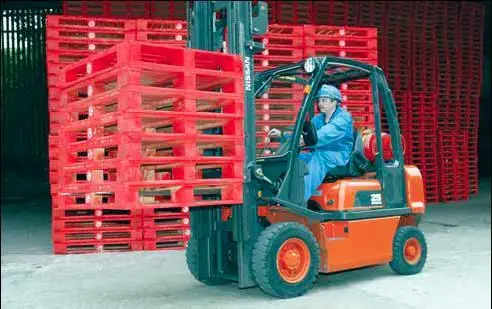
The logistics sector faces many challenges to overcome if it is to survive. And while profit and performance may now be at the top of the agenda, hitting environmental targets is still an important issue. The sector can look at reducing empty running and the combined environmental and cost benefits it can bring. For FMCG manufacturers and their hauliers, it’s particularly important that they meet customer demands for improved environmental credentials, but also that they protect their cost base and focus on their core business. To improve environmental performance, reducing the amount of vehicles on the road is an obvious option. However, this doesn’t appear viable in the short term, as the amount of goods we’re moving by haulage is actually increasing – according to a recent UK Department for Transport report there was a four per cent increase in 2007. Therefore, it is even more crucial that we tackle empty running, as it’s one of the most wasteful activities of the sector, especially at a time when fuel costs are high. We have already begun to make a dent in empty running as figures have fallen over the last 25 years from a shocking one third of lorry journeys to around a quarter. But in reality this is still too high a figure – and is both a financial and environmental waste. Innovation and changes to the traditional way of working are going to deliver important efficiencies and green benefits in the long term. Many sectors such as automotive and FMCG have already reaped the benefits of seeking new solutions. The pallet management system can contribute significantly to empty running. Many FMCG manufacturers operate under the traditional one-for-one system, which requires one pallet to be returned for every one pallet delivered. To enable a manufacturer to have the pallets to swap, this often results in empty or part loads when returning pallets to the manufacturer. Increasingly, FMCG brands are turning to the ‘one way trip’ pallet solution, which provides a more efficient pallet service where the FMCG manufacturer doesn’t need to be inherently involved in providing their own pallet service and can focus on their core business. Under the ‘one way trip’ model all an FMCG manufacturer needs to do is deliver their goods from A to B. The pallet pool provider will then take responsibility for the collection and refurbishment of the pallet. Additionally, since pallets can be invoiced on a ‘per trip’ basis, no longer must a manufacturer do battle with complex invoices, administration and escalating costs should a pallet not be returned. The result is a hassle-free pallet pool service, with fixed costs. As costs for returning empty pallets back to the manufacturer under the one for- one model are only going to escalate, finding alternative options is becoming more attractive. Hauliers are now looking closely at their own businesses to make every minute they’re on the road pay by eliminating redundant journeys. Collecting pallets on a one for one basis also contributes significantly to wasted journeys and one of the benefits the pallet pooler offers is economics of scale in the collection of pallets – maximising vehicle fill. Therefore, full loads can be collected from retailers, reducing vehicle movements in the RDCs and allowing the hauliers to focus on other full load activity thereby reducing empty running and the associated environmental damage. By looking at alternative ways of moving goods, manufacturers and their hauliers are able to make a significant difference to empty running and utilise return trips for different business, increasing profitability and reducing the negative environmental impact that such redundant journeys can have. www.lpr.eu
Related Articles
 ALTERNATIVE FUELS GREENPORT