![PortStrategy[GreenPort]](https://www.portstrategy.com/wp-content/uploads/2026/09/PortStrategyGreenPort.svg)



Ports endorse “lean and green” strategy
The importance of keeping sustainability high on the agenda of ports, transport operators and shippers was an important theme of the GreenPort 2009 Conference held in Naples earlier this year. Kate Royston reviews the highlights.
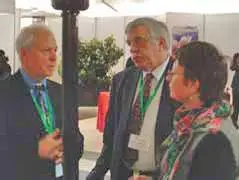
Despite the economic recession and its impact on the Ports Industry, over 200 delegates from some 40 countries from across Europe, Africa and North America gathered in Naples for the 4th GreenPort Conference (GP09) on 25 and 26 February 2009. They endorsed the theme: “Lean and Green: Finding New Answers in a Changing Economic Climate”. The event, hosted by the Port of Naples, was organised by EWP Communications Ltd, in association with the EcoPorts Foundation (EPF) and the European Sea Ports Organisation (ESPO). Their work, and that of other national Port organisations in sustainability, climate change and air quality responses is being supported by the World Ports Climate Initiative (WPCI). WPCI’s progress is reviewed in a separate article. GP09 successfully brought together shippers, cargo owners, port operators and others from across the port and logistics supply chain to share challenges, developing sustainable practices and remaining gaps. This was the focus of the inspirational opening session from some key players, reviewed below, which set the tone for the rest of the conference. Opening Session 1, Sergio Barbarino from Procter and Gamble discussed the challenges of achieving their targeted 10- 30% intermodal transport shift from road haulage to rail by 2015 (Project TINA). Ports are an integral component. Success requires a critical mass of cargo on a regular basis to establish dedicated and dependable routes. Like-minded cargo owners and supply chain partners are sought for collaboration. EFICO, the Belgium-based coffee trader, shared its challenges in maintaining an ongoing raw materials supply of sufficient quality in the face of climate change. Integral to this is the ability to ensure a chain of custody throughout the supply chain enabling assurance of product sustainability criteria to retailers and consumers. They determined this could best be achieved by establishing their own self-managed end to end operation. A port is an ideal location, and EFICO found their answer at Zeebrugge. A close partnership and the flexible attitude of the port have been important factors. Maersk Line’s aim is to become the “sustainable carrier of choice”. Soren Stig Neilsen, the company’s Head of Sustainability, explained their progress in improving the sustainability of their fleet. He noted this will have limited impact on the overall journey if ports cannot provide sustainable and efficient service. This includes supporting fast turnarounds to reduce fuel use and emissions and best waste management practices. These factors are becoming key selection criteria for business partners. Appropriate environmental legislation is an important enabler. The European Commission’s Julio de la Cueva provided an update on forthcoming EU guidelines impacting port development. A port operation must be compliant to legislation and able to prove its level of performance to potential customers and suppliers (such as Maersk). Clear and communicable records are needed. Implementation and operation of a sound environmental management system can facilitate this. The Ecoports tools are an option to consider. The 2009 four yearly ESPO/EPF update of ‘Top 10 Operational Environmental Issues’ in Ports was also announced. All ports are invited to participate at www. ecoports.com.
The opening session concluded with responses to the Sustainability challenge being developed by Ports and Terminal Operators. Christopher Patton from the Port of Los Angeles highlighted the importance of setting clear goals and standards. These help to provide direction. The Port works in partnership with its tenants, with policy makers, funding facilities and others to find solutions and share information. This approach has led to increasing success. James Cannon from Energy Futures considers the Ports of LA and Long Beach in the US to be leading the world in addressing air quality issues. Alan Cartwright from the Port of London Authority discussed options for a port to leverage its own assets to gain more efficient and sustainable operations. These include dredging, where possible, to establish the most direct routes to berths and generating power on the port estate. Facilitating development of value adding process and storage operations based at the port can generate additional business and avoid the need for double transport. EFICO is a good example of this. DP World’s Charles Haine shared the views of a global terminal operator. He emphasised the need for a port to be actively monitoring and managing its carbon footprint. Keeping on top of sources of carbon in the operation help identify cost effective opportunities such as deploying more efficient port lighting and reducing engine sizes where feasible. GP09’s parallel sessions continued the informative discussion in some key areas. These included :
• Initiatives to develop Sustainable Supply chains
• A progress update on the World Port Climate Initiatives
• Showcasing a wide variety of best and developing practice in sustainable solutions from terminal operators, ports and equipment manufacturers
• Developments and progress in deploying Health, Safety and Environmental management system tools in ports. The interaction of a Port and its local community is an important, often overlooked, aspect of a sustainable port. This was also addressed in one of the parallel sessions. The importance of this was emphasised by ESPO’s launch of their Award for ‘Societal Integration of Ports’ (Applications are welcomed – www.espo.be). GP09 was brought to a close with a lively open discussion. This endorsed the consensus shared by all presenters over the two days of the conference, and echoed by the events theme. Changing attitudes and regulatory pressures concerning air quality, climate change and the drive towards low carbon economies will increasingly impact the supply chain. Becoming lean and green will be an imperative for survival and success and should be an essential element of any growth strategy. Customers and suppliers are increasingly selecting business partners based on their sustainability, but they are unlikely to pay more to do so. An essential response is to partner, collaborate and innovate through the supply chain. This was the common message arising from the speakers and panels over the two days. Innovate and collaborate. Share best practice in what worked but also what didn’t. Answers are unlikely to be found in isolation. How much might realistically be achieved in the next 12 months? GreenPort 2010 provides an opportunity to assess progress. It will be hosted by the Ports of Stockholm on 24th to 25th February 2010. GP09’s success in bringing together players from the whole logistics chain will be further encouraged for GreenPort 2010. For details see www.green-port.net.
The key messages from GreenPort 2009
• Environmental concerns must be included as a part of every port investment
• Environmental improvement is integral to improvement of processes. Sustainable investment pays dividends from a business perspective
• Strategic management requires investment in infrastructure and pollution reduction systems now, in preparation for the next sharp increase in economic and cargo transport growth
• Investment programmes must also consider the risk from climate change impacts and ensure adaptation is integrated.
• Many individual ports, shipping and logistics organisations are trying to solve their own global problems. This is clearly impossible without greater cooperation with partners in the transport chain and to eliminate logistics inefficiencies
• There is already a strong basis of knowledge and experience in enabling ports to operate with a lower carbon footprint, but closer cooperation and dialogue must be strengthened
Related Articles
 ALTERNATIVE FUELS GREENPORT