![PortStrategy[GreenPort]](https://www.portstrategy.com/wp-content/uploads/2026/09/PortStrategyGreenPort.svg)





Reducing shipping’s CO2 emissions
Although the level of emissions of CO2 by the shipping industry is largely determined by world trade, multilateral collaborative action is needed to ensure signifi cant reductions. Simon Bennett, Secretary of the International Chamber of Shipping*, explains how this might be achieved
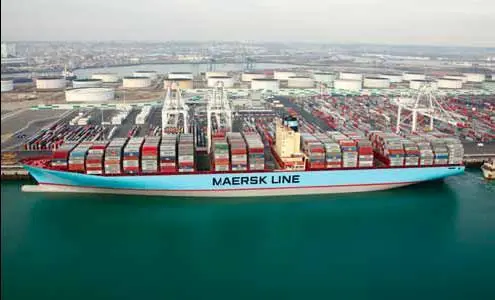
Although the level of emissions of CO2 by the shipping industry is largely determined by world trade, multilateral collaborative action is needed to ensure significant reductions. Simon Bennett, Secretary of the International Chamber of Shipping*, explains how this might be achieved
The international shipping industry is firmly committed to playing its part in reducing emissions of carbon dioxide and Green House Gases. International shipping is already, by far, the most carbon efficient mode of commercial transport.
However, it is fully recognised that CO2 emissions from the industry as a whole (some 3% of global emissions) are comparable to those of a major national economy. The shipping industry therefore accepts that the CO2 emission reduction which ships must aim to achieve should be at least as ambitious as the CO2 emission reduction agreed under any new United Nations Climate Change Convention. However, shipping is the servant of world trade. The total emissions of shipping, as a sector, will therefore be determined, to a signifi cant extent, by the expected long term growth of the world economy (and population) between now and 2050.
IMO must lead CO2 reduction measures
As already acknowledged by the Kyoto Protocol, emissions from international shipping cannot be attributed to any particular national economy. Multilateral collaborative action will be the most appropriate means to address emissions from the maritime transport sector.
Multilateral collaborative action will be best achieved by governments at the specialist United Nations agency – the IMO – that has a successful track record for the development of global regulations governing the shipping industry’s environmental performance. For example, the International Convention on the Prevention of Pollution by Ships (MARPOL) has been ratified and enforced globally through a combination of flag state and port state control by IMO Member States.
The delivery of significant emission reductions by the maritime sector will require that any mandatory measures adopted are applied on a uniform and global basis to avoid ‘carbon leakage’. Most shipping companies have the freedom to decide to register their ships with the ‘flag state’ of their choice including those which, under the current Kyoto Protocol, are not Annex I nations. Measures to deliver meaningful emission reductions are thus much more likely to be achieved by instruments developed by governments at IMO.
IMO package for reducing shipping’s CO2
The IMO Marine Environment Protection Committee has already developed a package of measures for reducing shipping’s CO2 emissions, with an agreed timetable for adoption. Inter alia, these include:
• A system of energy efficiency design indexing for new ships (similar in concept to the ratings applied to cars and electrical appliances)
• A template for a Ship Energy Efficiency Management Plan (SEEMP) for use by all ships. The SEEMP allows companies and ships to monitor and improve performance with regard to various factors that may contribute to CO2 emissions. These include, inter alia: improved voyage planning; speed management; weather routeing; optimising engine power, use of rudders and propellers; hull maintenance and use of different fuel types.
• The ingredients for possible economic measures that could be applied globally to shipping in order to encourage emission reduction. Governments at IMO have also agreed key principles for the development of regulations on CO2 from ships so that they will:
1. Effectively reduce CO2 emissions
2. Be binding and include all fl ag states
3. Be cost effective
4. Not distort competition
5. Be based on sustainable development without restricting trade and growth
6. Be goal-based and not prescribe particular methods
7. Stimulate technical research and development in the entire maritime sector
8. Take into account new technology
9. Be practical, transparent, free of fraud and easy to administer The international shipping industry fully subscribes to these principles.
*The International Chamber of Shipping (ICS) is the principal international trade association for merchant ship operators, representing the global shipping industry at IMO and other inter-governmental fora that impact on the industry. ICS membership comprises national ship owners’ associations from 33 nations representing all sectors and trades and about 75% of the world merchant fleet.
Regulation should be applied uniformly
The Kyoto Protocol concept of ‘common but differentiated responsibility’ (CBDR) cannot be practically applied to shipping without the danger of significant ‘carbon leakage’. The ‘flag state’ with which a ship is registered, or indeed the ‘nationality’ of the entity operating the ship, can change frequently, especially when ships are bought and sold. The direct application of the CBDR concept would also cause gross distortion of shipping markets, reducing the efficiency of maritime transport and thus the smooth flow of world trade. However, the IMO principle of ‘no more favourable treatment’ ensures that standards adopted for shipping are applied equally throughout the world, delivering maximum environmental improvement. The international shipping industry therefore believes that the achievement of meaningful reductions in CO2 emissions will be best achieved if nations agree that the development of detailed measures, for the international merchant fleet, should be directed by governments at IMO – but respecting the outcomes agreed for the sector under any new UN Climate Change Convention. Failure to deliver a global and uniform CO2 reduction regime for international shipping will greatly reduce the ability of the shipping sector as a whole to reduce its emissions.
International shipping does not lend itself to inclusion as part of national emission targets. A ship may be registered in one country while the beneficial owner of the ship may be located in another. The cargo carried by the ship will be of economic benefit to a variety of different importing and exporting nations. Most ships do not follow fixed routes and they will collect and deliver varying amounts of cargo in a large number of different nations throughout the course of a voyage. Moreover, the nationality of the entities exporting and importing the cargo carried will vary considerably from voyage to voyage.
IMO’s track record on environmental regulation
The impressive track record of IMO is demonstrated by the success of the MARPOL Convention in contributing to the substantial reduction of oil pollution since it entered into force.
The level of ratification and enforcement of IMO Conventions is very high in comparison to international regulations governing many land based industries. The MARPOL Convention has been ratified and implemented by virtually every maritime country and is applied, through a combination of flag state and port state control, to virtually the entire world merchant fleet. Most significantly, the ability of governments at IMO to respond to political pressure and to deliver global environmental regulations involving complex issues has also been demonstrated by the recent agreement, finalised in October 2008, to reduce pollutant atmospheric emissions (such as sulphur) from ships dramatically. Atmospheric pollution from ships, like CO2, is a complicated subject, but on which an impressive global consensus has already been achieved at IMO.
How is shipping reducing its emissions?
The consensus of opinion within the global industry is that it may be possible for shipping to reduce CO2 emitted per tonne of cargo transported one kilometre (tonne/km) by perhaps 15%-20% between 2007 and 2020, through a combination of technological and operational developments, as well as the introduction of new and bigger ships, designed to the new IMO Energy Efficiency Design Index. This is a significant challenge given that there have already been substantial improvements in the efficiency of ships’ engines.
In the longer term, depending on technological developments which at the moment cannot be fully anticipated, the industry believes it should be possible to deliver even more dramatic emission reductions (although for the foreseeable future shipping will remain dependent on fossil fuels).
Although the shipping industry is already very energy efficient, additional improvements to hull, engine and propeller design are expected to produce further reductions in fuel consumption. There may also be possibilities for the better utilisation of waste heat.
The increasing size of many ships is also expected to improve fuel efficiency. In addition, operational measures (e.g. better speed management throughout the course of a voyage) are also expected to reduce fuel consumption and are addressed in detail by the new Ship Energy Efficiency Management Plan that has been developed at IMO, with assistance from the industry. Shipping companies have a very strong incentive to reduce their fuel consumption and thus reduce their CO2 emissions: bunker costs represent an increasingly significant proportion of ships’ operational expenses, having increased by about 300% in the last 5 years.
There is every expectation that marine bunker prices will remain high. Furthermore, the cost of ships’ fuel is expected to increase by a further 50% as result of the increased use of (low sulphur) distillate fuel that will follow the implementation of the new IMO rules (MARPOL Annex VI) that will apply globally in Emission Control Areas by 2015.
Alternative fuel sources
The various parts of the shipping industry – shipowners, shipbuilders and classification societies – are actively examining a number of ways to reduce CO2 emissions, both for new and existing ships, which are primarily linked to reducing fuel consumption. In the longer term, however, the shipping industry is also exploring a number of alternative fuel sources to help reduce CO2 emissions.
Renewable energy sources, such as wind and solar power, may have their place in helping to meet some ancillary requirements, such as lighting on board ships. However, they are not practical for providing sufficient power to operate ships’ main engines. The current assumption, therefore, remains that ships will continue to burn fossil fuels for the foreseeable future, and that the most significant means of reducing CO2 emissions will be achieved by further improvements in efficiency across the entire transport chain.
The challenge of reducing carbon emissions remains a critical issue for shipping, a global industry requiring global regulation applicable to all internationally trading ships, regardless of flag. Reducing these emissions is the responsibility of all parties in the supply chain, and the shipping industry certainly stands ready to play its part.
Related Articles
 ALTERNATIVE FUELS GREENPORT