![PortStrategy[GreenPort]](https://www.portstrategy.com/wp-content/uploads/2026/09/PortStrategyGreenPort.svg)

Is shipping ready for the 0.5% sulphur rule
Shaun Skilton, Product Manager, Parker Kittiwake, looks at the compliance challengesfacing the shipping industry as the sulphur emissions deadline draws closer.
With only a matter of weeks to go until 1st January 2020, the shipping industry continues to be inundated with more questions than answers on the effective enforcement of the global sulphur cap regulation. Furthermore, the lack of robust enforcement mechanisms is giving rise to widespread concerns – and rightly so, given the inevitable increase in costs.
There are cost implications and risks associated with noncompliance. According to shipping giants Maersk and CMA CGM, it will cost them as much as US$1.5 billion and US$2 billon respectively to adopt the necessary measures to ensure compliance, figures that present a genuine risk to the profitability of future operations.
Significant investment will be required to ensure compliance, no matter which solution is employed, so much so that OPEC’s World Oil Outlook predicts that only 70% of vessels will be ready to comply with the regulations by January 2020, with the other 30% remaining a concern for rule-abiding shipowners alarmed by the prospects of a two-tier market that offers financial incentives for non-compliance.
Effective enforcement is essential in ensuring a level playing field for the global shipping industry. Given the significant capital shipowners are having to invest to ensure compliance, the absence of robust enforcement mechanisms and the variance in fines handed out to shipowners for non-compliance with existing sulphur regulations only serves as an incentive for deliberately evading the rules, which – come 2020 – will leave law-abiding shipowners at a significant financial disadvantage.
Fines and penalties for non-compliance in existing Emission Control Areas (ECAs) vary significantly. For example, the highest fine in Denmark is currently US$60,000 for vessels operating within the ECA, whereas in Belgium shipowners could face fines of US$7 million as a result of non-compliance.
To ensure effective enforcement and to drive widespread compliance of the rule, the Maritime and Port Authority of Singapore (MPA) announced its intention to impose severe penalties for breaching the sulphur cap regulation, which could even result in a prison term of up to two years for deliberately non-compliant shipowners.
From January this year, China tightened its sulphur restrictions for ships by imposing a 0.5% sulphur limit along its entire coastline, with Hong Kong and Taiwan implementing similar restrictions.
Separately, Denmark is moving forward with a proposal to publish the names of repeat violators of its sulphur emissions cap, where the sulphur content of emissions has been limited to 0.1% since 2015 under the current ECA.
As a direct result of being subjected to public scrutiny, customers may not be willing to associate themselves with an offending shipowner and could stop conducting business with them; an act that has not only a commercial impact for the owner, but also a severe reputational one.
Conversely, the Indonesian Ministry of Transportation announced that Indonesia will not implement the 2020 sulphur cap regulation on its domestic shipping fleet sailing in Indonesia’s territorial waters because of the expense of the cleaner fuel, which raises concerns for wider non-compliance.
FUEL SAFETY AND QUALITY
Alongside the enforcement challenges, shipowners and operators are faced with fuel compatibility and stability issues. With the majority of shipowners likely to opt for low-sulphur fuels for compliance, the expected surge in demand for compliant fuels is resulting in the introduction of new blended fuels to the market.
Major fuel suppliers have pledged to supply the market with compliant fuel in time for the 2020 regulation, with oil major BP recently announcing that it will begin to sell very low-sulphur fuel oil with a maximum sulphur content of 0.5%, following trials in Amsterdam, Rotterdam, Antwerp and Singapore. ExxonMobil, Shell, Total and Neste have already disclosed their initial plans for the availability of 0.5% sulphur fuel, yet it is still unclear if the compliant fuel oil supplied will be compatible across different fuel suppliers and ports.
Currently there is little standardisation on a global basis regarding the composition and quality of low-sulphur fuels/ This gives rise to concerns of compatibility and stability issues, including increased levels of cat fines in the fuel, and differing parameters regarding viscosity, flash point and pour point.
As witnessed by the shipping industry in March 2018, over 100 ships were affected by contaminated marine fuels that were bunkered in the ports in Houston, Panama and Singapore, with further reports of a recent spread to China. Vessels suffered mechanical issues ranging from clogged pipes and filters to engine breakdown and power loss, leading to insurance claims worth millions of dollars.
This has also resulted in the loss of confidence in the quality of fuel bunkered in Panama. Without proper checks in place, the sharp rise in bunker quality issues seen in recent months could be an indicator for what may lie ahead when the 2020 sulphur cap comes into effect.
PREPARING WITH ONBOARD TESTING
With so many variables influencing fuel quality and the resulting impact on combustion and engine damage, effective and reliable testing and proactive monitoring become critical to ensuring the safety and operational efficiency of the vessel.
Onboard testing gives shipowners, operators and authorities quick and easy access to the information they need. If left unchecked, fuel instability can cause severe problems including sludging of the fuel tanks, filter blockages and excessive sludging of the purifier. In the worst cases, this can lead to a loss of propulsion and power.
Parker Kittiwake has designed a range of tools to support shipowners and operators in ensuring that compliance is navigated safely without impacting operational efficiency, and without creating additional requirements for training or implementing complex new operating practices.
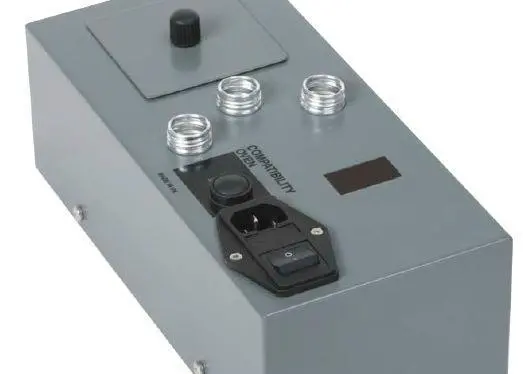
One example is Parker Kittiwake’s Compatibility Tester which provides shipowners and operators with the ability to regularly test fuels on-site, providing a quick indication of potential fuel stability or compatibility problems.
This allows operators to identify any potential issues before the fuel enters the system, creating a simple mechanism to mitigate the risks associated with costly engine damage and unplanned downtime.
While the IMO continues to address the uncertainties around enforcement and compliance in the industry, it is key to provide Port State Control inspectors and shipowners with access to readily available technology to test fuel onsite and check for compliance whilst ensuring the effective policing of the regulation and a level playing field for the global shipping community.
Related Articles
 REGULATION & POLICY GREENPORT
 REGULATION & POLICY GREENPORT
 REGULATION & POLICY GREENPORT