





CHILE HOT ON COVID-19
Among all the South American countries, Chile seems to have escaped many of the worst ravages of the coronavirus, as Rob Ward confirms.
Chile has certainly fared much better than poorer Ecuador, where the main port city Guayaquil has been devastated by COVID-19 with 1,000s of deaths and Brazil which, after a slow start, has seen a high number of new infections and fatalities, topping 20,000 in mid-May 2020.
Under President Sebastián Piñera, Chile reacted early to the pandemic, closing schools and businesses as well as introducing “rolling lockdowns” targeting specific towns or areas of Santiago with high infection rates but keeping other areas open, and the ports remained open throughout, despite some doubts.
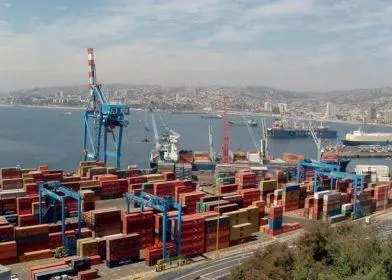
However, it is known that COVID-19 is a rapidly changing matter in the days just before going to press, Chile’s figures, especially in the capital Santiago, jumped considerably – with intensive care units now running at 90 per cent of capacity – and this may in the weeks ahead add further casualties to the key ports of San Antonio and Valparaiso. So far they have been almost unscathed, with just a handful of workers going into 14 day quarantine “due to family members contracting COVID-19”.
As of May 21, 2020, Chile had recorded 49,579 confirmed cases with 21,567 recovered and 509 deaths, however just two weeks earlier there had been around 12,000 cases, 6,000 recovered and just under 300 deaths. Most of the increase came from polluted Santiago.
During the first four months of this year container throughput at San Antonio, the biggest container port, was 565,928 TEU, down 11.3 per cent from the 638,203 TEU handled during the same period of 2019. By comparison, Valparaiso handled 245,103 TEU, down 26.8 per cent.
The total for Region V, the two ports added together, was down 16.7 per cent compared with 2019. For the full year 2019 San Antonio handled 1.7million TEU, up 2.9 per cent over 2018, while Valparaiso’s throughput was 898,715 TEU, down 0.5 per cent.
During the first two months of this year Chilean exports held up well due to continuing demand, especially from China, for its various fruits (especially grapes, avocados, blueberries, plums and apples) and other foodstuffs, including fish, while imports were steady because they had already fallen between October and December of last year due to the riots and economic disturbances that plagued the country. Peak period for fruit and vegetable exports to China and the Far East are usually December through to February.
“We have been impacted heavily by the situation with China as around a third of our trade is with them,” said Simon MacKenzie, the president of the Chilean National Association of Shipping Agents (or Asonave). However, the effects of COVID-19 have now started to impact at the base of the Chilean economy and in the second half of March movement was down by 20 per cent.
This is expected to continue into April, according to figures from Camport, the Chilean Chamber of Ports and Shipping. MacKenzie, who is also a director of Ian Taylor Shipping Agency, added that – as of mid-May – all the Chilean ports were open for business and there had been only a few days at the beginning of the Andean country’s lock-down where productivity slowed as dock workers flexed muscles and insisted on sufficient Personal Protective Equipment. This was quickly granted, and a series of protocols were put in place for safety procedures, including daily temperature checks, widespread use of PPEs, work distancing and disinfectant availability/use.
“The authorities were quick to undertake a raft of measures to make working in the ports safe and they are working,” he confirmed, adding, “Also, the tactic of Dynamic and Selective Quarantining [focusing on problem areas only] has worked well and kept the country open for business.”
Chile has also pushed ahead vigorously with the digitalisation of its customs procedures which is drastically reducing the need for face-to-face contact in the logistics supply chain.
“Overall, Chile has advanced a lot in terms of digitalisation and one-stop customs clearances and this has helped tremendously,” MacKenzie stated, further adding that there were some issues with cruise ships during the southern hemisphere summer season (November to March) and one small port was closed in the far south, and several cruise vessels were only allowed to take on board supplies and bunkers but no passengers were allowed off if any cases of COVID-19 onboard.
Related Articles
 SOUTH AMERICA
 PORT & TERMINAL NEWS
 PORT & TERMINAL NEWS