






Policy recommendations for Chile’s ports
The International Transport Forum (ITF)’s latest report has highlighted policy recommendations to improve the performance and impacts of Chile’s ports.
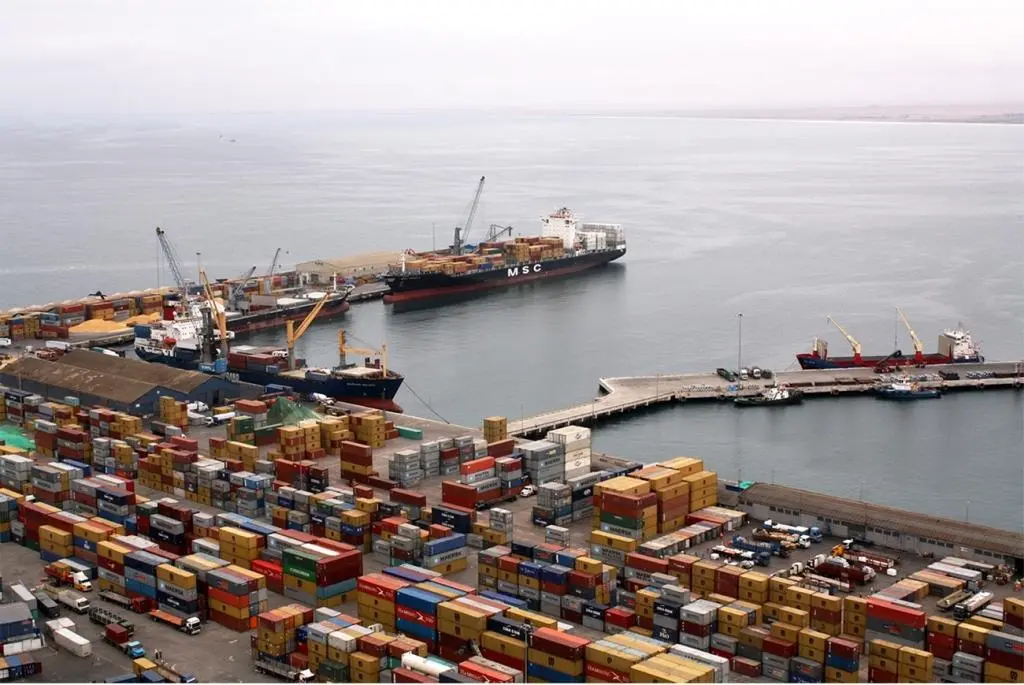
Ports Policy Review of Chile draws on two study visits to the country, a series of interviews with stakeholders and key data from stakeholders to assess port policies and review the performance of the country.
One of the main challenges ITF highlights is the fact is has a dual port system of both private and public ports. It recommends that the country formulates a unified ports and logistics strategy.
The report states: “This measure aims at solving the fragmentation of the ports system that leads to lower maritime and port connectivity than would be achieved in a more concentrated port system.”
This includes establishing a national hierarchy of ports, developing a national freight strategy, forbidding the continuation of maritime concessions in the case the concession is not used, and making private ports pay for the infrastructure needed to connect the port with the hinterland.
Generally, the ports of Chile perform well but challenges do exist with hinterland connectivity as well as ship waiting times and labour conflicts.
The report suggests that Chile should develop a long-term joint port labour agreement to solve the lack of structural labour negations.
This aims to optimise the labour legislation for dockworkers, with a view of convergence towards the general labour regime in Chile and stimulating permanent employment. As well as improve basic worker conditions and develop a more consensual culture of negotiations.
“Several ports, such as San Antonio and Valparaiso, have implemented such policies that could be rolled out to other ports in Chile. Such a measure could help to break out of the spiral of continuous negotiations and strikes,” it added.
The report’s policy recommendations also included introducing performance incentives by providing incentives to pilots in order to improve performance and reduce inefficiencies. The recommendation also includes defining objective criteria for port closures and a consideration for introducing competition in the field of pilotage.
Another policy recommendation is aimed at solving the lack of a multi-modal strategy. Creating a level playing field for all hinterland transport modes includes; formulating an ambitious action plan to increase freight, phasing out subsidies to truck transportation, and proving incentives for trucks to come at off-peak hours.
It also recommends the modernisation of port governance to solve the constrained mandate of ports.
Ports Policy Review of Chile explained: “The mandate of port authorities should be expended, both spatially beyond the boundaries of the port areas, and in terms of authority, with greater powers given to management and co-ordination, as well as the resources to exercise these.”
A framework for green port policies is also recommended, this would contain the set up of a continuous port air measurement programme and defining main targets for environmental air emissions. As well as developing a comprehensive approach on tackling air emissions from port activity and giving room to ports to develop their own instruments. The report used the Port of LA and its Clean Air Action Plan (CAAP) as an example that Chile could follow.
The final recommendation is to give cities a stake in ports, this aims to solve the poor co-ordination between urban and port policies.
“Schemes should be considered that give cities a share of port revenue, beyond the limited collection of a municipal tax and on the declared capital of the port authority and port operator. This would mean that they get an incentive to increase the attractiveness of the port, which currently they hardly have,” the ITF report concluded.
Related Articles
 SOUTH AMERICA
 PORT & TERMINAL NEWS
 PORT & TERMINAL NEWS