![PortStrategy[GreenPort]](https://www.portstrategy.com/wp-content/uploads/2026/09/PortStrategyGreenPort.svg)





Please turn off the light!
For little or no cost, ports can saves thousands by optimising the way they use energy, but key to it all is awareness and communication, as Patrik Wheater finds out
We have all seen those satellite images of the sky at night where small pockets of darkness disrupt an otherwise incandescent blanket of energy left in standby. In Britain it is estimated that the total amount of equipment left in sleep mode uses about 7TWh of energy and emits the same amount of carbon as 1.4m long-haul flights. UK businesses are wasting up to 20% of their energy merely by leaving on lights, TVs, computers and monitors when not in use, over filling kettles, leaving windows open when the air conditioning is on, and failing to insulate old buildings sufficiently. UK homes alone throw away £900m a year just by leaving appliances on when not in use – a relatively indifferent amount when compared with the amount companies are throwing away in lost energy.
We often take for granted the power we consume and forget that by simply flicking on a switch to turn on, tune in and log on we enter into a financial transaction with the utility supplier. In most companies, lighting is a big outlay and in some instances accounts for more than 40% of total electricity costs. If, say, one unit of power costs eight pence, then keeping a single 100W lamp burning for a year would cost about £80. Another interesting equation is the cost of running a single PC. According to www.codinghorror.com, a blog site for computer geeks, leaving a computer in standby mode 24/7 costs about £120 a year. The monitor too is a high energy consumer, although oddly this depends on what you view. A 42″ plasma screen consumes between 90W if the screen is totally black and 270W for a totally white screen. On average a plasma screen takes around 150W for typical viewing. So simply turning off equipment and lights when not in use could make a huge difference to a company’s profit and loss account.
Yet despite the potential for significant savings there are several key barriers hindering a greater take up of energy efficiency, according to a UK government White Paper Meeting the Energy Challenge, published in May 2007.
“Issues of behaviour and motivation are significant barriers to investment in large organisations; energy saving is rarely core business. For small- and medium-sized enterprises, hidden costs, such as management time, are a common barrier. For the manufacturing sector finance is an important issue while in the commercial sector, where use of energy in buildings predominates, lack of information, split incentives and motivation are key barriers. For the individual, lack of information and motivation are primary barriers,” so states the Paper which sets out the Government’s strategy for cutting CO2 emissions by some 60% by 2050.
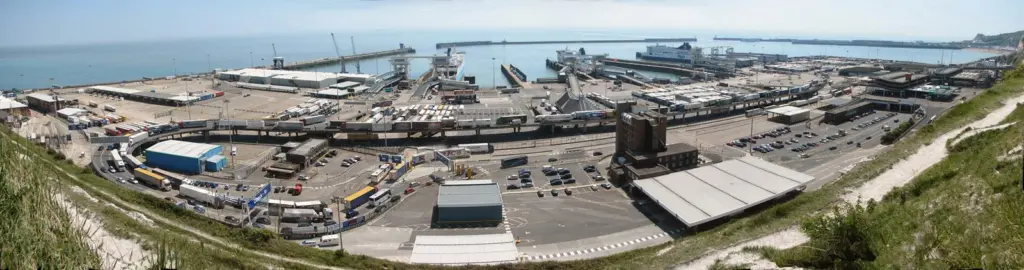
Motivation, information and behavioural change are key words that embody the Port of Dover’s comprehensive, award-wining environmental strategy, implemented not only to reduce its carbon footprint but to save money through optimising the use of the energy it purchases.
In 2005, the Port approached The Carbon Trust, a UK government quango set up to inform and promote energy efficient schemes, to assess its energy consumption across all operations throughout its facility. The Port says that through staff training and the implementation of simple, mostly free measures it has slashed its annual electricity bill by more than 10% and reduced its carbon footprint to boot.
Following a Carbon Trust audit, which calculates a company’s annual carbon emissions and advises on ways to reduce it, the Dover Harbour Board held an energy efficiency training day to encourage staff to, among a welter of other energy saving initiatives, turn off lights, computer monitors and non-essential equipment when not in use.
Since then the Port has implemented changes to its 24h lighting arrangements. It is currently introducing new energy-efficient LED lamp bulbs to high mast lighting systems, and reducing or relocating these for optimum effect. Road signs and advertising boards are also being fitted with low energy LED lamps, while 6000W navigation lights have been adapted to take just 240W. Old boilers have been updated and renewed for modern energy-saving systems and employees have been trained in the correct usage of the heating and air condition thermostats.
Halogen heaters have been installed to increase heating efficiency in large spaces, and to reduce CO2 emissions and traffic congestion through the port, a Green Travel Plan has been adopted to encourage the use of bicycles and car-share schemes. Staff have also been recruited as energy wardens, and timers and energy monitoring systems have been installed to monitor and report on electricity consumption. On-line and in real-time, 30 minute meter readings provide staff with energy consumption statistics for each building/area of the Port.
The Carbon Trust returned to the Port in September last year to carry out another energy assessment and significant progress was evident. Based on a chart showing daily electricity consumption at the port’s eastern docks for the 2006 period, winter consumption peaked on the 16th January at 71,000kWh. The same day a year later consumption had dropped to around 66, 000kWh. Of course, it may have been warmer that day and demand for heating less, but the overall trend showed about a 5000kWh drop in daily electricity consumption throughout 2007 compared with the previous year. It would have been less but the Port installed a new cold storage, which took a chunk from the energy saved.
Such is the extent of the energy-saving initiatives now in place that the Port is likely to receive ISO 14001:2004 accreditation – the certificate confirming a company is operating in an environmentally sustainable manner. The port was audited by ISO officials last month and although there were four of five non-compliances, these will have been addressed by the time they return in a couple of weeks to present the certificate.
But compliance won’t stop the Port from implementing further initiatives, and as Jack Goodhew, the Port of Dover’s general manager, Technical Services Delivery, explains, other investments are on the cards. The Port is currently looking at ways of optimising its heating and ventilation arrangements, such as redirecting the heat generated from its computer server room to offices and other buildings. Voltage too is being assessed and Mr Goodhew’s team are looking at ways to reduce the actual voltage of the mains feeding the Port’s consumers from 250v to 235v. Energy independence is also under consideration, with a feasibility assessment for its own Combined Heat and Power plant, solar or wind farm system.
Gas bills too can be reduced, as can be gleaned from the Devonport Management Ltd (DML) case study posted on the Carbon Trust’s website. After a free Carbon Trust audit and their ensuing recommendations, DML, which runs the Devonport Dockyard down in Plymouth, was able to reduce its annual gas bill by £500,000 merely by improving the efficiency of its steam-generation system and in raising staff awareness.
In summer, the yard was losing up to 80% of the heat generated from its compressed air and steam system through distribution, but following advice from the Trust, major investments were made in improving the steam trap system and implementing monitoring and targeting devices. It also implemented a partial summer shutdown to enable major repairs tackling steam leaks and replacing damaged sections of pipes. An energy awareness programme helped further reduce energy use and to-date DML has noted a 13% reduction in gas use, saving 3,800t of carbon dioxide. More energy-saving projects are planned which could net further reductions.
Related Articles
 TERMINAL OPERATIONS
 TERMINAL OPERATIONS
 CONTAINER & CARGO HANDLING