![PortStrategy[GreenPort]](https://www.portstrategy.com/wp-content/uploads/2026/09/PortStrategyGreenPort.svg)





Quickest to the draw
Authorities and the public are watching to see who will be the first to act on green issues, says Martin Rushmere
A cross current of swirling, sometimes contradictory, concerns and concessions over green initiatives and projects characterises environmental development. Port authorities and terminal operators are keeping a weather eye on each other as they try to outfox and juggle the costs and pressures from the industry and public.
One of the biggest lessons or, perhaps more accurately, dangers in balancing these pressures can be seen in the Port of Los Angeles. LA has probably been the most aggressive, environmentally conscious port of the last 10 years and it brought in environmental expert Geraldine Knatz specifically to clean up air quality, introduce cold ironing and concentrate on modernising the cargo vehicles serving the container lines.
The national economic crisis hit just as the programme was in full force, slashing revenues for the city (which oversees the port) and knocking budgets out of kilter. At the same time, costs for the enlarged Trans Pacific Terminal, which was designed to incorporate the latest environmental techniques, more than doubled the budgeted amount and Ms Knatz abruptly left.
On top of the anti-pollution issues was the drive to install more computer and automated systems – largely because of problems with the unionised dockworkers – after the project was approved.
Industry analysts caution that in times of crisis, environmental initiatives are usually shoved aside by money considerations.
Local law
But ports and local authorities are often squeezed by bigger fish in the form of regional and national governments. Los Angeles is again an example. The port brought in a Green Flag initiative, reducing docking fees for carriers that used low sulphur fuel within 20-40 nautical miles of the coast. This has been forgotten with California’s penalties for ships exceeding the state’s own sulphur regulations, regardless of the IMO mandates for the Emission Control Areas.
The Los Angeles director of environmental management, Chris Cannon, says: “Environmental requirements are written into port lease agreements. In most cases, the requirements simply reflect local, state and federal regulations. In just a few cases, we go a little bit beyond those requirements. Examples of that are vessel speed reduction requirements (some refer to this as slow steaming) where we ask that ships slow to approximately 12 knots within 40 nautical miles of the port, and shore power requirements that go beyond California Air Resources Board’s current shore power rule requiring at least 50% of ships calls be plugged into shore power.
“The port also has Sustainable Construction Requirements for our development projects.”
California politicians aiming for election to Congress add to the pressure on ports throughout the state, feeding off the public’s eagerness – some of it uninformed and counterproductive – for any green-related proposal.
Across the chain
Los Angeles has found that the industry has been careful to count the cost. “Most cargo owners, shipping companies and other cargo movers seem to have incorporated the idea of green logistics into their business plans and marketing,” says Mr Cannon, “so these things are being introduced at many levels in goods movement.
“As an example, outside of lease requirements, the vessel speed reduction program is voluntary, yet we still have 95% compliance out to 20nm and 84% compliance out to 40nm. Most ships are in compliance with vessel speed reduction because shipping lines recognise it helps the environment.”
The reality is more complex. Carriers and terminal operators privately express anger that bureaucrats take a simplistic approach and lack understanding of the engineering difficulties of quickly switching to low sulphur, plus other seemingly simple environmental controls.
But there is no doubt of the big challenge ahead.
“The biggest change in 2015 is introduction of low sulphur fuel requirements all the way out to 200 nm as part of the [IMO-induced] North American Emission Control Area,” says Mr Cannon. “We will also continue to work with our tenants and port customers to test new technologies for reduction of environmental impacts from port-related activities. Zero-emission technology testing for cargo handling and short-haul drayage are good examples.”
Which may be so, but commercial and industrial customers are jittery over costs and some delivery schedules are under strain because road transporters are finding it more difficult to comply.
Growing green
For the port there is only one option. “We recognise it is our responsibility to operate the port in a manner that addresses environmental impacts,” says Mr Cannon. “This is one of the key tenets of sustainability. We have to grow green.”
Cold ironing and the mandatory use of modern and environmentally-friendly cargo vehicles have been the main provisions of the port’s Clean Air Action Plan. Mr Cannon says the plan “was a collaborative effort that was developed with input from the community, regulators, environmental groups and industry. We believe that close collaboration among all the stakeholders is what led to its success.
“This kind of collaboration is essential and we believe it will continue as we look to address ongoing environmental challenges.”
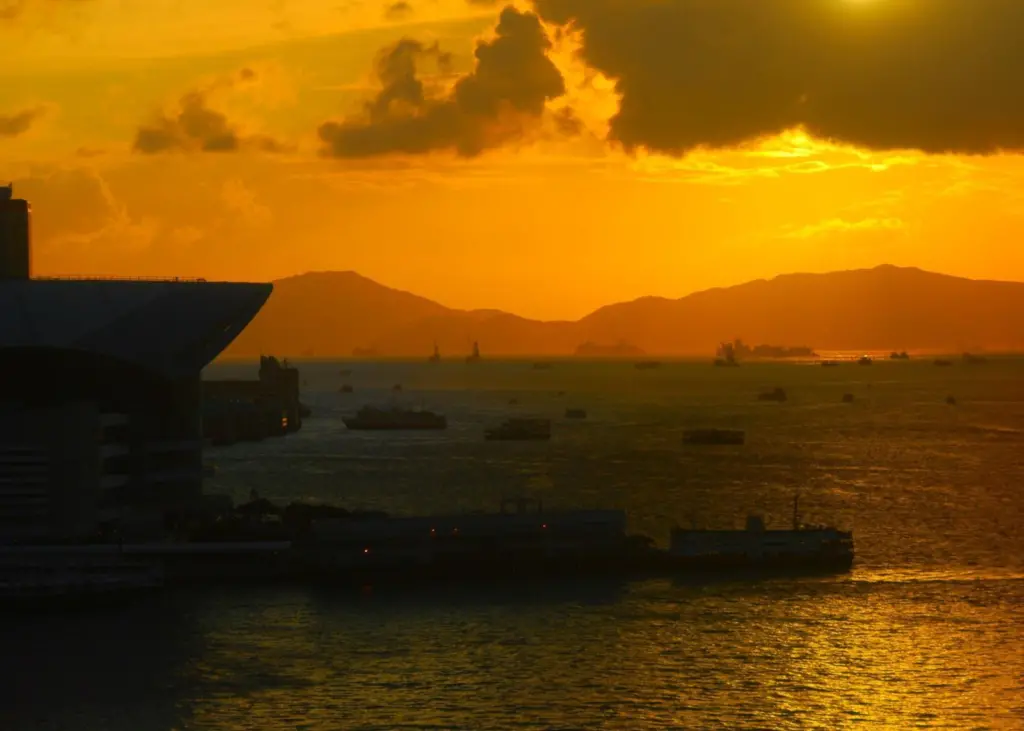
Hong Kong has been going through travails of its own. The Fair Winds Charter, aimed at reducing air emissions in port by persuading shipping lines to use low-sulphur fuel, officially ran out in December. There has been no sign of it being renewed and all indications are that there is little hope of renewal.
The problem is that the agreement is voluntary, with the result that some carriers have opted out. They have scored a financial advantage, and ignored the environmental effects, because low sulphur is significantly more expensive.
Carrier drive
Yet it was the carriers, possibly because they were exasperated at the appalling air quality at the port, who took the initiative, in the form of OOCL and Maersk. Says Arthur Bowring, managing director, Hong Kong Shipowners Association: “The pressure in HK to reduce shipping emissions is coming from the industry, which has been working to find a solution for many years. In 2010 we designed the Fair Winds Charter that initially took effect for two years, 2011 and 2012. We continue our pressure on government to legislate, and are rather frustrated by the time that this seems to take. The longer it takes to make the switch mandatory, the more money those who switch will lose.”
A study found that less than 15% of carriers were switching fuel, while sulphur emissions at Hong King fell by about 9%.
Says Mr Bowring: “I have not heard of any environmental provisions in lease agreements, but I do know that Wharf, which has the lease on Ocean Terminal, the cruise terminal in the centre of Hong Kong, is privately considering installation of shore power. I would think that the pressure for this has come from the cruise lines that use the terminal. Government is assessing the cost of fitting shore power to Kai Tak, the new cruise terminal, but this study has been going on for quite a long time already.”
Hong Kong is also thinking of bringing in a law that will treat willful disobedience of environmental regulations a crime – for both the shipping line and the ship’s master – similar to harsh US penalties. The maximum penalty for a master is six months’ jail and a $200,000 fine.
Growing connection between consideration and intention
Adam Wasserman, managing partner at Global Logistics Development Partners, is critical of ports’ environmental considerations and intentions.
“I guess I could offer that there is linkage, but it isn’t anywhere close to what it will be in a decade. My view is that ports are generally coming to these issues late and as landlords are one step removed from the issues so have used that to insulate.”
But, he says, ports are becoming more attuned. “Issues like commodity management practice for producing controlled air cloud releases, liquid discharges/runoffs and noise management practices are becoming quite important for ports in some areas. I would offer that in some cases, meeting upgraded requirements is more management practice and standards rather than onerous cost burdens.
“In some cases there are higher costs,” says Mr Wasserman, “as related to mandatory equipment purchases and those are rather challenging especially if instituted without sufficient ramp-in period. If railroads and trucking firms are working at being more environmentally conscious, then it is going to be important for seaports and their environments to act accordingly.”
Related Articles
 TERMINAL OPERATIONS
 TERMINAL OPERATIONS
 CONTAINER & CARGO HANDLING