![PortStrategy[GreenPort]](https://www.portstrategy.com/wp-content/uploads/2026/09/PortStrategyGreenPort.svg)





SENSE OF SECURITY
Port security issues are growing in number and severity. John Bensalhia identifies the problem hotspots and new thinking in curbing and eradicating their influence.
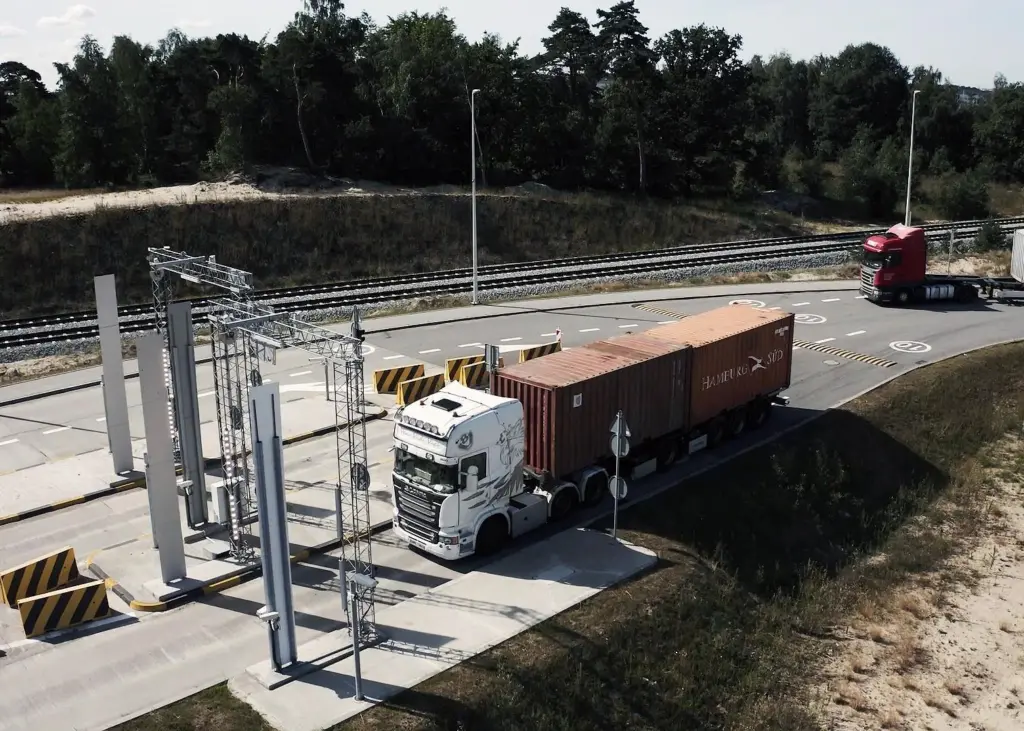
To protect against threats like damage, crime and accidents, ports must be ready to face all challenges, in both the real and virtual worlds. As John Lund, Senior Sales Agent, Americas, Visy, explains: “Each facility is somewhat unique in terms of its exact security requirements. For example, our customers in Latin America face diff erent security challenges than our customers in Europe.”
CYBER-CRIME OR REAL WORLD?
A challenge for all ports is the constant occurrence of new security issues, whether through the growing incidence of cyber-crime or from real world events. The most obvious example of the latter is COVID-19. While port sector companies strive to run businesses as smoothly as possible, they must also ensure maximum safety of staff and visitors.
Accordingly, security product manufacturers are devising products to help realise this objective. SICPA Certus’ myHealth pass, for example, is a technology-based solution that enables health status management in real time.
The pass was trialled in Singapore and the Philippines in Autumn 2020 in conjunction with CrewAssist, a Hong Kong-based non-profit organisation. Other ports have introduced temperature screening systems. Portsmouth International Port’s temperature scanner takes temperatures of employees before they commence work, adding extra protection for staff and passengers. X-ray machines, walk-through detection arches and hand-held detectors are also employed at the UK-port as a way of maximising detection and the protection of individuals against the virus.
The UK’s Port of Poole now features a VIRALERT 3 noncontact body temperature screening system. Anyone entering the port has their temperature taken, with results being accurate to within 0.5 degrees Celsius. Developed by AMETEK Land, the VIRALERT 3 system is fast, efficient and accurate (with body temperature calculated in seconds). One-off incidents can also have consequences.
Debbie Heald MBE, Managing Director, Heald, points out how the recent highly publicised incident – the mv Ever Given blocking the Suez Canal – has parallels with maritime port security issues. She notes: “With the rising cost of shipping products and the cost of goods themselves, ports that do not invest in security measures to protect from the threat of organised crime and terrorist attacks could be left with costly consequences.” The Suez Canal incident underlines it just takes one catastrophic event.
VIRTUAL WORLD THREATS
The virtual world poses a growing threat to port and terminal security, although many facilities continue to take meaningful steps to fight back against cyber-crime. The Port of Los Angeles, for example, has teamed up with IBM Security to create a Port Cyber Resilience Centre which protects the port against cyber-crime, plus supports all stakeholders involved with transportation of cargo through the port.
Visy is a company that is strongly focussed on the subject of visibility, as Lund explains: “We are having a lot of conversations about how we can provide visibility in the yard and in the stacks. Visy AREA is one way that we are providing security and operational benefits inside the terminal. In the stacks we are adding vision technology directly to the container handling equipment (CHE) in the form of spreader optical character recognition (OCR), called TopView.”
Lund highlights the value of the product in relation to port security: “We have essentially turned the spreader into a smart device. By adding OCR cameras, we turn every spreader into a data collection tool that allows operators to automatically verify every container identification before the box is moved. If the wrong box is about to be moved, the system will notify the operator and prevent the wrong move. For security purposes, the system also links the operator and CHE to the box move. This is important for regions that deal with issues such as fraud and drugs.”
DETECT AND REACT
Laura Quinton, External Communications Lead, Wärtsilä Voyage, says that critical infrastructure protection is an important part of effective security services. “We see the trends to increase sensitivity of the systems and advanced decision support solutions allowing operators to detect and identify threats, as well as to react in a timely and appropriate way to them.
“All in all,” she points out, “the adoption of smarter systems that help to solve four major problems in ports, namely safety, security, efficiency and environmental protection – is a big emerging trend.”
In its Smart Ports Vision 2021, Wärtsilä Voyage advocates an ecosystem approach to developing digital solutions for ports. “The notion of a ‘smart port’ refers to a port that uses digital solutions to overcome some of the traditional challenges associated with the sector,” says Quinton. “These include spatial constraints, pressure on productivity, fiscal limitations, safety and security risks and sustainability.”
The key to effective security in all aspects of port operations is seen as innovation. Quinton states: “The focus is always on the possibilities to enhance and upgrade existing technologies, for example, machine learning to detect anomalies or suspicious behaviour, development of 3D models and displaying 3D pictures of the port areas in real-time, automatic identification of the vessels etc. Recently,” she adds, “the demand for additional drone detection systems has been noted as well.”
Related Articles
 TERMINAL OPERATIONS
 TERMINAL OPERATIONS
 CONTAINER & CARGO HANDLING