![PortStrategy[GreenPort]](https://www.portstrategy.com/wp-content/uploads/2026/09/PortStrategyGreenPort.svg)





Something in the water
Felicity Landon discusses the implications of the IMO Ballast Water Management Convention on ports
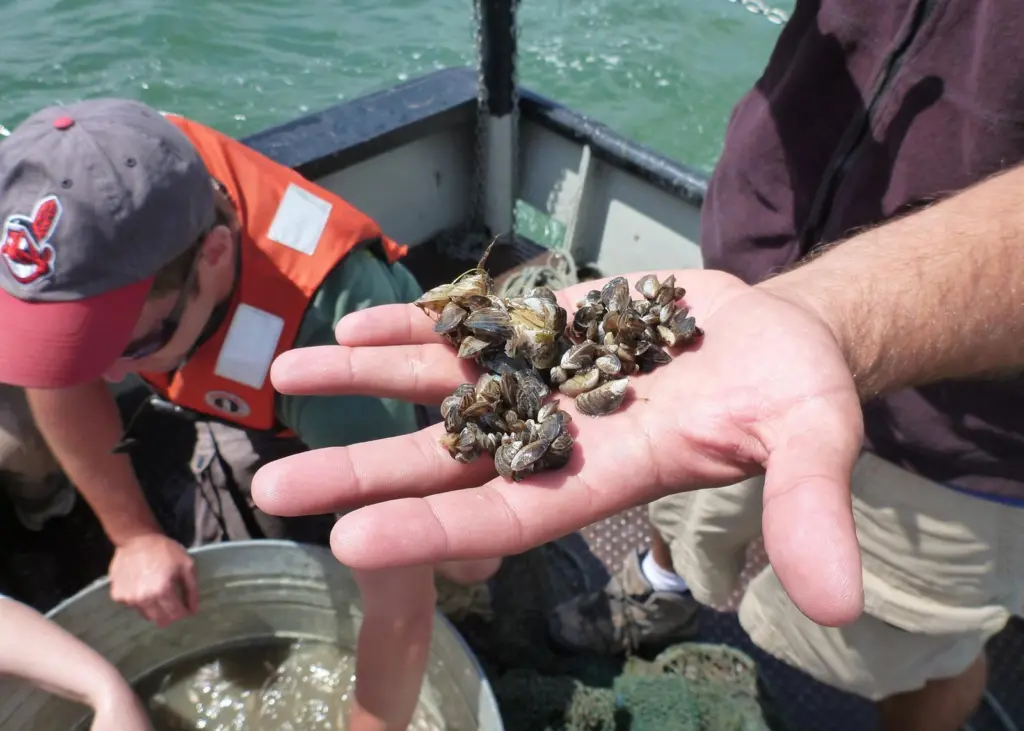
This time last year, the New Scientist ran an article under the rather alarming headline “Five reasons to worry about a quagga mussel invasion”, after the Port of London Authority reported that this invasive species had been discovered in the River Wraysbury, and then in the tidal Thames.
Meanwhile in the US, this ‘invasive and aggressive’ species, which can cover boat hulls and smother native mussels, is even displacing the notorious zebra mussels which themselves have clogged up the Great Lakes. Originating from Eastern Europe, the quagga is one example of a species that most likely hitched a lift abroad in a ship’s ballast water.
The Global Ballast Water Management Programme (GloBallast), a joint project co-ordinated by the IMO to help prepare for the new Ballast Water Management (BWM) Convention, has described the introduction of invasive marine species into new environments by ships’ ballast water as ‘one of the four greatest threats to the world’s oceans’, with the potential to cause severe environmental, economic and public health impacts.
For example, the zebra mussel can reduce native biodiversity and alter freshwater ecosystems by filtration; the ‘killer shrimp’ carries parasites that can reduce fish stocks; and the Chinese mitten crab undermines riverbanks through burrowing, leading to increased risk of erosion.
Edging closer
It’s now 11 years since the BWM Convention was first adopted by member states and, at the time of writing, it had been ratified by 44 states representing 32.89% of world merchant tonnage; 35% is the magic figure required for the Convention to enter into force.
Needless to say, shipowners are at the front line; the new regulations will require them to install ballast water treatment systems onboard and to keep detailed records of all operations of the system, with the information to be made readily available to appropriate authorities on request.
Marine biologist and ballast water expert Dr Stephan Gollasch, who runs the Hamburg-based consultancy GoConsult, has been involved in the development of the BWM Convention and a number of related projects. He says: “Ports may not be as aware as the shipping industry is of this Convention but there are obligations for ports – and not only the larger ones.”
Ports and terminals, where cleaning or repair of ballast tanks takes place, should have adequate reception facilities for sediments, he says. Port states are encouraged to identify, assess and designate areas where ships may conduct ballast water exchange in accordance with the Convention; and they can conduct risk assessments to exempt low-risk ships from the requirements, or to impose more stringent measures to high-risk ships. They are also encouraged to monitor the waters where ships may take on ballast water, and to inform ships’ officers when they should not – because, for example, of an outbreak of harmful organisms or pathogens.
All ports
“The essence of what ports need to be considering would be valid for all ports involved in international shipping,” says Dr Gollasch. “Provided a port is handling international shipping and the cleaning of ballast tanks, there are guidelines on what should be done. The sediment should not be disposed of in the sea, but disposed of on land and suitably treated.”
If a port makes the decision to not provide what ships really need, the risk is that the ships could then make the decision to call elsewhere. “That’s always the possibility and that is not in the interest of the port,” he says. A few ports in Europe with shipyards within their perimeters already have facilities, but they are few and far between.
As for accepting the whole tank of ballast water, facilities for this would be rarely available, he says. “A large tanker could carry 100,000 tonnes of ballast water – it is huge amounts of water we are talking about.”
While the vessels themselves would be expected to have organised treatment systems, there are various projects and prototypes underway for mobile onshore treatment facilities, where the treatment system could be mounted on a barge or truck, which would then connect to the vessel.
Dr Gollasch says his database contains approximately 100 different types of ballast water treatment systems, with the vast majority involving mechanical separation of larger organisms and items and then treatment using chemicals similar to those used in a swimming pool, or chlorination treatment by electrolysers. “But after that you have to neutralise that treated water before you discharge; so you make sure the organisms are killed by chlorine, but you also make sure you don’t chlorinate the port.”
He also warns that one of the key problems with the BWM Convention is that it isn’t in force. “If it was, that would drive the momentum and make it an urgent issue, motivating people to act. But so many people have put this on hold until it’s in force. They don’t want to invest in a system or facilities that they are not sure they will need for another five years.”
The IMO says that reception facilities provided by ports should operate ‘without causing undue delay to ships’ and should provide for the safe disposal of sediments that does not impair or damage the environment, human health, property or resources.
High-tech
Reception facilities are “not an easy business”, says Sunil Shastri, who heads up Hull University’s Centre for Environmental and Marine Sciences. “It is high-technology, but a port has to be capable of dealing with this waste,” he says. “Talking to the Domesday philosophers, they say everything is too late already, but that can’t be an excuse for inaction. If you just do nothing about it, then things are going to get rapidly much, much worse. If we start trying to reverse the trend – boosted by much ingenuity and technical developments – we can decelerate that growth rate.”
There is huge uncertainty around the Convention as far as ports are concerned, and port reception facilities are something the industry brings up as a matter of concern, says Anne Carnegie, secretary of the International Harbour Masters Association. “There are a lot questions surrounding exactly what is going to happen; it hasn’t been ratified yet and, until that happens, people are just holding back,” she says.
While creating such a Convention involves the complexity of finding words accepted by everyone, the actual implications are at grass roots level, she points out – and often it is much more difficult to know exactly how it is going to work out there.
“We could also end up with tensions between what ships require and what ports are going to offer. Eventually it will come down to national legislation and how different countries implement the BWM Convention.”
Flexibility needed on rule application
A big concern around the BWM Convention is the way that its requirements apply to international shipping, that is, ships that cross international boundaries on their voyage.
If a ship remains within a country’s territorial waters, then the Convention doesn’t apply. That means a vessel travelling thousands of miles from west to east Russia via the north, without leaving Russian territorial waters, doesn’t have to comply, even though it is moving between clearly different ecologies. The same would apply to a vessel going via the Kiel Canal from the North Sea into the Baltic Sea, as long as it stayed in German waters.
A ship heading from the US East Coast to US West Coast via the Panama Canal would not be considered domestic traffic because it goes into non-US waters, so would have to comply; yet a ship going all the way from Alaska to San Francisco would be a domestic voyage, although again the ecologies would be very different.
A shortsea service hopping between ports within Europe or across the English Channel would be judged to be an international service to which the regulations apply, although the ecology would be very similar. That creates concern that once again shipping will be penalised compared with road transport in Europe.
“In general we are quite happy with the BWM Convention and agree it is an important issue certainly for long distance/deepsea traffic,” says Isabelle Ryckbost, secretary general of the European Sea Ports Organisation. “But the problem is that for shortsea shipping there is not really a risk and yet it will be very difficult to get an exemption. Apparently the procedure for having an exemption requires you to do an Environmental Impact Assessment – and then to do it again every couple of years.
“This is again an additional burden on shortsea shipping and another challenge as it competes with other modes. That is what we see as a big problem. A vessel which regularly functions on a voyage between Zeebrugge and Gothenburg is not such a risk. There needs to be a balance here.”
Related Articles
 TERMINAL OPERATIONS
 TERMINAL OPERATIONS
 CONTAINER & CARGO HANDLING