![PortStrategy[GreenPort]](https://www.portstrategy.com/wp-content/uploads/2026/09/PortStrategyGreenPort.svg)






US port cuts emissions despite being busier
Efforts by a California port to reduce air pollution have paid off, with the latest analysis showing an 87% cut in diesel emissions despite increased throughput.
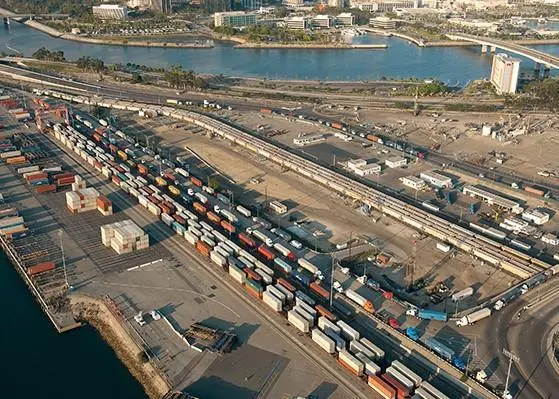
While emissions at the Port of Long Beach remain dramatically lower than they were in 2005, a port-funded annual emissions inventory, conducted by an independent consultant, for 2018 found a small increase in diesel particulates and greenhouse gas emissions from the previous year’s inventory. The 2017 inventory measured an 88% decrease in diesel particulates and an 18% reduction in greenhouse gases compared to the 2005 baseline year. Port officials attributed the change to record throughput of 8.1 million twenty-foot equivalent units in 2018.
In addition to diesel particulates, the study found the port’s aggressive actions to curtail pollution have decreased smog-forming nitrogen oxides by 56% since 2005. Sulfur oxides were down 97% and greenhouse gases are 16% lower.
“We’ve accomplished these reductions even while container traffic has risen 21% since 2005,” said Port of Long Beach Executive Director Mario Cordero. “We are proud of what we’ve done in cooperation with our many partners, but we’re not finished. The Port is managing $150 million in projects all across our port, all in the name of cleaner air. This includes $80 million in grant funding to demonstrate zero emissions equipment and advanced energy systems in Port operations.”
“We’re seeing the results of the hard work by the Port and the goods movement industry, and we’re showing the world that sustainable cargo movement is possible,” said Long Beach Harbor Commission president, Bonnie Lowenthal. “There’s work to be done to get to our ultimate goal of zero-emissions operations, but I’m confident we will get there together.”
The purpose of the emissions inventory is to measure and track the overall cumulative progress of Clean Air Action Plan measures and ensure the port is on track to meet emission reduction goals.
Related Articles
 TERMINAL OPERATIONS
 TERMINAL OPERATIONS
 CONTAINER & CARGO HANDLING