![PortStrategy[GreenPort]](https://www.portstrategy.com/wp-content/uploads/2026/09/PortStrategyGreenPort.svg)

POLITICAL PRESSURES SET TO CHANGE TRADE HORIZONS
All of a sudden (or at least so it seems) gone is the conviction that free trade is a ‘win-win’ solution that will make all countries (and their people) better-off.
All of a sudden (or at least so it seems) gone is the conviction that free trade is a ‘win-win’ solution that will make all countries (and their people) better-off . And gone is the associated expectation that ultimately free trade will foment freedom and democracy.
Enter a new world in which the major countries or economic blocks aim to maximise their economic (and military) strength in a turbulent international arena. In this arena, trade is good as long as it does not create ‘dependence’, especially a dependence on countries with diff erent values (from a western perspective: countries that are not democratic nor free).
Probably it took a war for Europe to accept this reality. But Russia’s unprovoked aggression and war crimes cannot be ignored. And China’s actions are scrutinised; so far there seem to be no indications that China’s leadership is joining the international coalition calling on Russia to stop its aggression. All of this makes a scenario of a prolonged clash between a democratic and a non-democratic block (mainly consisting of China and Russia) more likely. Barriers for trade between these two blocks may rise and countries (like Indonesia and India) may increasingly be under pressure to choose sides.
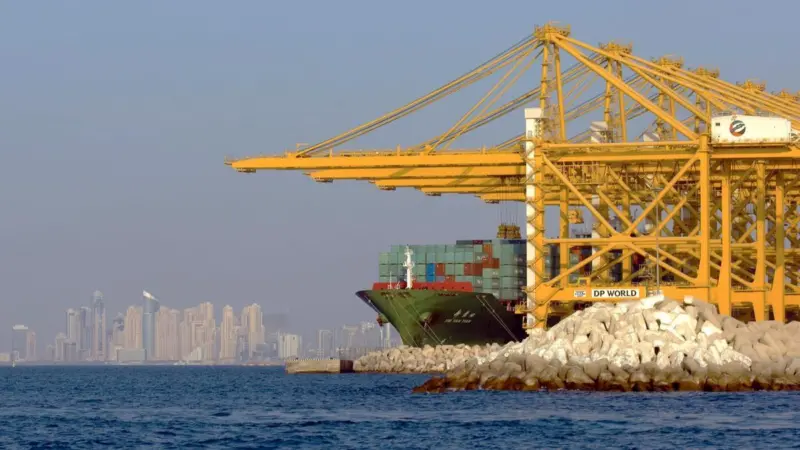
The geo-political relevance of ports further increases in such a scenario. Port infrastructure, especially for energy sources, becomes critical for energy-independence, and countries will seek to increase control over foreign ports as it gives them leverage to secure favourable positions towards ‘their block’. The uncomfortable feeling of Europe and the US about the Chinese Belt and Road Initiative may turn into an outright rejection (and the development of a competing ‘build back better’ offering for developing countries), while Russia’s Arctic route ambitions may receive a similar treatment. Regional integration within the democratic block(s) and the associated efforts to improve shortsea connections, for instance in the Gulf of Mexico and the Mediterranean Sea, may get more attention. Finally, the role of the State-Owned Enterprises from non-democratic countries (including COSCO, DP World and possibly even PSA) may be increasingly scrutinised and possibly limited. All in all, not really a ‘feel good’ scenario. Let’s hope pressure, and especially domestic pressure, can positively influence the choices of Russia’s (and China’s) leadership.
Related Articles
 INSIGHT & OPINION