![PortStrategy[GreenPort]](https://www.portstrategy.com/wp-content/uploads/2026/09/PortStrategyGreenPort.svg)


Poland’s changing port development approach
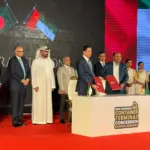
The recent announcement of the ‘Cape Pomerania’ development, a project involving a container terminal as well as additional port activities is interesting because its setting reflects the changing geopolitical landscape and how that leads to changing port development approaches.
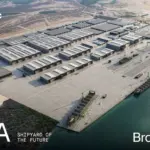
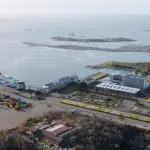
The project, coined ‘the most ambitious project in the 75-year history of the Szczecin-Świnoujście Port Authority’ consists of 186ha of new land, a quay wall almost 3 km long with a breakwater, an access channel, and a harbor basin with a depth of 17m. The centerpiece is a deep-water container terminal with a 1.3 km long quay and a handling capacity of 2 million TEU per year. It is considered one of the largest investment projects on the Baltic Sea.
This project replaces a previous project, agreed only two years ago (July 2023) in which a consortium consisting of DEME and Q Terminals pre-agreed to finance, build and operate a container terminal based on a for a 30-year lease. The consortium was selected by means of a competitive tender procedure. At the announcement of the new project, financing issues were stated to be one of the bottlenecks that had prevented full closure of the deal.
The newly announced project is considerably larger than the previous one – not in terms of the TEU capacity of the terminal, which is 2 million TEU in the current and previous project, but in terms of additional infrastructure. The investment is partly justified as it enhances Poland’s military mobility, as the terminal is designed for dual civil and military use.
In addition to the investments of the state-owned port authority (around US$350 million), the central government is committing US$1.9bn for the land and seaway improvements, including deepening port access channels and road and rail infrastructure.
This case shows how the government changed its port development approach, from market driven to government-led, gave military mobility considerations a central place in port development, provides large scale public funding for port development and reduced geopolitical dependencies by no longer involving a foreign state-owned port company (i.e., Q terminals). And all of this quite rapidly. While I think all of the above is justifiable based on the changed geopolitical landscape, the ultimate test of whether the investments make Poland better off is the commercial success of the port in terms of attracting container volumes.
Related Articles
 CONTAINER & CARGO HANDLING
 INSIGHT & OPINION
 INSIGHT & OPINION