![PortStrategy[GreenPort]](https://www.portstrategy.com/wp-content/uploads/2026/09/PortStrategyGreenPort.svg)




The Insurer
September opened a new chapter in the growing book of potential liabilities for port and terminal operators.
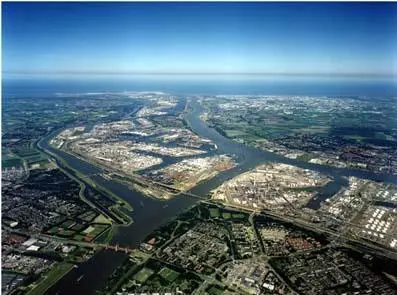
The signing ceremony in Rotterdam for the United Nations Convention on Contracts for the International Carriage of Goods Wholly or Partly by Sea, has pushed into the limelight what is known as the Rotterdam Rules. This could herald as radical a shake-up as did the 1923 Hague Rules and 1968 Hague-Visby Rules, or as damp a squib as were the little used 1978 Hamburg Rules. The idea is to increase the choice of target for a claimant – and the seaport where goods are loaded or discharged is being brought firmly into range.
In the age of containerisation, the blueprint is about bringing the non-sea legs of the transport chain into focus, for in addition to enabling claims against a carrier, the Rotterdam Rules nets any interest which could be defined as a maritime performing party, and that includes stevedoring companies and cargo terminal operators. Ports and shoreside handling operations would have the same obligations and liabilities as a carrier.
The convention will come into force one year after ratification by at least 20 UN member states. After a rush to sign, it may be a case of “after you” to enact the relevant national legislation, and the US, although thought to be keen, has much else on its priority list.
It may be three, four or five years before this has an impact on business, Andrew Nicholas, a partner at Clyde & Co, said at a recent seminar organised by his firm. The whole thing may never come to pass. All the same he and his colleagues, and other maritime lawyers, are warning that the long (96 articles over 36 pages) and complex rules could bring unpredictable changes. Exactly what is meant in some areas is going to have to be tested in court. Some articles bear the hallmark of many different pens, according to Andrew Bicknell, also of Clyde & Co.
Worrying about the consequences, insurer the TT Club says that terminal operators are currently not subject to any mandatory international convention, and thus can limit their liabilities. Shippers and freight forwarders also have considerable reservations, while cargo interests approve of its – probably too ambitious – aim to add coherence and certainty to treatment of the door-to-door concept.
Only gradually has it dawned on the ports sector that it is very much in the frame here. Mr Bicknell said of the ports: “They are drawn in, and it is going to be a matter of looking to negotiate as best they can with their customers, the liner operators, to ensure that they do not become an easy target.”
One aspect that will please cargo insurers is that the container supplied by a carrier will be viewed as part of the ship and therefore must be ‘cargoworthy.’ Ports and their crane drivers are certain to applaud this too.
Related Articles
 THE INSURER
 THE INSURER
 THE INSURER